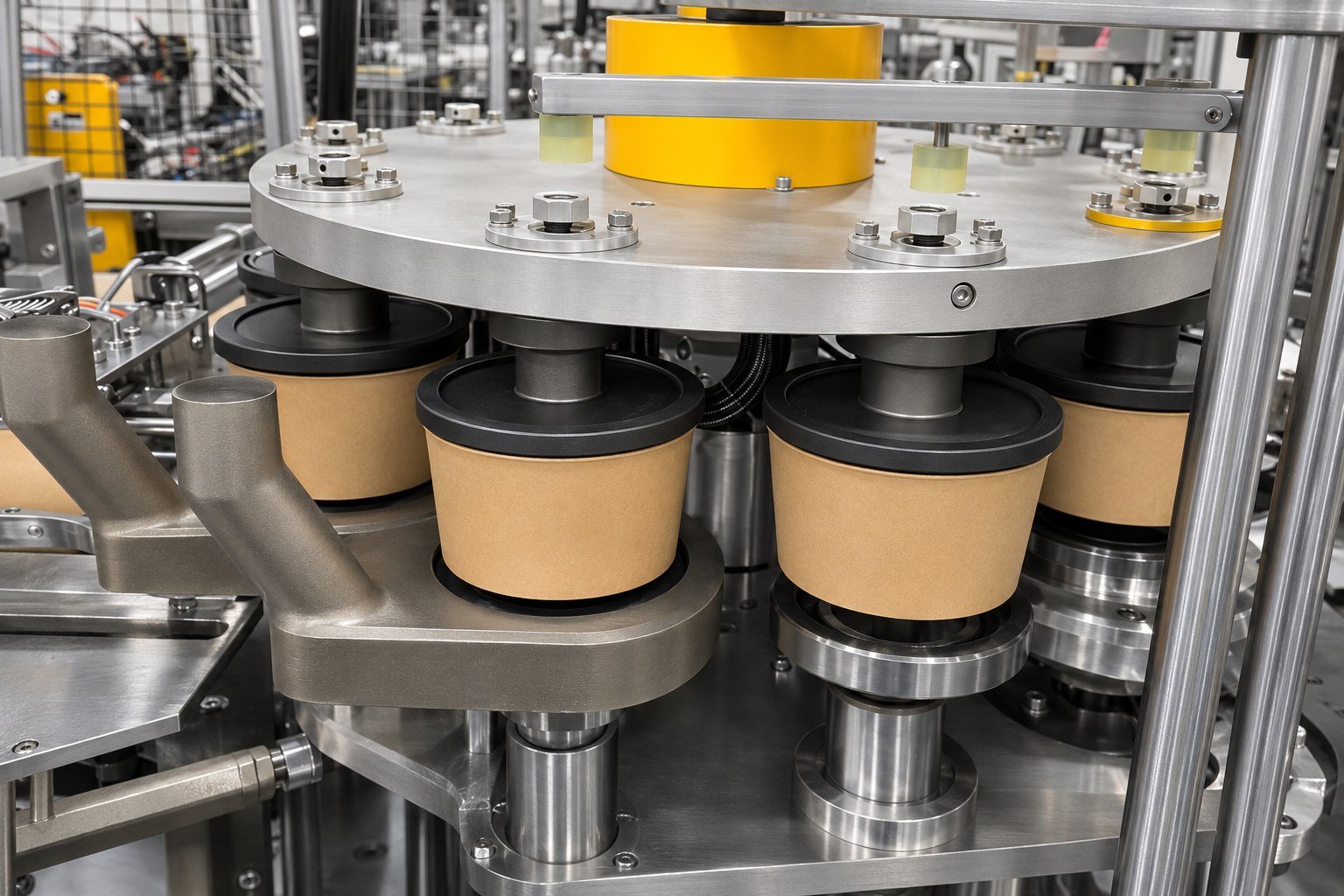
A food-contact compliance letter tells you about the substances a supplier put into your cup on purpose. It says much less about the substances that arrived with the raw material. Those are different risks, they are documented differently, and the second kind is the one buyers usually skip. This guide covers what to check beyond the paperwork, which contaminants ride in on the fibre, and the questions that separate a real answer from a reassuring one.
Start with conditions of use, not a label
“Food grade” is not a status a cup holds on its own. Compliance depends on what your cup holds, at what temperature, and for how long. A material cleared for a cold drink is not automatically cleared for one at 90°C. If you serve both, you are buying two conditions of use, not one.
The United States handles this component by component. Your cup is a substrate, a coating, an ink and an adhesive, and each sits under its own regulatory basis. Our guide to FDA compliance for imported paper cups walks through which document covers which component and what to request for each. The specification sheet template gives you a single form for recording all of it.
That documentary route is necessary and it is not sufficient. It addresses the things a formulator chose. The rest of this article is about the things nobody chose.
Four layers, four different questions
Read a cup as a stack of materials before you read it as a product. The paperboard, the inner barrier coating, the outer wall and the print each have their own supply chain and their own compliance basis. A cutaway like this one makes it obvious why one blanket certificate cannot answer for all of them.
Which coating you specify changes more than liquid holdout. PE, PLA and aqueous coatings behave differently under heat, at the score line and at end of life, and each one needs its own evidence matched to your beverage. Wall construction matters too — see hot versus cold drink cup construction before you assume one cup covers both menus.
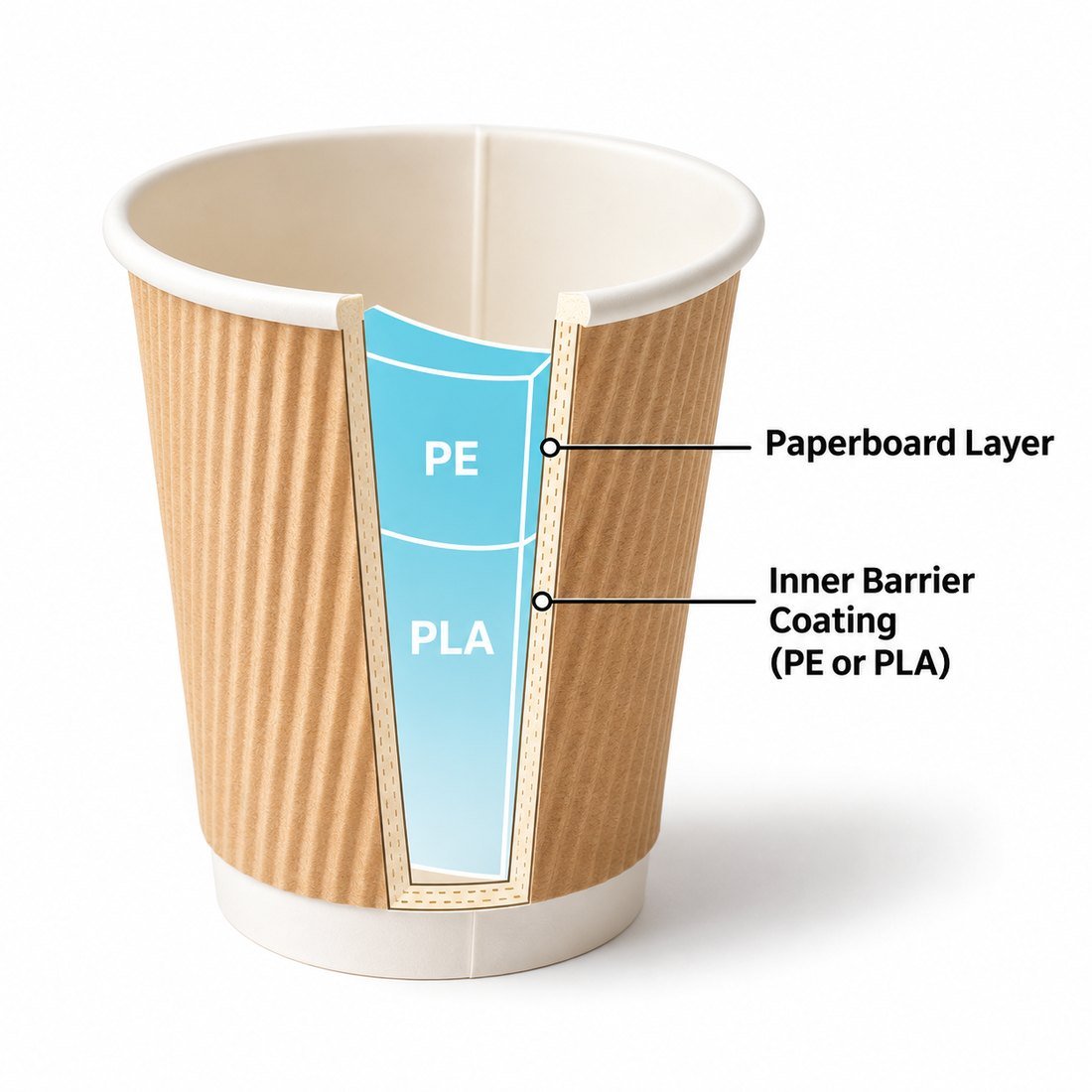
Once you see the layers, the question changes. You stop asking “is this cup food grade?” and start asking “what is in each layer, who made it, and what test covers this exact stack?”
The contaminants that arrive with the fibre
Mineral oil hydrocarbons are the clearest example, and nobody adds them to your cup deliberately. The European Commission’s Recommendation (EU) 2017/84 defines them as compounds derived mainly from crude oil but also produced synthetically from coal, natural gas and biomass, and splits them into MOSH (mineral oil saturated hydrocarbons) and MOAH (mineral oil aromatic hydrocarbons).
The distinction matters because the concerns differ. Summarising EFSA’s 2012 CONTAM opinion, the same recommendation notes that MOAH may act as genotoxic carcinogens, while some MOSH can accumulate in human tissue and may cause adverse effects in the liver. It also lists the routes into food: environmental contamination, lubricants on harvesting and production machinery, processing aids, food additives and food contact materials.
Recycled fibre is the route buyers hear about first, because printed paper re-enters the fibre stream and printing inks are a mineral-oil source. Note the other two words in that Commission list, though: processing aids and environmental contamination. They are why “we use virgin fibre” is a reasonable answer to your question but not a complete one.
The recommendation also tells member states that migration from paper and board packaging is suspected to contribute significantly to total exposure, and asks them to look at the packaging material, the presence of functional barriers, storage time and storage conditions. In other words, migration is not only a direct-contact question, and a short hot-drink hold is a different exposure from a dry product in a folding carton over a long shelf life.
Why a PE lining is not the barrier you might assume

A lined cup feels like a sealed system. A polyethylene layer is specified as a liquid barrier: it stops a hot drink soaking into the board. That is what the coating data sheet is describing, and it is a real performance claim.
It is not the same claim as a functional barrier against mineral-oil migration. Recommendation (EU) 2017/84 asks regulators to record whether a functional barrier is present as a separate piece of data, which tells you the two questions are not interchangeable. Do not let a waterproofing spec stand in for a migration answer on your construction.
Scope this honestly before you act on it. The EU monitoring exercise covered mainly prepacked foods in cartons over long shelf lives, not a coffee held for twenty minutes. The mechanism still applies, but the point for you is narrower than alarm: fibre sourcing is a question you ask directly rather than one you treat as handled by the lining.
The formed areas deserve the same treatment. A coating that performs on a flat sheet can be stressed at the rolled rim, the sidewall joint and the bottom seal once the cup is shaped. Cup and lid compatibility testing covers the fit side of that; the seal side belongs in your migration request.
What the numbers are, and what they are not
Almost every figure quoted in this area is a recommendation, a monitoring exercise or a draft, not a legal limit you can write into a purchase order. Getting that distinction right protects you in a tender. Here is what the documents you will actually be shown do and do not establish.
| Document | What it actually is | What you can hold a supplier to |
|---|---|---|
| Commission Recommendation (EU) 2017/84, 16 January 2017 | An EU monitoring recommendation. It asked member states to monitor MOH in food and in food contact materials during 2017 and 2018, and to investigate sources when MOH was found. | No numeric limit. It is evidence that packaging, functional barriers and storage conditions are in scope. |
| EFSA CONTAM opinion, EFSA Journal 2012;10(6):2704 | A scientific risk assessment, cited as the basis for the 2017 recommendation. | The hazard basis: MOAH may act as genotoxic carcinogens; some MOSH accumulate in human tissue. Not a product limit. |
| GB 4806.8-2022 | China’s mandatory national food safety standard for food-contact paper and paperboard, issued 28 July 2022 and effective 30 June 2023. It revised GB 4806.8-2016. | A dated test report against this version, for the exact construction you are buying. |
| GB 11680-1989 | The old hygienic standard for food packaging base paper, published 1989 and now listed as withdrawn by China’s national standards database. | Nothing. A supplier citing it is citing a withdrawn standard. |
| ISO 22000:2018 | A food-safety management system certificate covering a factory’s production system. | Evidence a system exists. It is not a batch migration result and does not name your cup. |
The 2017 recommendation set no maximum level and no general zero tolerance; its purpose was to generate comparable occurrence data. Mineral-oil rules have continued to develop since that 2017–2018 exercise, so treat any threshold you see quoted as market- and date-specific. Confirm the current position for your destination market with your test house before a figure goes into a specification.
One practical consequence: the honest standard to hold a supplier to is documentation, not a number. Ask for ALARA-style reasoning — what was measured, under which conditions, and why the result is as low as reasonably achievable for your construction.
The Chinese standard question, if you import from China
If your supplier cites a Chinese national standard, check it is still in force. This is not hypothetical. The official national standards database entry for GB 11680-1989 lists its status as withdrawn (废止). It was superseded in April 2017 by GB 4806.8-2016, and the standard number still appears in supplier material across the industry.
China’s current mandatory standard is GB 4806.8-2022, issued on 28 July 2022 by the National Health Commission and the State Administration for Market Regulation, and in force since 30 June 2023. Ask which standard your material was actually tested against, and ask for the dated report rather than a standard number on its own. A report for a different coating or a different board supplier does not cover your order.
A food-contact standard speaks to safety. It certifies nothing about compostability or recyclability, so do not let one stand in for the other on your packaging. Compostable, biodegradable, recyclable or plastic-free explains why those four words are not interchangeable, and our recyclability guide covers the claim-by-market problem in detail.
Four questions that separate a real answer from a reassuring one
Put these to your supplier in writing, and ask for documents rather than statements.
- Is the board virgin or recycled, and who is the mill? If any recycled content is present, ask what testing covers mineral oil. If it is virgin, ask the same question anyway: processing aids and environmental contamination are named routes too.
- Which standard is the material tested to, and when? Request the report with its date, the standard version, and the specific construction it covers. A report for a different coating or a different board supplier does not cover your order.
- Where does the ink sit, and what migration work exists? Exterior printing is a migration and set-off question, especially for nested cups in transit. Our printing-process comparison explains the difference between the two terms.
- Do the test conditions match your drink? Food simulant, temperature and contact time all have to reflect how you actually serve. A cold-fill result does not carry over to a hot one.
If a supplier answers all four with one certificate, you have not been given what you asked for. The two photographs below show the formed details a generic report tends to skip: the rolled rim and sidewall joint, and the bottom seal and seam. Ask that the report names the same construction.
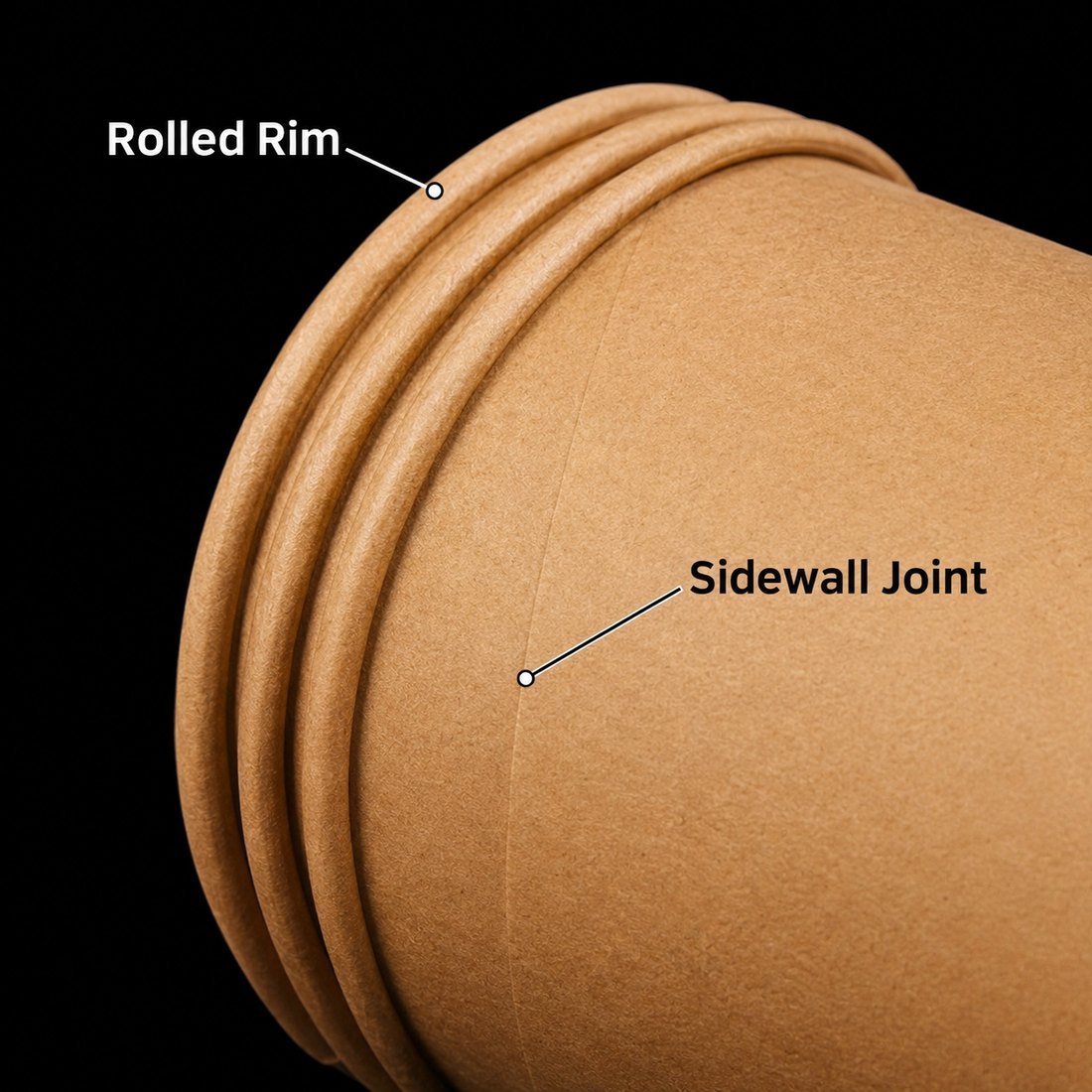
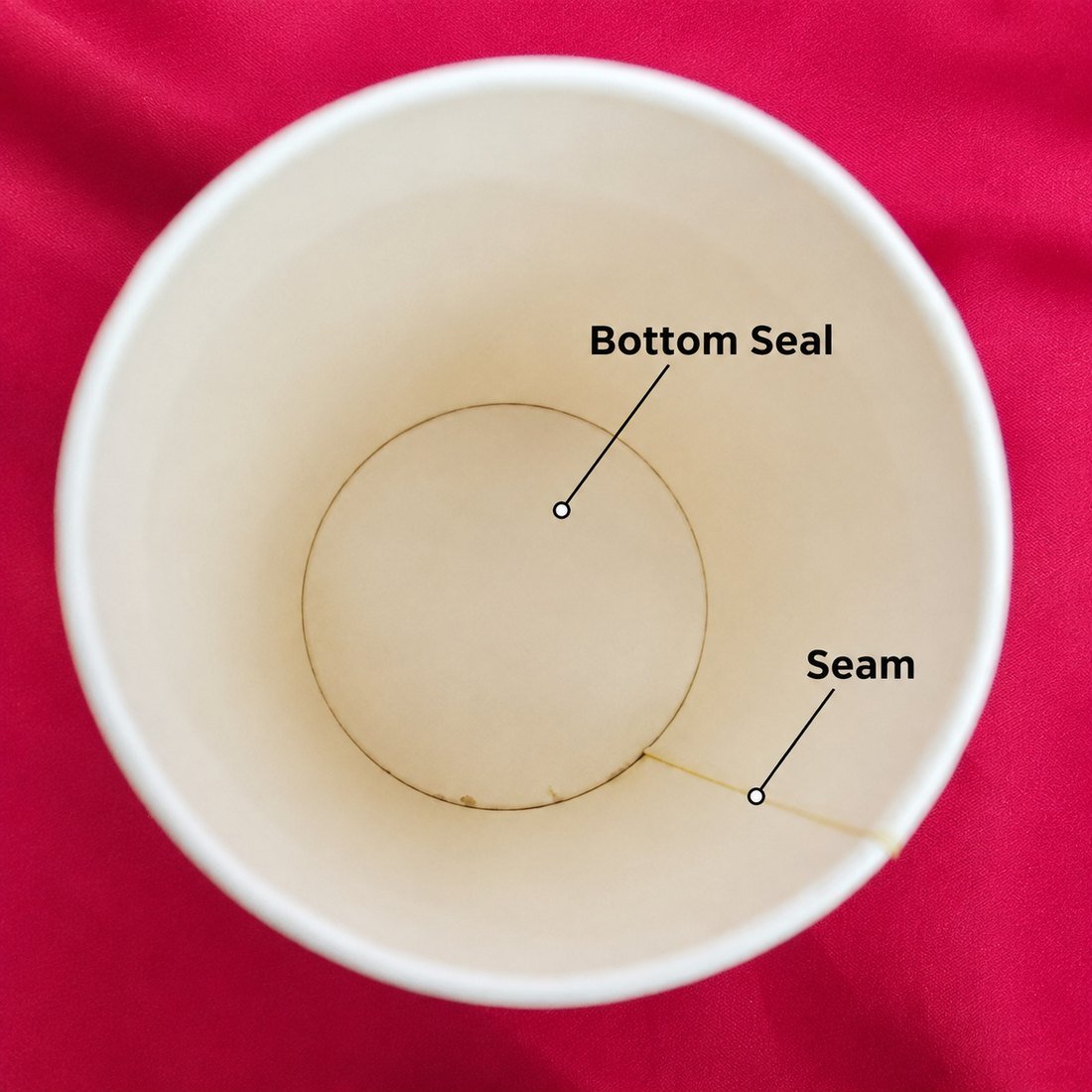
Write the answers into one document before you approve a sample. Our paper cup size guide is the natural companion if you are still fixing capacities and rim diameters, because a changed size is a changed construction.
What XINNENG publishes, and what to request

Read our published information as a starting point, not a compliance pack. The custom paper cups page lists 3 oz to 22 oz with food-grade virgin wood-pulp white card, PE, PLA or water-based coatings, and soybean- and corn-based inks. Our factory page describes single-wall, double-wall and ripple-wall cups from 4.5 oz to 22 oz across different series, and an ISO 22000:2018 certificate (no. 020FSMS2600004, valid through 6 January 2029).
The quality control page describes 85°C hot-water leak tests on 30 cups per hour, board weight held within ±5 g/m², fluorescent-agent testing of raw paper, an annual third-party food-safety test, and FDA and EU 10/2011 food-contact reports available on request. It also states the white card uses no recycled mix. Those are process and fibre-source statements, which is more than a bare certificate — but no dated migration report or mill identity is published on the page.
Two details are worth flagging because this article is about checking paperwork. Our custom cups page still says it “follows GB11680-1989 food-contact safety” — the withdrawn standard discussed above. And no published GSM range appears on these pages: the spec sheet template asks you to state a preferred GSM or a benchmark cup instead. Do not assume a gram weight; put it in the specification, and ask that the standard on your report is the current one.
What to request, then, is specific: the fibre source and mill, the current standard and a dated report that names your coating and board, and migration data matched to your beverage, fill temperature and hold time. Our certifications page draws the same distinction — a certificate tells you a management system exists, a batch report tells you what happened on a particular production day.
Paper cups from XINNENG
Browse the range on the paper cups category page to see what you can specify before you send the documentation request.
Sources
- Commission Recommendation (EU) 2017/84 of 16 January 2017 on the monitoring of mineral oil hydrocarbons in food and in materials and articles intended to come into contact with food (EUR-Lex, CELEX 32017H0084).
- EFSA Panel on Contaminants in the Food Chain, Scientific Opinion on Mineral Oil Hydrocarbons in Food, EFSA Journal 2012;10(6):2704, as cited in the recommendation above.
- State Administration for Market Regulation national standards database, GB 11680-1989 entry (status: withdrawn).
- Ganzhou Municipal Market Supervision Administration, interpretation of GB 4806.8-2022 (issued 28 July 2022, effective 30 June 2023).
- XINNENG custom paper cups, quality control, certifications and paper cup manufacturer pages.
FAQ
Does “food grade” mean a paper cup is safe for hot drinks?
Not on its own. Compliance depends on the conditions of use: what the cup holds, at what temperature and for how long. A material cleared for a cold beverage is not automatically cleared at 90°C. Ask for documentation that names your beverage type, fill temperature and contact time.
Should you avoid recycled fibre in food-contact cups?
Recycled fibre is the route most often named for mineral oil, because printed paper re-enters the fibre stream. Virgin fibre reduces that route without closing the question: Recommendation (EU) 2017/84 also names processing aids, environmental contamination, machinery lubricants and food contact materials as routes into food. Ask what testing covers mineral oil either way.
Does the PE lining stop contaminants reaching the drink?
A PE layer is a liquid barrier, and you should not assume it is also a functional barrier against mineral-oil migration. The EU monitoring recommendation treats the presence of a functional barrier as a separate data point. For a short hot-drink hold the exposure differs from long-shelf-life packaging, so ask what migration testing exists for your exact construction and serving conditions.
Is a Chinese GB standard number enough evidence?
Only if the standard is current and the report is specific. GB 11680-1989 is listed as withdrawn in China’s official national standards database. GB 4806.8-2022 has applied since 30 June 2023. Ask which one the material was tested against and for a dated report naming your coating and board supplier.
What is the difference between a certificate and a batch test report?
An ISO 22000 certificate shows a food-safety management system exists at the factory. A migration test report shows what was measured on a specific construction, under specific conditions, on a specific date. You need both, but only the second can be matched to your order.
What should go in the documentation request?
Fibre source and mill identity, the current standard version and a dated report covering your exact coating and board, migration data matched to your beverage and fill temperature, and confirmation of where the ink sits. Our specification sheet template gives you one form that captures all of it.
Get the Compliance Pack for Your Cup
Send XINNENG your beverage type, fill temperature, hold time and destination market. Ask for the fibre source and mill, the current standard with a dated report naming your construction, and migration data matched to how you actually serve. You get documentation tied to your cup rather than a general statement.