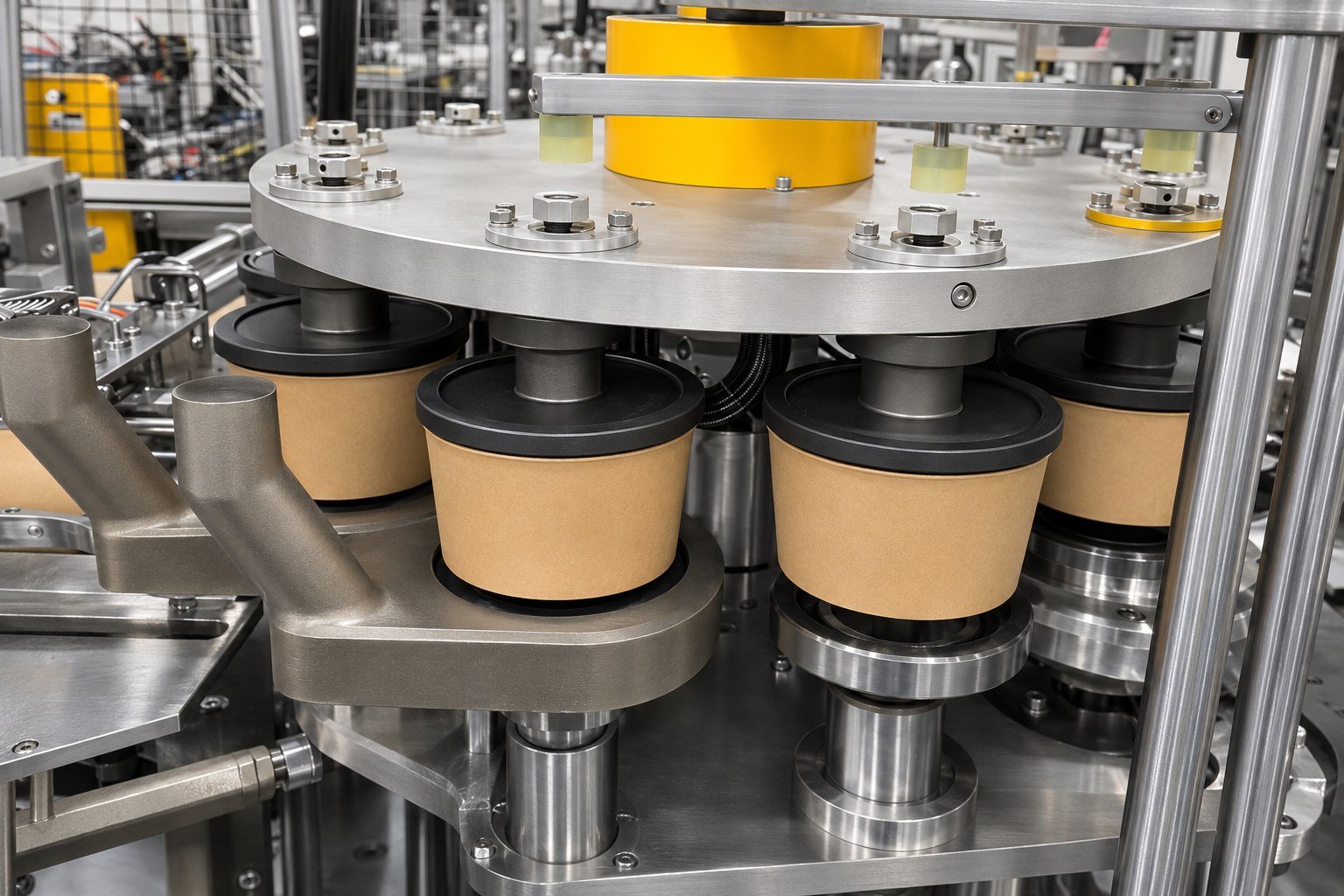
Choose rigid paper bowls with a water-based (plastic-free) coating for your next event. A 12 to 16 oz size covers most serving needs. Pair the bowl with a dome lid if it travels. These bowls hold their shape through a normal two- to three-hour service window. Thin plastic and wax bowls don’t hold up nearly as well.
What breaks at a party, and how to avoid it
Three things ruin a bowl at your event. Know them before you order, not after.
Soggy bottoms
Moisture or grease soaks through a weak coating over time. This shows up most on your dips, dressed salads, and anything sitting out for hours.
Lid pop-off
Steam builds up inside a sealed hot bowl. Without a vent, that pressure can push the lid right off your tray mid-transport.
Stack collapse
A tall stack of your nested bowls bends or crushes under its own weight. Low-weight paper stock is the usual cause. Heat and moisture make it worse, since a soft, hot bottom can’t support the bowls stacked on top of it.
Your fix for all three starts with the right coating and the right paper weight, not a vague ‘heavy-duty’ claim.


Material and coating for stamina

Choose a water-based (plastic-free) coating for long hot holds. PE is the lower-cost option. Both form a continuous barrier across the paper, so the bowl resists soak-through even with hot, oily, or acidic food. Our material comparison guide covers how paper, plastic, and foam each handle heat and grease over time.
Wax coatings soften at a lower temperature than water-based or PE. Hot dips and saucy sides can push a wax-coated bowl past its limit faster than you’d expect. Plastic bowls hold up fine for cold items, but thin plastic flexes and can crack under a full, heavy portion.
Paper weight matters as much as coating. Cup and bowl paperboard typically runs from about 170 to over 350 gsm. Lighter stock flexes and feels cheap in hand. Heavier stock, generally in the 300–380 gsm range, holds its shape under real weight. Ask your supplier for the gsm number directly, not just a general “sturdy” claim.
Size mix for a typical event
Most caterers split their order across three sizes rather than buying one size for everything.
| Bowl size | Typical use at the event | Rough share of the order |
|---|---|---|
| 8 oz | Chips, dips, small sides | ~25–30% |
| 12 to 16 oz | Salads, mains, standard portions | ~40–45% |
| 16 to 26 oz | Chili, punch, family-style sides | ~25–35% |
For full liquid portions that travel, consider XINNENG’s lidded paper soup containers instead of open bowls at the larger sizes.
Treat this split as a starting point, not a formula. Your actual menu, your guest count, and whether guests serve themselves all shift these numbers. A buffet with heavy self-serve traffic usually needs more of the smaller size than a plated, served event does.


Lids and transport
A dome lid is your default choice for anything that travels. It clears loaded toppings and stays stable when bowls get stacked in a transport case.
Vent your lids whenever hot food is involved. The vent’s main job is pressure relief, letting steam escape before it builds up enough to pop the lid. A secondary benefit is less condensation dripping back into your food.
If your event calls for a bowl that’s sealed tight for a bumpy ride, not just covered, look at XINNENG’s deeper paper soup containers instead of its open paper bowls. They’re sold as a matched bucket-and-lid set, built specifically for that kind of transport, not just an open bowl with a lid added on.

Themed and seasonal bowls
A Christmas or Halloween design isn’t a separate off-the-shelf product from XINNENG. It’s a custom print run on its standard blank paper bowl stock. You supply the artwork, XINNENG prints it.
Custom printing accepts Adobe Illustrator (.ai), PDF or EPS files, with fonts converted to outlines before production. If you want a holiday design on a compostable, plastic-free coating, say so when you place your order, since that’s a separate spec from the print itself.
Same-artwork orders across a few sizes can often combine to hit your minimum order faster. That matters if your seasonal run is smaller than a standard bulk order.


Bulk buying for caterers: MOQ, pallet, and custom print
Most custom-printed orders start at a 10,000-piece minimum. Blank, unprinted stock carries a lower minimum if you skip custom branding.
Lead time runs about one week for 10,000 pieces. A larger run, from 50,000 to 200,000 pieces, takes about 15 days, plus shipping on top. Six factors drive your actual price: capacity, material and coating, print area and color count, order quantity, accessories like lids, and final packaging.
A free digital e-proof confirms your layout before anything gets printed. A physical mock-up sample runs about $14 and takes roughly 3 days. An on-press sample using your real print material runs about $70, refundable against your bulk order once you place it.
XINNENG’s catering bowl range
XINNENG’s open paper bowls run in four stock sizes: 8, 12, 16 and 26 oz, with paper weight from 250 to 380 gsm depending on size, using a PE or water-based coating rated to 95 °C. For deeper portions that need a true lid, its paper soup containers extend further at 16, 24, 32, 48 and 64 oz, built as matched bucket-and-lid sets rated -20 °C to 100 °C.
XINNENG holds ISO 22000 food safety management certification and National High-Tech Enterprise status, backed by an in-house lab and annual third-party testing. ISO 22000 covers food safety management. It doesn’t certify stacking strength or leak resistance on its own, so ask for the specific coating and paper-weight numbers behind any sturdiness claim.
Relevant XINNENG paper bowl category
Use the XINNENG paper bowls category as the natural next step from a size and coating shortlist to a sample request, then confirm the exact gsm, coating and lid spec for your event order.
FAQ
What size disposable bowl works best for your party buffet?
A 12 to 16 oz bowl covers most mains and salads. Add some 8 oz bowls for sides and dips, and size up for anything served family-style.
Do paper bowls really hold up better than plastic at your catered event?
For hot, oily, or acidic food held over hours, yes, generally. Thin plastic can flex or crack under a heavy, hot portion, while a properly coated paper bowl holds its shape.
Why does your bowl’s lid keep popping off during transport?
Steam pressure is the usual cause. A vented lid lets that pressure escape instead of building up enough to push the lid off.
Can you get a custom holiday design printed on disposable bowls?
Yes, through custom OEM printing on standard blank stock. Submit artwork as an Adobe Illustrator (.ai), PDF or EPS file with fonts converted to outlines.
What’s the minimum order for custom-printed catering bowls?
Most custom-printed orders start at 10,000 pieces. Combining the same artwork across a few sizes can help you reach that faster.
How do you stop your bowls from collapsing when they’re stacked for transport?
Check the paper weight first, generally 300 gsm or higher for real stacking strength. Keep hot, wet-bottomed bowls out of a tall, tightly packed stack, since heat and moisture soften the paper further.
Build your event bowl bundle
Ask XINNENG for a bulk quote on your exact size mix, coating, and custom print needs. Request a free sample first, so you can test it against your actual menu before your event, not after.
If your event involves soup service, our soup bowls buying guide covers lid types, coatings, and leak-proof picks. For exact paper bowl dimensions by size, see our paper bowl sizes guide. If you need to verify a supplier’s compostability claims before ordering, our compostable paper bowls guide explains what the certifications actually cover. And for microwave reheating questions by coating type, see our microwave safety guide.
That one quote tells you more about your real cost per event than a generic price list ever will.