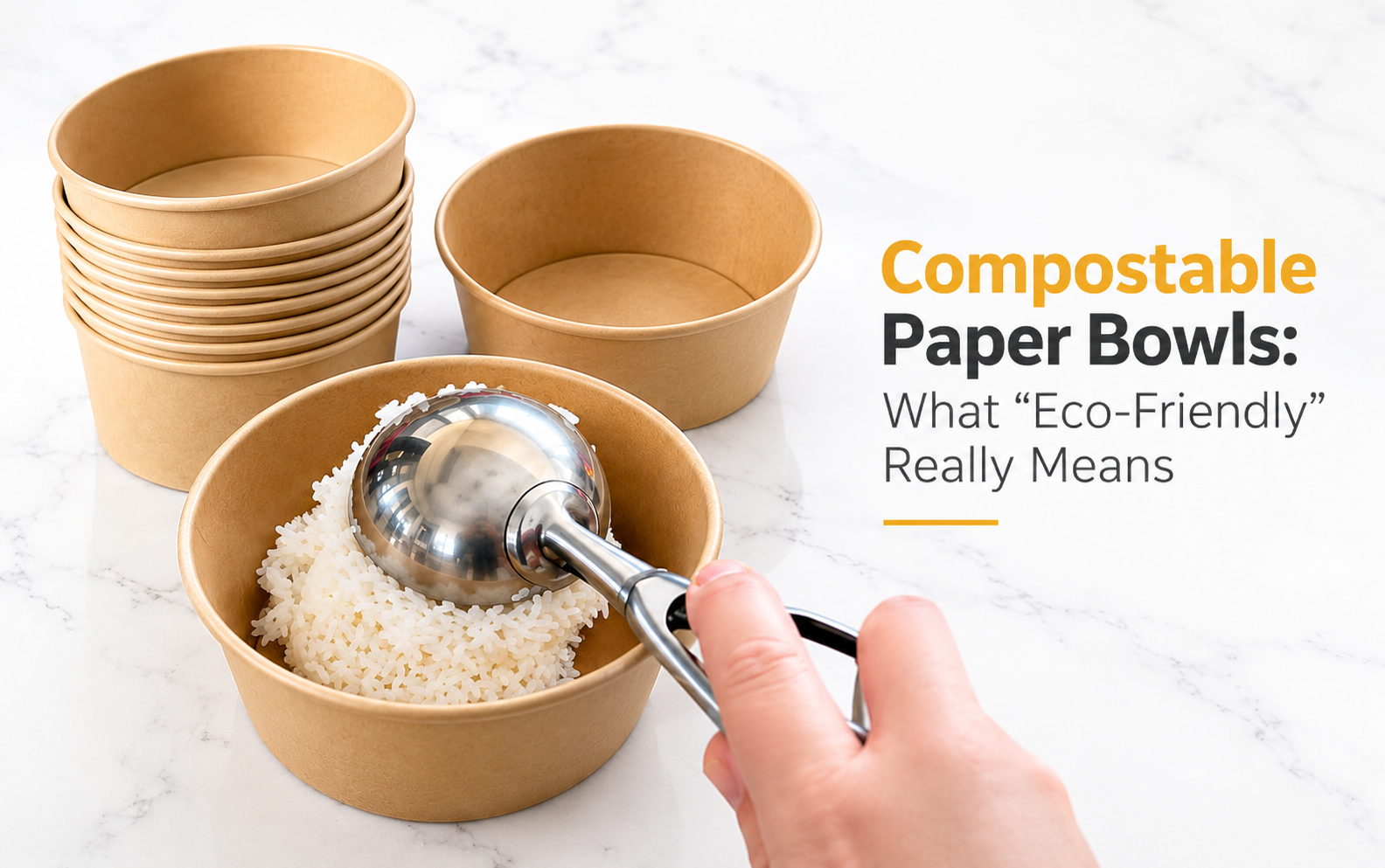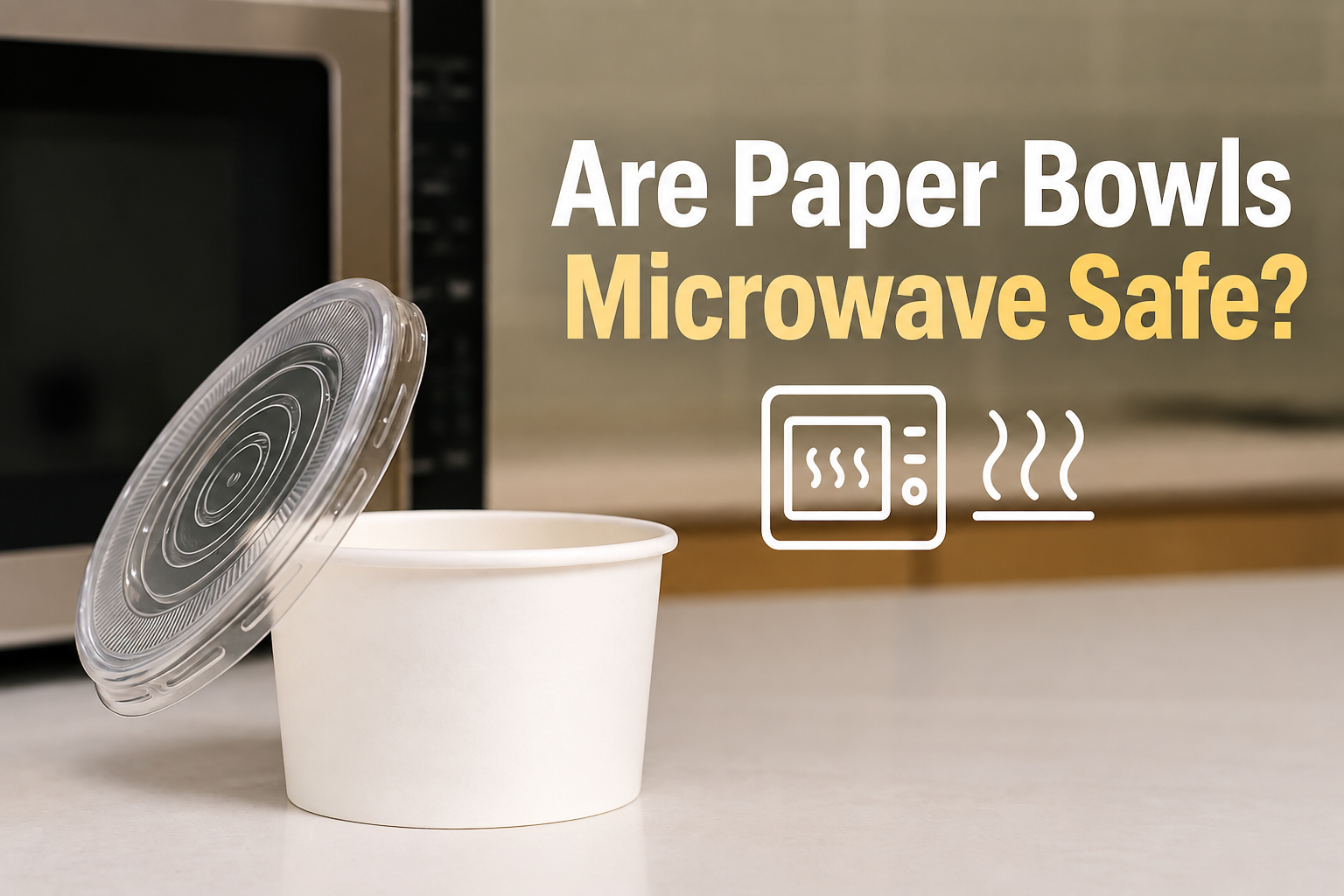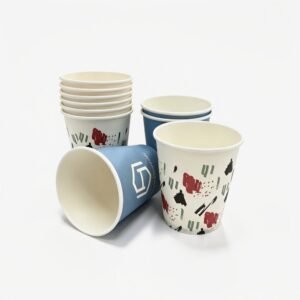
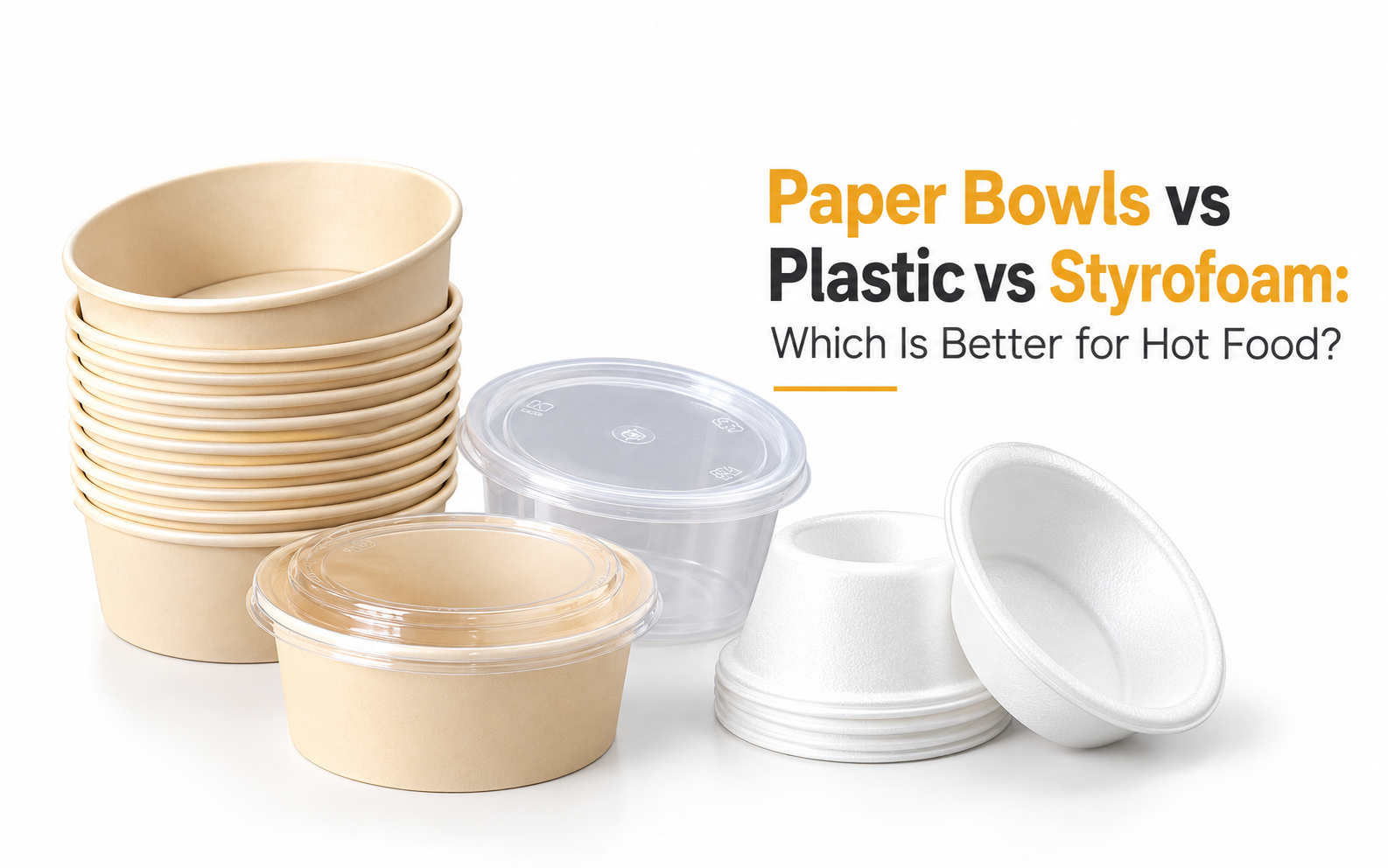
For most hot food lines, a paper bowl with a food-safe aqueous or PE coating holds up better than plastic or styrofoam on heat performance and compostability. That holds true when the coating and certification actually match your use case, not as a blanket rule. Styrofoam costs less upfront but faces growing bans. Plastic holds up to moderate heat but carries its own microplastic concerns. The right answer for your business still depends on your SKU, your regulatory footprint, and what your supplier can actually document, not a single universal ranking.
At a glance: the 3 materials compared
Here’s how the three materials stack up on the factors that actually matter for your hot-food program. These are published, general-case figures for the material categories, not a single tested result for every product on the market. Confirm the exact numbers against your own supplier’s documentation before you order.
| Material | Heat limit | Cost per unit | Compostable | Regulatory risk | Best use |
|---|---|---|---|---|---|
| Paper (aqueous/PE/PLA) | Up to ~95°C for XINNENG’s water-based paper bowl line specifically, varies by supplier and coating | ~0.062 per published wholesale estimates | Yes, when certified for the specific product | Low, several jurisdictions favor it | Hot soup, sides, takeout |
| Plastic (PP) | ~82°C continuous, softens near 110°C, general PP material data | ~0.09 at volume, varies by grade | Rarely | Rising, several PFAS and EPR rules | Cold prep, reusable-style service |
| Styrofoam (EPS) | Melts and deforms well below boiling | Lowest upfront cost | No | High, multiple bans taking effect in 2026 | Shrinking use case |
Your actual order volume, region, menu, and the specific coating your supplier uses all change these numbers. Treat this table as your starting point for a real supplier conversation, not a substitute for your own factory quote and test report.
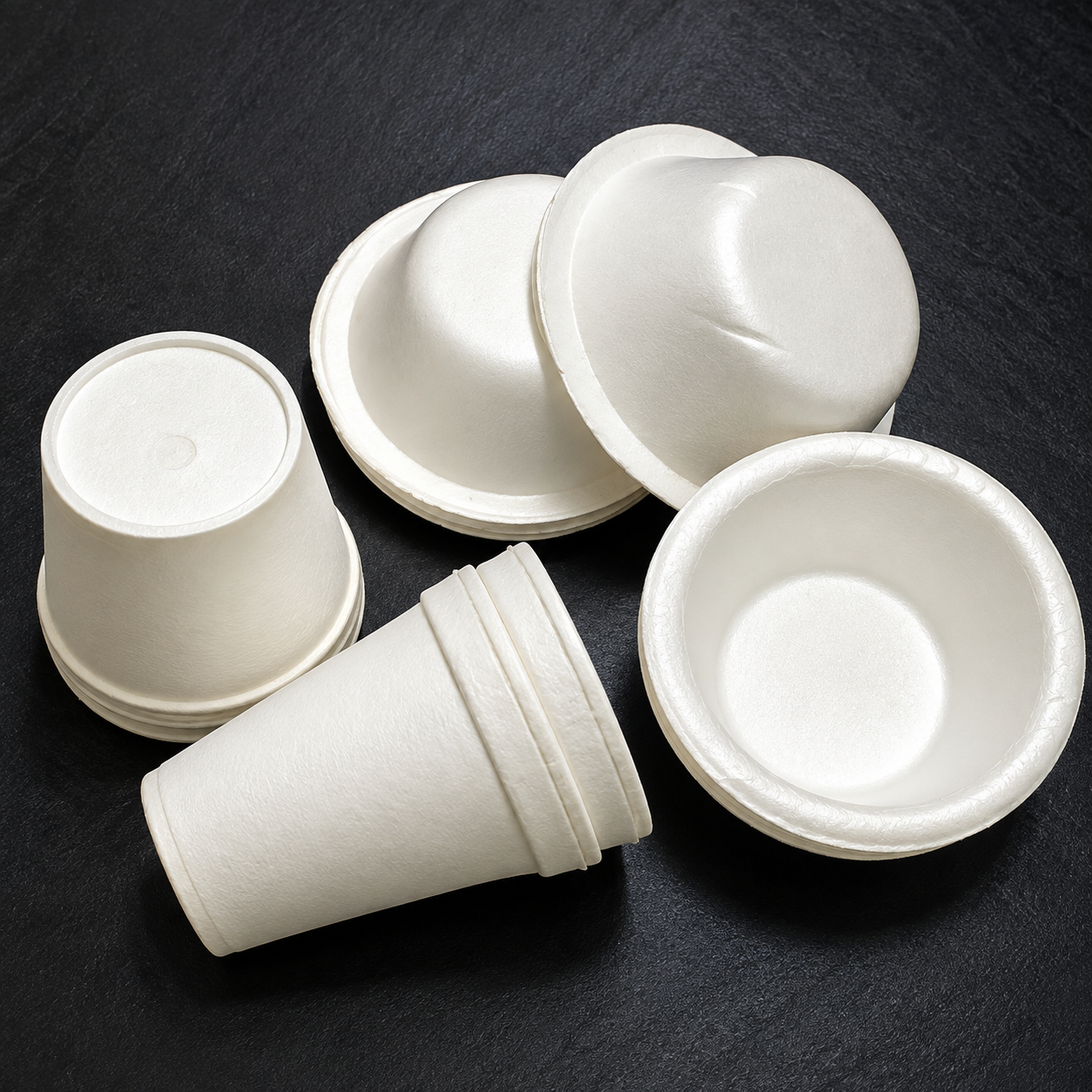
Heat performance for hot food
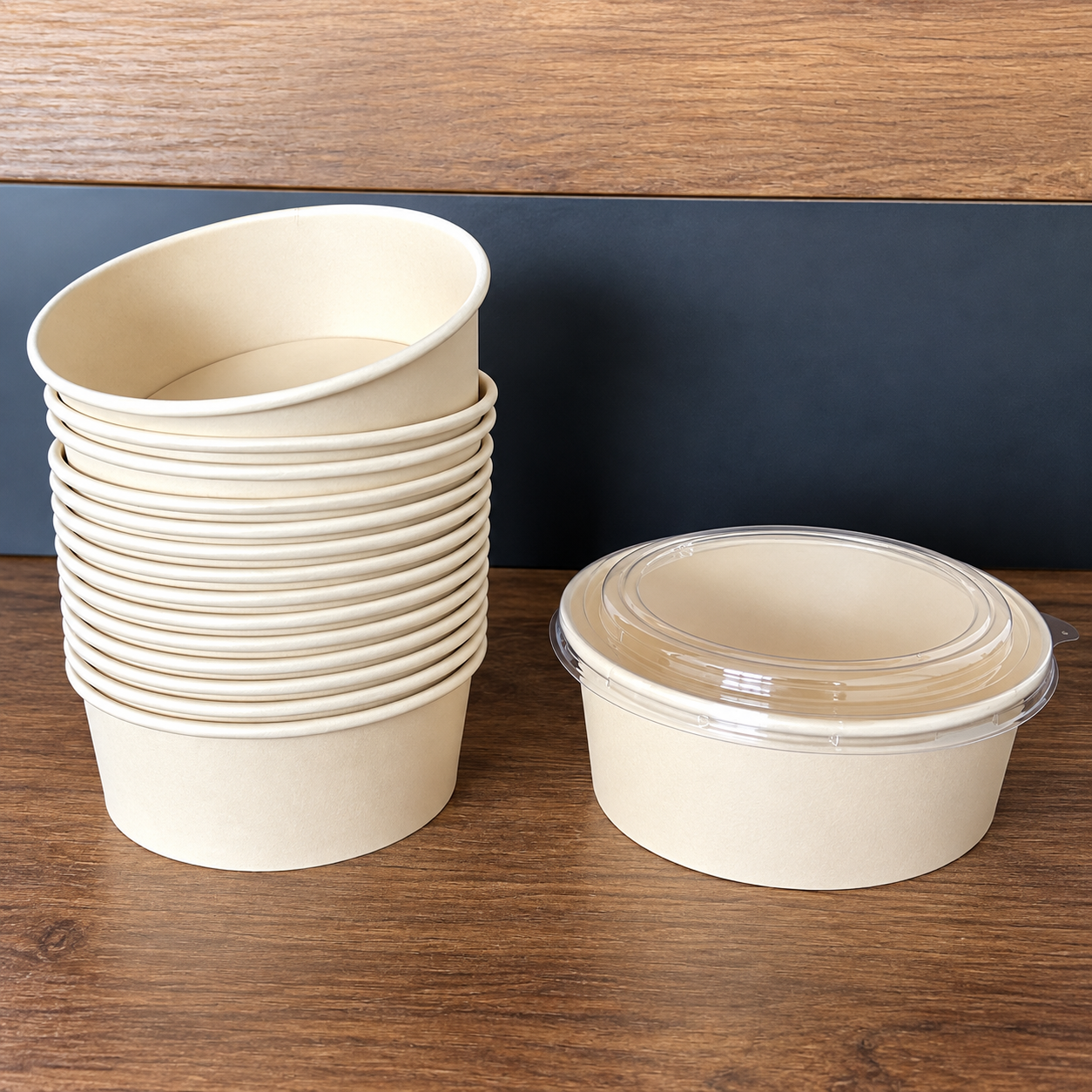
Paper: built for the job, when the coating is right
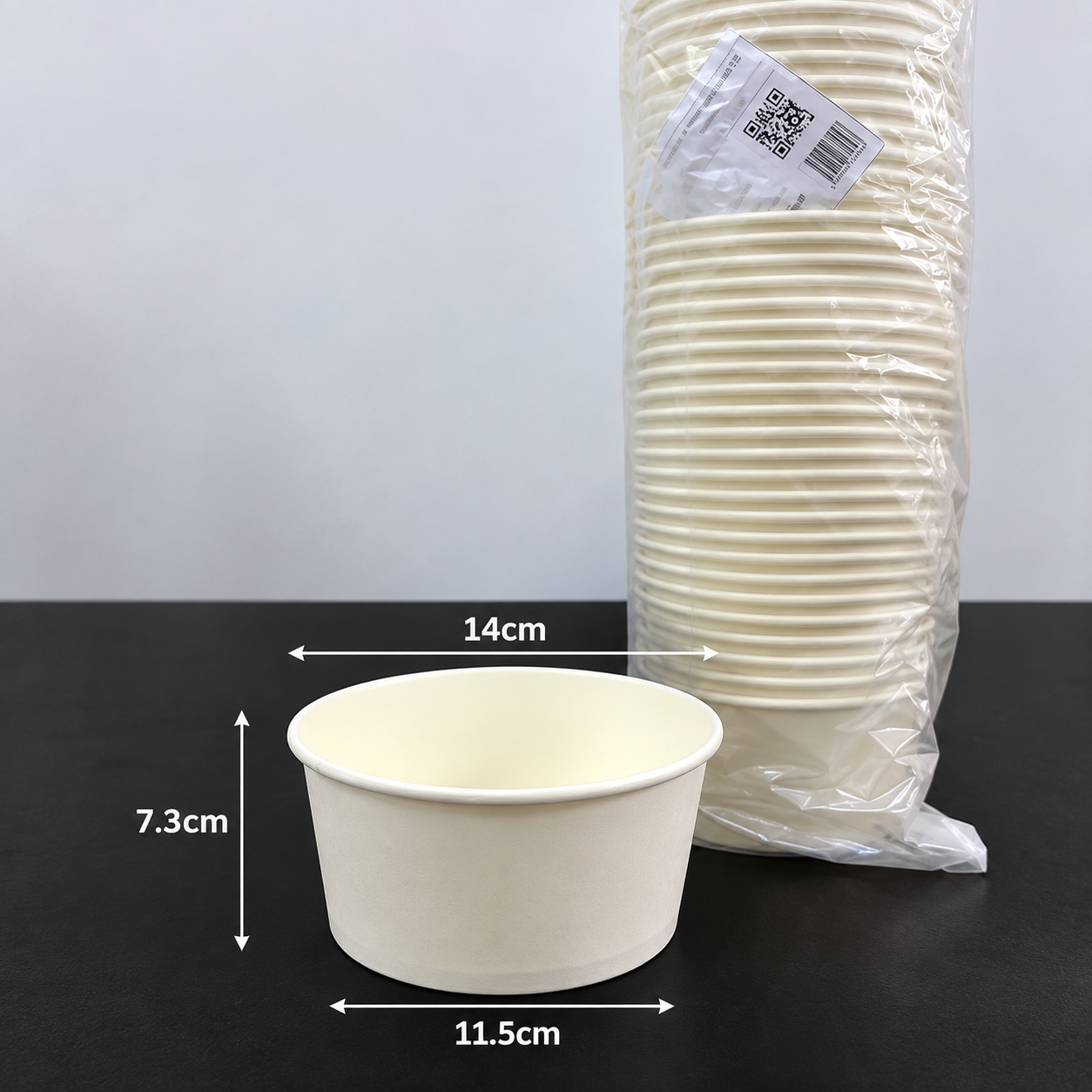
XINNENG’s own paper bowl line uses a PE or water-based coating. It’s rated for heat tolerance up to 95°C, by the company’s own specification for that specific product line. That figure doesn’t automatically apply to every paper bowl on the market. Ask your own supplier for the tested rating on your exact SKU.
Its deeper paper soup containers go further still, rated from -20°C to 100°C for full liquid portions, not just sides. That range is specific to that product line too. A PLA-lined bowl softens closer to 55 to 60°C and isn’t built for the same job, regardless of supplier.
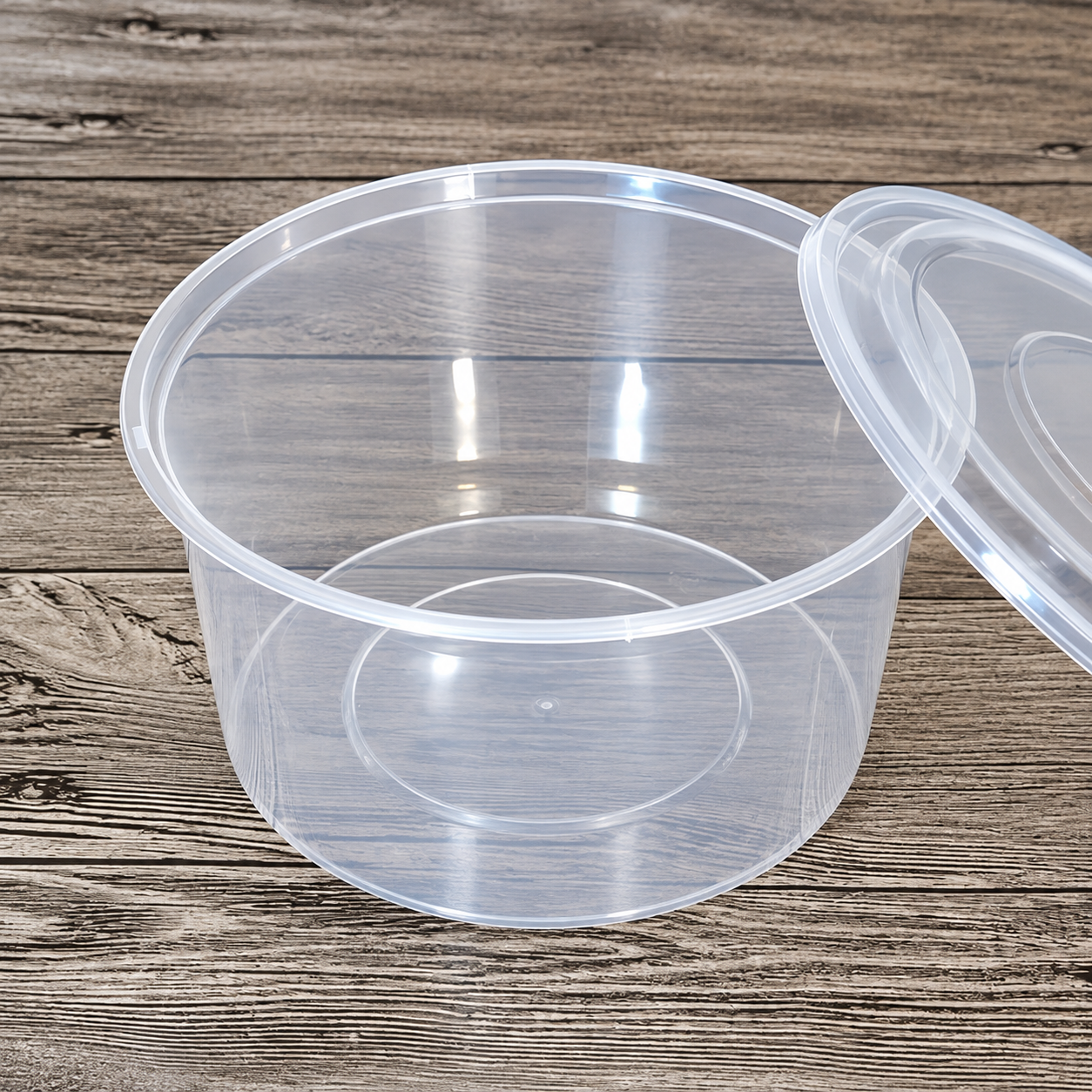
Plastic: fine for moderate heat, not for sustained high heat
Polypropylene (PP), the plastic most food bowls use, has a continuous-use ceiling around 82°C by general material specification. It starts softening near 110°C, with a true melting point around 160°C. These are published material figures for PP generally, not a test result for any single bowl, so confirm your supplier’s actual rated range.
That covers a lot of your warm food, but it’s not rated for prolonged high-heat holding or oven use. Published research on heated plastics more broadly flags microplastic shedding as a growing concern. The data specific to a single hot-food use in a PP bowl is less settled than the styrofoam research below, so treat this as a developing area rather than a closed case.
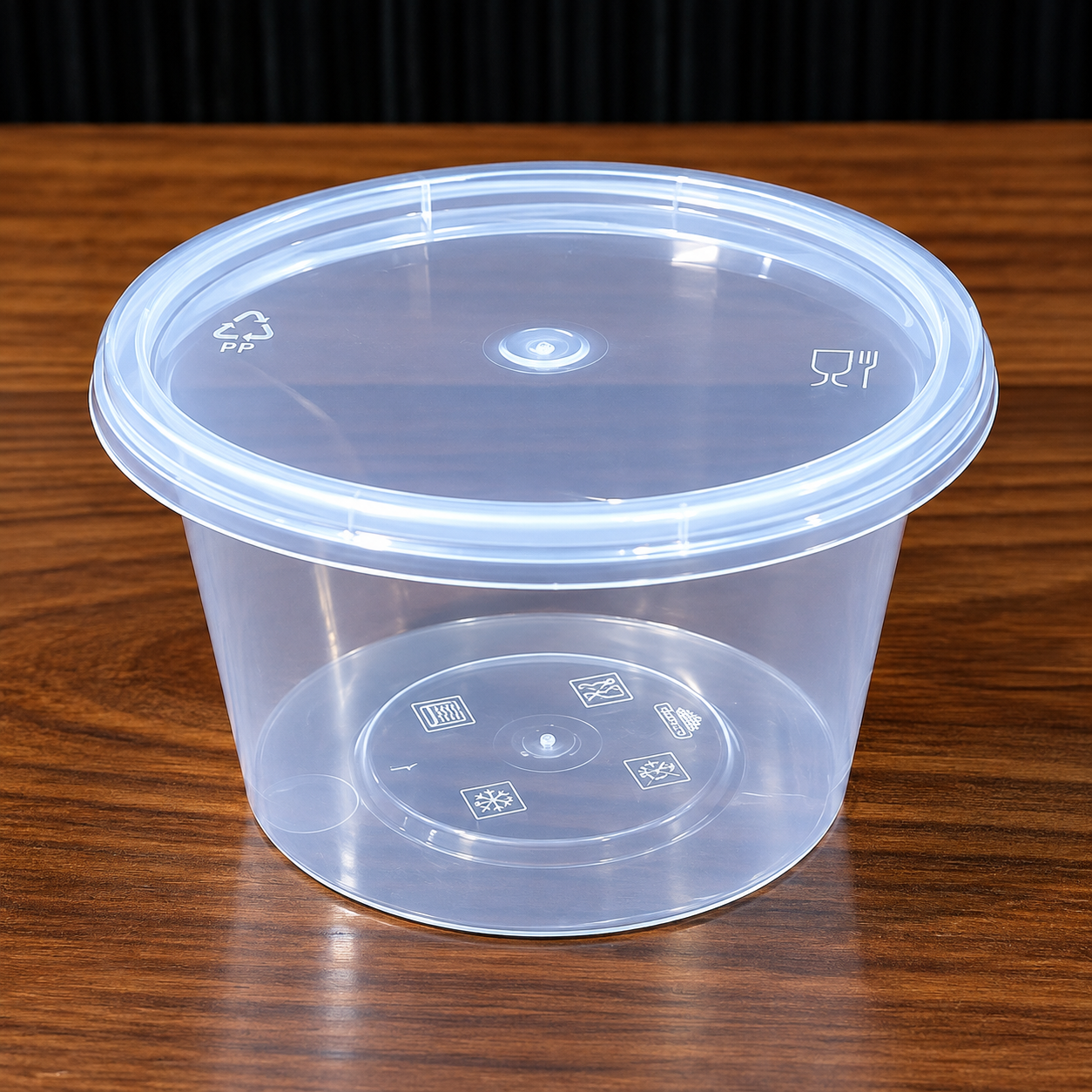
Styrofoam: the real heat problem
Expanded polystyrene (EPS), the material behind styrofoam, has the weakest hot-food profile of the three. Published health research links chronic styrene exposure to cancer risk, memory effects, and nervous-system effects, mostly documented in occupational settings rather than single consumer meals. Your food-contact concern is narrower but real. Heat and oily food can cause styrene to migrate out of the foam and into what your customer is eating. That’s on top of the material’s own tendency to soften once a hot, oily dish sits in it for a while.
Cost and total value at volume
Styrofoam usually wins your sticker-price comparison alone. Published wholesale estimates put compostable paper bowls around $0.045 to $0.062 per unit. A comparable plastic bowl runs roughly $0.035, a gap of about 30 to 50 percent at the unit level by these published figures. Conventional PP plastic ranges more widely, from around $0.04 up to $0.86 per unit depending on grade and volume tier. These ranges come from published industry sources rather than one standardized study, so treat them as directional, not a quote for your specific order.
That per-unit gap isn’t your whole cost picture. One published case study found switching to eco tableware cut one food business’s waste-disposal costs by as much as 61 percent. That’s a result specific to that one conversion, not a guaranteed outcome for yours. Landfill and waste-hauling fees still tend to hit plastic and foam harder in regulated regions, and a ban can add fines on top of that (see the next section). Your real cost comparison should rest on your own total cost of ownership, not the published per-unit price alone.
Ask XINNENG, or any supplier, for factory-direct pricing on your actual bowl size and coating. Don’t compare a factory quote against a retail plastic price, since the two numbers aren’t measuring the same thing. A same-spec, same-quantity factory quote is the number that actually matters for your decision, not a general published range.
Regulation and bans in 2026
Foam bans keep expanding on you, and the rules below reflect their status as written at the time of this article, not a permanent state of law. New York’s foam ban widened on January 1, 2026, to cover cold storage containers alongside its existing foodservice restrictions. Virginia’s statewide foam ban is set to reach full effect on July 1, 2026, covering food vendors under the law’s specific scope and exceptions.
PFAS rules are moving on a similar timeline. Illinois banned the sale of food packaging with intentionally added PFAS starting January 1, 2026, covering coatings, inks, and closures, not just the base material. Maine’s rule against PFAS in plant-fiber food packaging takes effect May 25, 2026, currently applying only to manufacturers with national sales above $1 billion, so check whether it binds your specific supplier.
If your business operates in or ships into any of these states, confirm the current rule text first. Check your own exposure with your compliance team or import counsel before you treat any of this as settled. A paper bowl with a documented PFAS-free coating can help position you ahead of both the foam bans and the PFAS rules. Neither this article nor any single product claim should stand in for your own legal review, though.
Compostability and brand image
A genuine compostability claim carries real weight with sustainability-focused buyers and customers. One widely cited survey found 74 percent of consumers willing to pay at least 5 percent more for sustainable packaging. Some brands separately report a 7 percent lift in average order value after switching. Both figures come from separate published sources rather than a single controlled study, so treat them as a possible business factor to investigate for your own market, not a guaranteed return.
The catch is that “compostable” isn’t self-certifying. BPI certification, built on ASTM D6868 for products that combine paper or fiber with a biodegradable coating, is the benchmark most US composting facilities and major retailers actually check against. OK Compost, run by TÜV Austria on the EN 13432 standard, matters more if you sell into Europe, the UK, or Australia. Its HOME tier tests a tougher backyard-composting bar than the industrial-only BPI standard, and the two aren’t interchangeable claims.
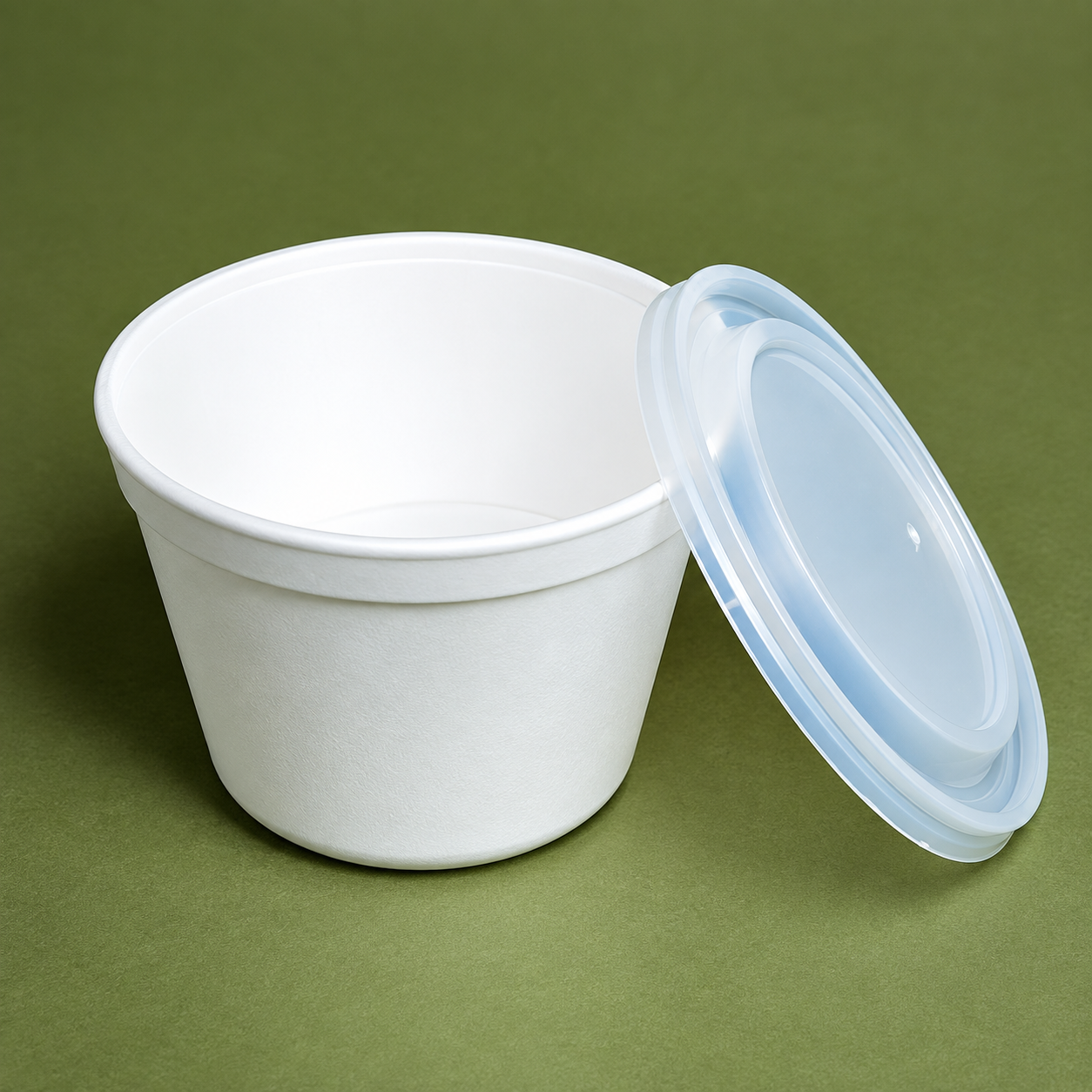
Don’t accept a general “compostable” label at face value. Ask for a certificate tied to the exact product model, size, and print run you’re ordering, since a coating or print change can take a bowl outside its original certification.
XINNENG describes its own plastic-free paper bowl line as home and garden compostable within 12 weeks, by the company’s own site. Treat that as a claim worth verifying against a current certificate for your exact product, rather than a general assurance that applies to every size or print option.
Which should your operation choose?
If you run a QSR or fast-casual counter, your volume and speed matter most. A PE or water-based paper bowl, tested to your actual temperature range, handles your hot-food line without the heat ceiling plastic carries. You also avoid foam’s growing ban exposure in the states listed above.
If you cater events or run a buffet line, your food sits longer at serving temperature. Paper’s higher heat tolerance and your guests’ own expectations around sustainability both point toward a coated paper bowl, as long as your supplier’s tested range actually covers your serving time.
If you supply an institution, school, or hospital, procurement policy increasingly screens out foam and flagged PFAS materials before price even enters the conversation. Confirm your paper supplier’s PFAS-free documentation and its exact scope before you bid.
If you run meal-prep or delivery, your bowl travels further and sits longer before your customer opens it. A deeper paper soup container, rated for sustained heat, often fits your full liquid portion better than a shallow bowl built for sides.
Across all four, a PFAS-free aqueous or PE-coated paper bowl tends to combine heat performance, compostability, and regulatory headroom better than an uncertified alternative, as long as a certificate and test report back it up. Your own supplier’s documentation for your exact SKU should still decide the final call.
XINNENG’s paper bowl advantage
XINNENG’s paper bowl line carries specific, stated specs rather than a single marketing claim. Ask for the underlying report before treating any of them as your own compliance evidence. Its 8 to 26 oz bowls use PE or water-based coating rated to 95°C, with paper weight running from 250 to 380gsm depending on size. Its deeper paper soup containers extend that range further, built as matched bucket-and-lid sets rated from -20°C to 100°C for full liquid portions.
XINNENG states that it holds ISO 22000 food safety management certification and National High-Tech Enterprise status, backed by an in-house lab and annual third-party testing. ISO 22000 covers food safety management, a separate evidence layer from heat performance or compostability certification, so don’t treat it as proof of either. Ask XINNENG for the specific food-contact compliance report against FDA and EU 10/2011 requirements, with its scope and date, rather than accepting “available on request” as the final answer. That matters directly if your business sits inside any of the state rules covered above.
Custom OEM printing accepts your AI, PDF, or EPS files, with fonts converted to outlines. Most custom-printed orders start at a 10,000-piece MOQ. Same-artwork runs across different sizes often combine to reach it, and blank, unprinted stock carries a lower minimum. A free digital e-proof confirms your layout first. A physical mock-up sample runs about $14 and roughly 3 days. An on-press sample using your real print material runs about $70, refundable against your bulk order.
Relevant XINNENG paper bowl category
Use the XINNENG paper bowls category as the natural next step from comparison to sample request, then confirm the exact coating, documentation and tested range for your order.
FAQ
Are paper bowls better than plastic for your hot food overall?
For hot food specifically, a properly coated and certified paper bowl often holds higher sustained heat than PP plastic. It also avoids some of the microplastic and disposal concerns plastic carries at your scale. Confirm the specific coating and test rating before treating this as settled for your own order.
Are styrofoam bowls actually unsafe for hot food?
The concern is specific, not absolute. Heat and oily food can cause styrene to migrate from the foam into what you’re serving, and several states are banning foam foodservice ware partly for this reason, alongside disposal concerns.
Is a plastic bowl ever the right choice over paper or styrofoam?
Sometimes. PP plastic can make sense for your cold prep or a reusable-style program where sustained high heat isn’t part of your use case.
How do you verify a “compostable” claim on a paper bowl before you order?
Ask for a BPI or OK Compost certificate tied to the exact product model, size, and print run, not a general statement. A coating or print change can move a bowl outside its original certification.
Will a styrofoam ban actually affect your business if you’re not in New York or Virginia?
Possibly, since more states are adding similar rules each year, with their own scope and exceptions. Check your specific state and any state you ship into with your own compliance team, not just where your kitchen sits today.
What’s the real cost difference between paper and plastic bowls at your volume?
Published figures put paper at roughly a 30 to 50 percent premium per unit over plastic, though these ranges vary by source and aren’t a quote. A same-spec, same-quantity factory price, plus your waste-disposal fees and ban risk, gives you a more accurate picture than sticker price alone.
Compare your current bowl against a PFAS-free paper alternative
Request a free sample set of XINNENG’s aqueous-coated paper bowls against whatever plastic or styrofoam bowl you’re using now. Bring your exact capacity, your typical fill temperature, and your state or export market. That way your quote reflects your real order, not a generic one.
That comparison, backed by your own test and your supplier’s actual documentation, tells you more about your true switch cost than any published figure can on its own.