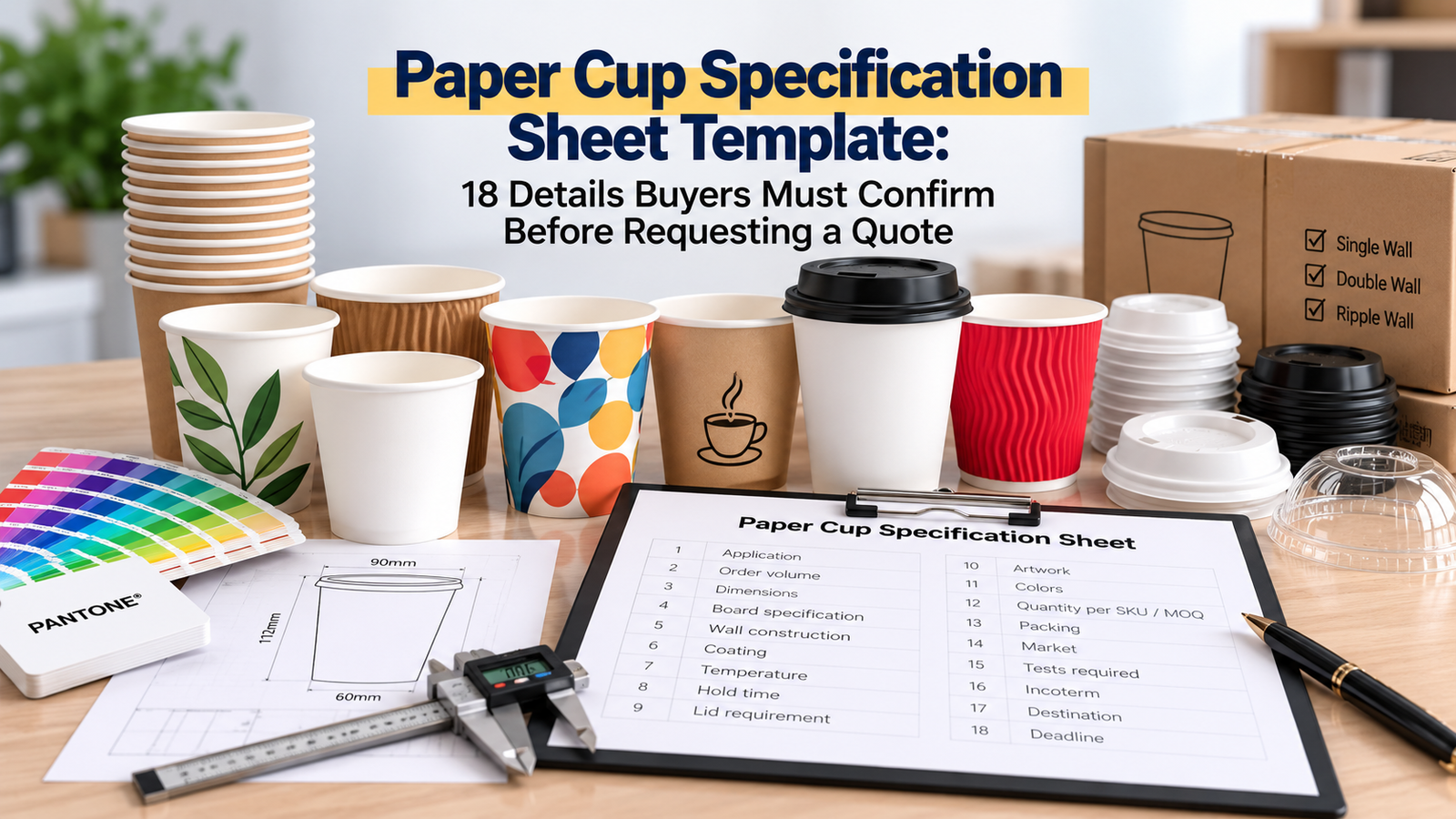
You get an accurate paper cup quote by submitting 18 specific details upfront, not by asking “how much for a custom cup?” A quote request missing even a few of these forces back-and-forth that delays your order, and in many cases produces a quote based on assumptions rather than your actual requirements. This template gives you every field to fill in before you request a quote.
The problem you’re actually solving
You send a supplier a quick inquiry — cup size, rough quantity, and a logo file. You get a quote back, but it doesn’t specify wall construction, coating type, or lead time, and the price seems to shift once you clarify details you assumed were already covered.
This happens because a paper cup quote depends on far more than size and quantity. Coating type, wall construction, printing complexity, destination market and packing requirements all affect price and lead time independently. A supplier working from an incomplete inquiry either quotes their default assumptions or has to come back with questions — either way, you lose time you didn’t need to lose.
The 18 details, explained
1. Application. What beverage or food is this cup for, and is it hot, cold, or both? This affects coating and wall-construction recommendations from the start.
2. Order volume. Your expected quantity, both for this order and your rough annual forecast if you have one. Volume affects which print process and packing approach makes economic sense.
3. Dimensions. Your target capacity and, if you already have a reference cup, its rim diameter and height. Capacity alone doesn’t fully specify a cup — two cups sharing a capacity label can have different rim diameters, which matters for lid fit.
4. Board specification. Paperboard weight (GSM) if you have a preference or an existing benchmark cup to match. If you don’t know this, we can recommend a spec based on your application.
5. Wall construction. Single wall, double wall, or ripple wall. This is a genuine trade-off between cost, comfort and insulation, worth deciding deliberately rather than defaulting.
6. Coating. PE, PLA, aqueous, or no preference. Your choice here affects both performance and any compostability or recyclability claim you might want to make later — flag any planned environmental claim now, since it affects which coating and certification path fits.
7. Temperature. Your beverage’s actual serving temperature, not just “hot” or “cold” generally. This affects coating and construction recommendations more precisely than a broad category does.
8. Hold time. How long the filled cup typically sits before your customer finishes it. This matters for leak and softening resistance, and it’s a detail suppliers often don’t ask for but genuinely need.
9. Lid requirement. Whether you need a matched lid, and if so, what type (flat or dome) and material (PP or PET) you’re expecting, or whether you want a recommendation based on your cup’s rim diameter.
10. Artwork. Whether you have print-ready vector artwork (AI, PDF, EPS) or need design support to prepare it. This affects both quote accuracy and lead time.
11. Colors. Your total color count and whether you need Pantone color matching. More colors generally means more setup complexity, so confirming this upfront avoids a quote revision later.
12. Quantity per SKU / MOQ. If you’re ordering multiple designs or sizes, specify quantity per individual SKU, not just a combined total — MOQ and setup cost are usually assessed per SKU, not per overall order.
13. Packing. Your preferred carton quantity per case, and whether you need retail-ready packaging, bulk cartons, or a specific labeling format on the outer case.
14. Market. Your destination country or region. This affects which compliance requirements apply — food-contact rules, environmental marking, and language requirements can all vary by market.
15. Tests required. Any specific test reports or documentation you need before or with your order — food-contact compliance documentation, leak testing results, or certification proof, for example.
16. Incoterm. Your preferred shipping term under Incoterms 2020 — EXW, FOB, CIF, DDP, or another rule from the current 11-term list. This determines who’s responsible for which costs and risks at each stage of shipping.
17. Destination. Your specific delivery port or address, not just the country — this affects freight routing and landed-cost calculation.
18. Deadline. Your target in-hands date. Share this upfront so we can confirm whether your timeline is realistic given your specification, rather than finding out midway through production.
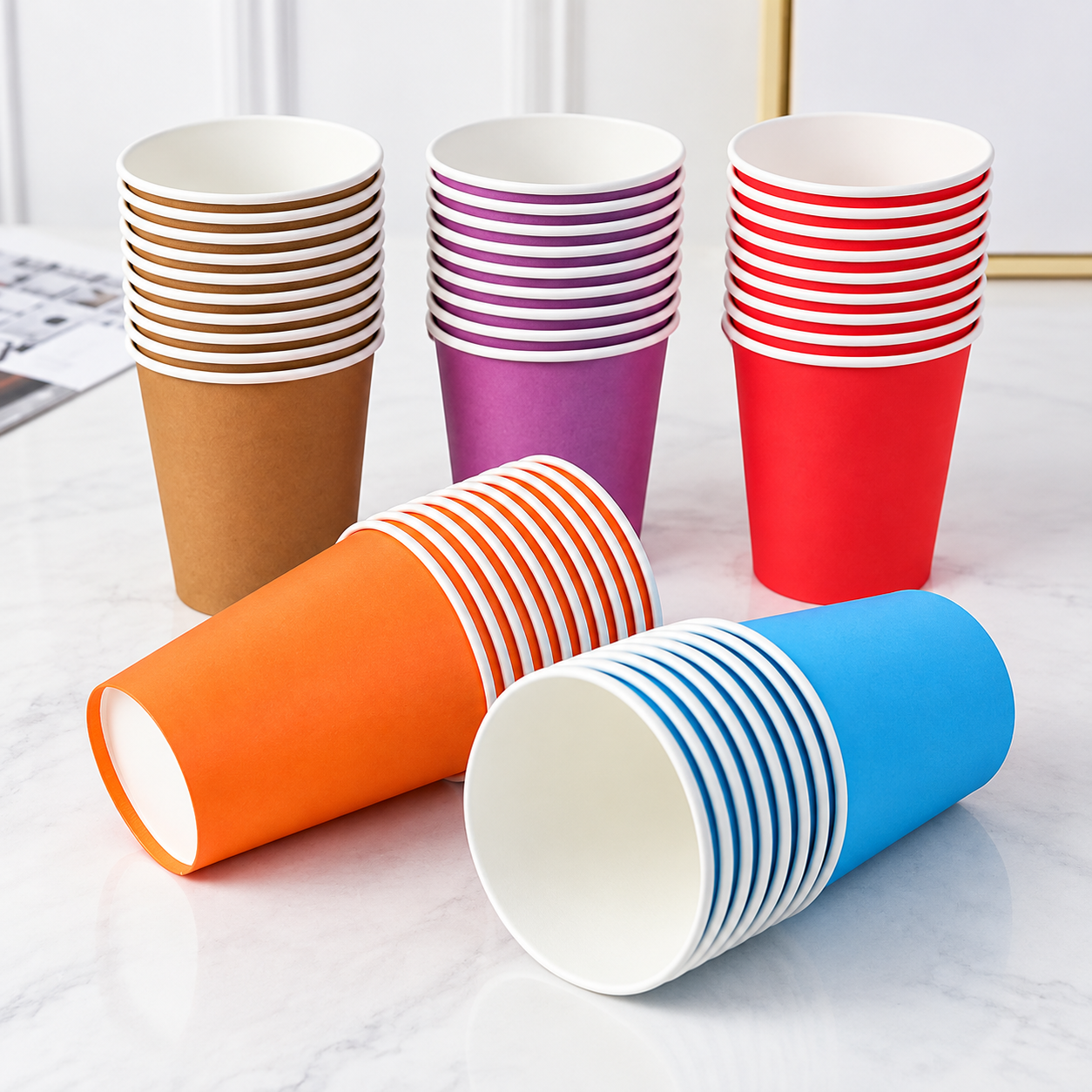

The RFQ template
Use the attached editable spreadsheet to fill in all 18 fields before you submit your inquiry. It includes a worked example row showing a completed specification, so you can see the level of detail we’re asking for.
| No. | Specification Field | What Buyer Should Provide |
|---|---|---|
| 1 | Application | Beverage or food use; hot, cold, or both |
| 2 | Order volume | Current quantity and annual forecast if available |
| 3 | Dimensions | Capacity, rim diameter and height |
| 4 | Board specification | Preferred GSM or benchmark cup to match |
| 5 | Wall construction | Single, double or ripple wall |
| 6 | Coating | PE, PLA, aqueous, or no preference |
| 7 | Temperature | Actual serving temperature |
| 8 | Hold time | Expected filled-cup use duration |
| 9 | Lid requirement | Lid needed, type and material |
| 10 | Artwork | AI/PDF/EPS or design support required |
| 11 | Colors | Color count and Pantone requirement |
| 12 | Quantity per SKU / MOQ | Quantity for each design or size |
| 13 | Packing | Carton quantity and packaging format |
| 14 | Market | Destination country or region |
| 15 | Tests required | Required reports or documentation |
| 16 | Incoterm | EXW, FOB, CIF, DDP or another applicable term |
| 17 | Destination | Delivery port or address |
| 18 | Deadline | Target in-hands date |
What happens after you submit
A complete specification lets us quote accurately on the first pass, instead of coming back with clarifying questions. It also lets us flag early if any part of your specification needs a trade-off decision — for example, if your target coating doesn’t support a compostability claim you’re planning to make in your target market.
Where this guidance doesn’t generalize
Not every field will apply to every order — a stock, unprinted cup order doesn’t need the same artwork detail as a custom-printed run. Fill in what’s relevant to your specific request, and mark fields as “not applicable” rather than leaving them blank, so we know you considered them rather than missed them.
FAQ
Do I need to fill in every field before I can get a quote?
A complete submission gets you the most accurate first-pass quote. If you’re missing information on a few fields, submit what you have — we’ll follow up on the rest, but expect a preliminary rather than final quote in that case.
What if I don’t know my exact coating or wall-construction preference?
That’s fine — tell us your application, temperature and hold time, and we can recommend an option based on those details.
Does this template work for a first-time order and a reorder?
Yes, though a reorder can reference your existing SKU and prior specification instead of restating every field from scratch.
Why does the destination market affect my quote?
Different markets carry different compliance requirements — food-contact rules, environmental marking obligations, and language requirements can all vary, and some of these affect artwork or documentation needs.
Download and submit the RFQ
Download the specification template, fill in your 18 details, and send it back to us through our Contact Us page. We’ll return a quote built on your actual specification, not a generic estimate.