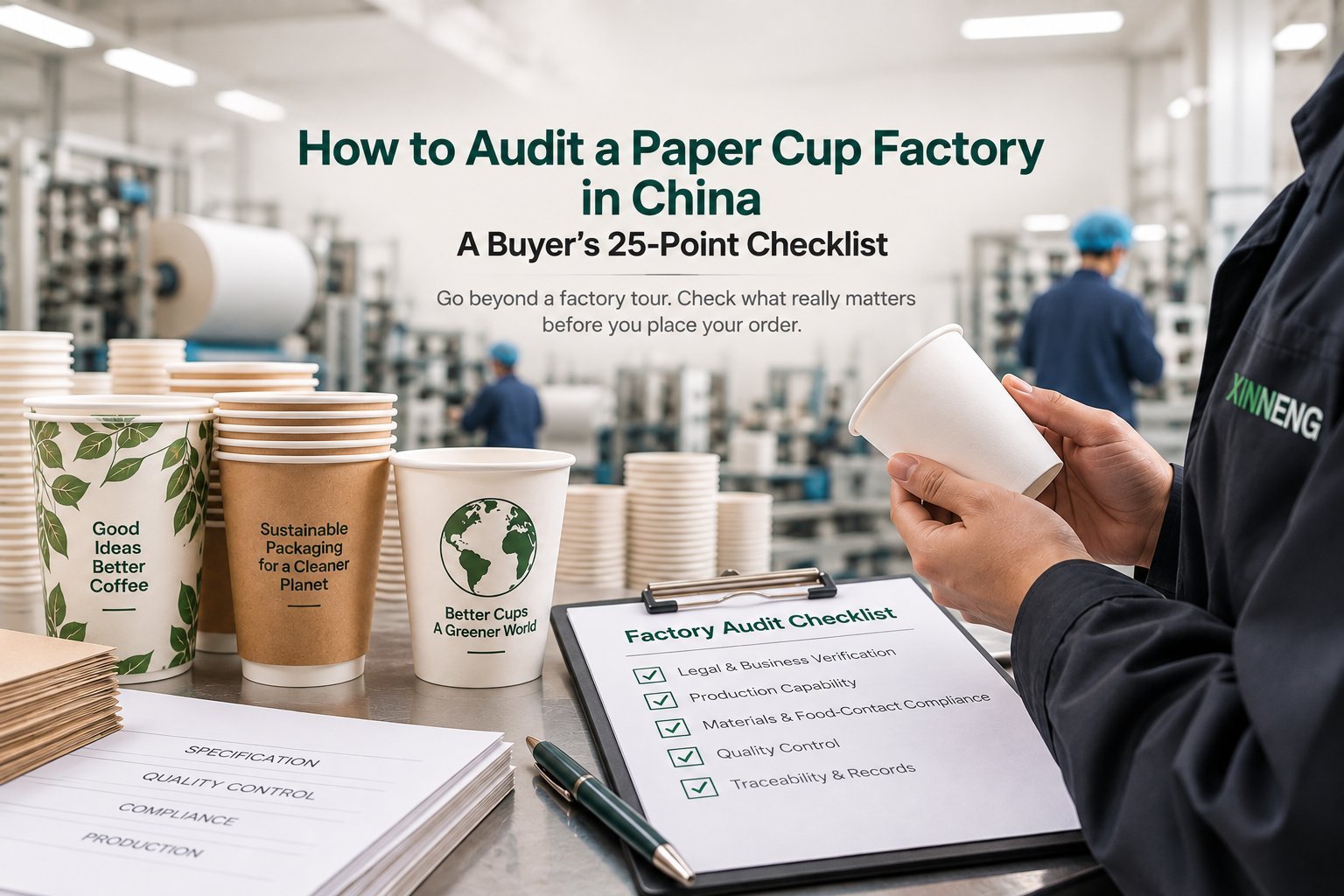
A clean showroom and a friendly sales team tell you almost nothing about whether a factory can actually run your order. You need to check legal standing, real production capacity, material compliance, quality control infrastructure, and record-keeping, in that order. This 25-point checklist gives you specific items to verify, not a vague impression to trust.
What a factory tour doesn’t show you
You walk the floor. Machines are running. Staff look busy. Everything seems fine.
None of that confirms the factory can actually produce your cup, at your volume, to your spec. A well-staged tour and a working factory are not the same thing, and you won’t tell them apart just by watching from the visitor’s path.
The gap between “looks fine” and “actually qualified” shows up later, usually after you’ve paid a deposit. Checking the specific items below, before you commit, catches most of that gap early.
The 25-point checklist
Legal and business verification
1. Business license is current and matches your contract. Ask to see the original, not a photocopy, and confirm the company name matches what’s on your purchase order.
2. Unified Social Credit Code checks out. This 18-character code is verifiable through China’s official business registry. A mismatch or a code that doesn’t resolve is a real warning sign for you.
3. Manufacturing scope explicitly covers paper cups or food packaging. Some registered businesses only trade or broker. Confirm your supplier is actually licensed to manufacture what you’re ordering.
4. A valid export license covers your destination market. Ask which countries your factory currently exports to, and confirm your market is one of them.
5. Payment goes to a corporate account, not a personal one. A request to wire your deposit to an individual’s bank account is a serious red flag you shouldn’t ignore.
Facility and production capability
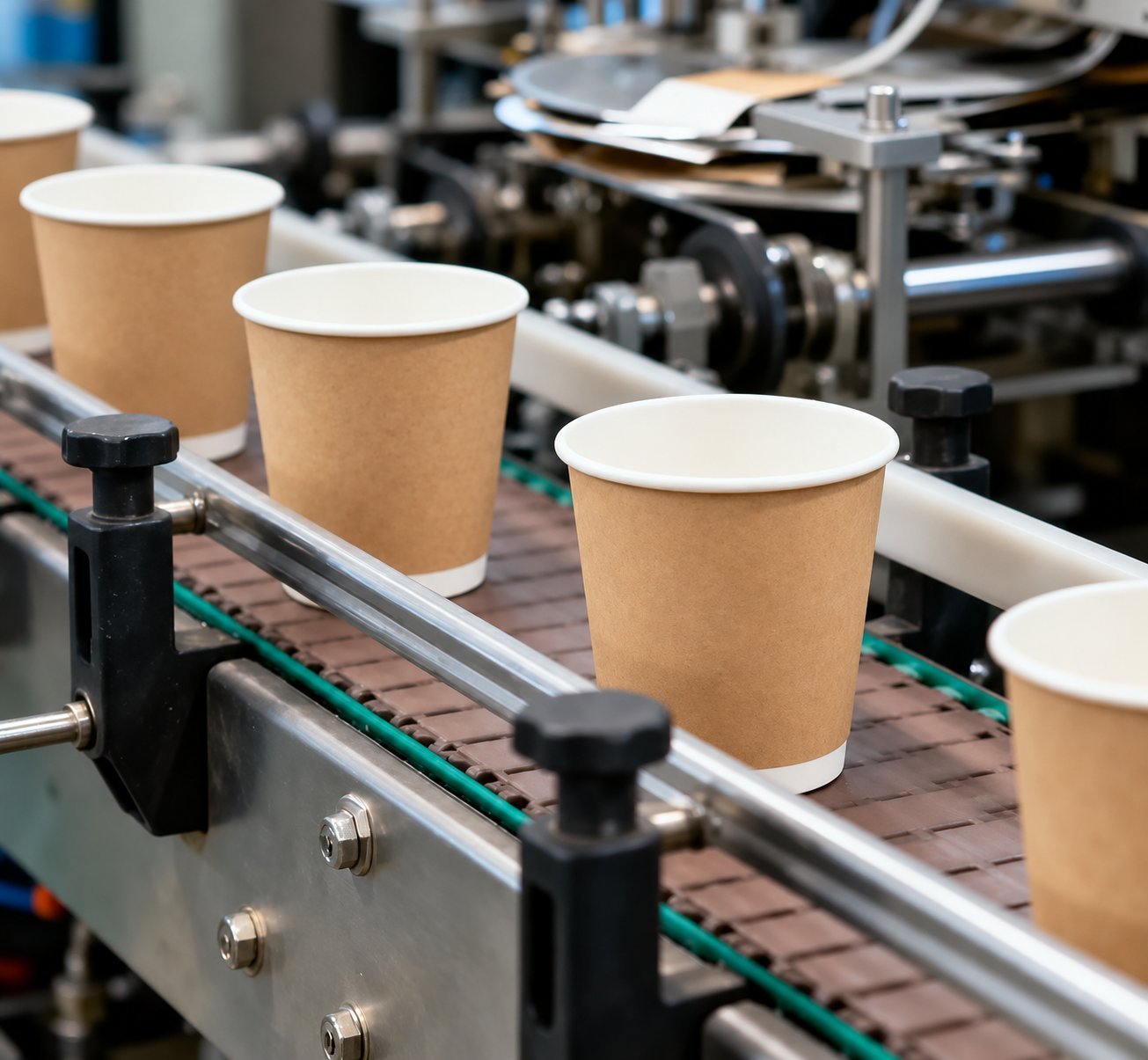
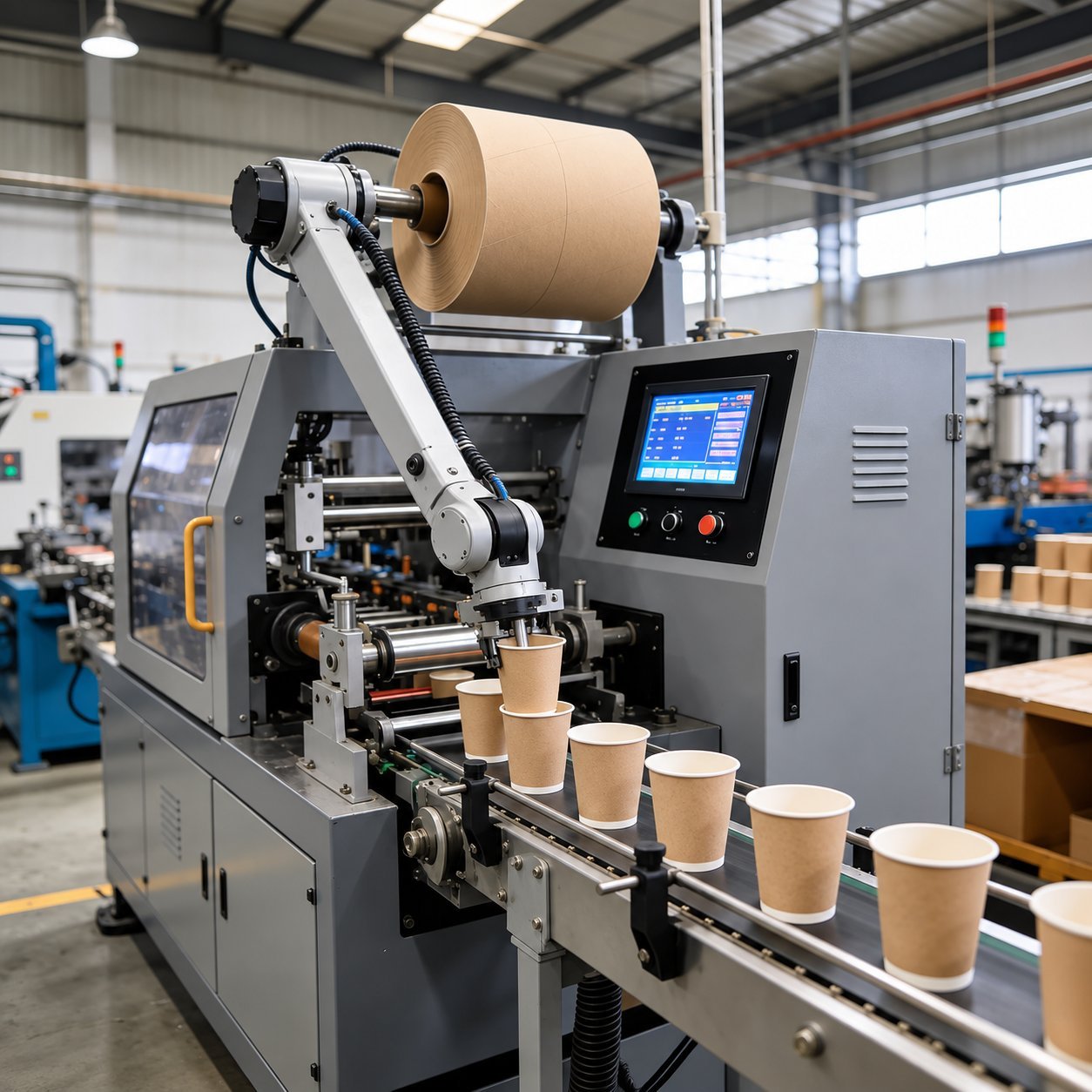
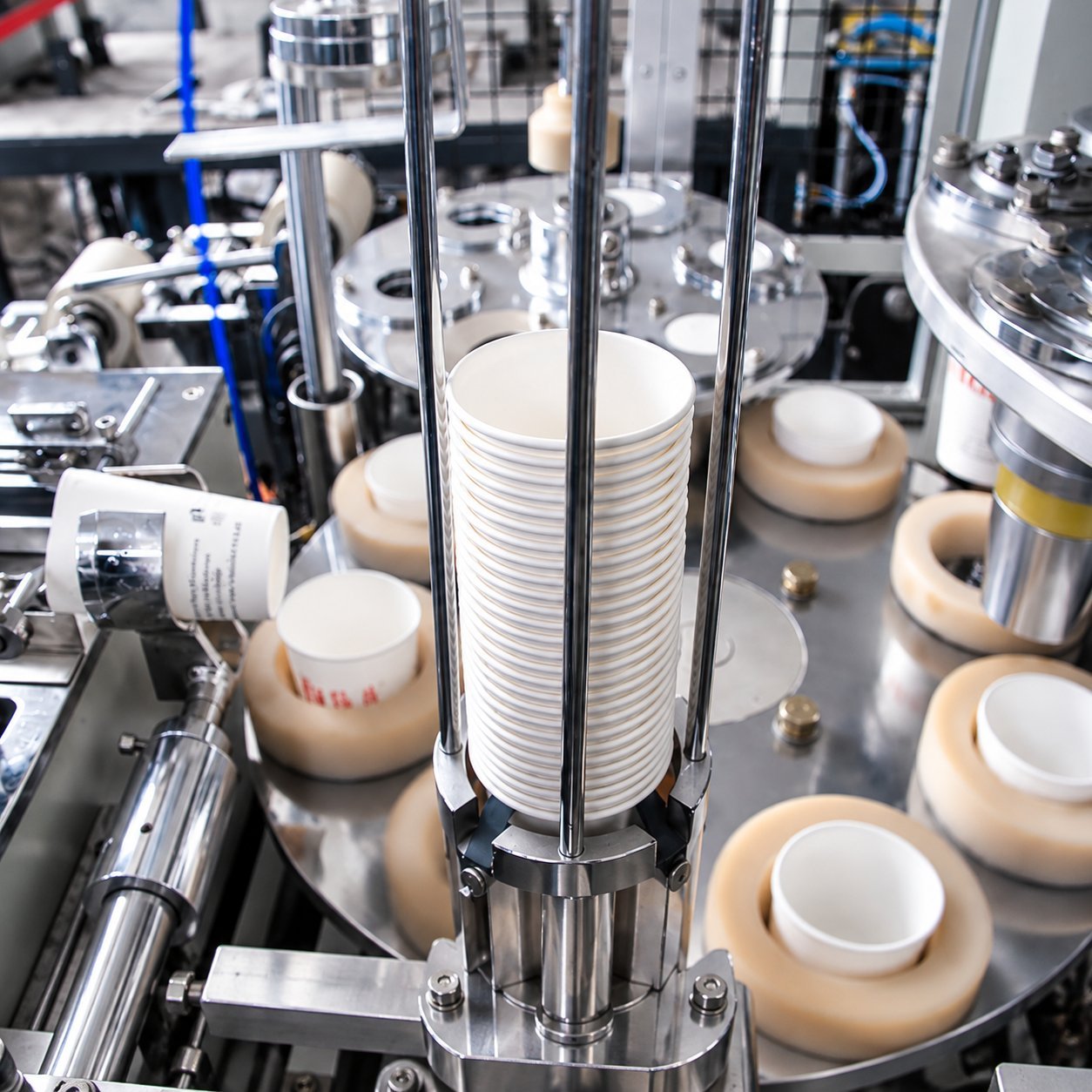
6. Floor space and equipment match the capacity you were quoted. A factory claiming a large monthly output should have visible machine count and floor space to support it.
7. Machinery is owned, not rented for your visit. Ask how long the equipment has been on-site, and look for wear consistent with real, ongoing use.
8. Actual headcount on the floor matches what you were told. A quiet floor on your visit day, when you were promised a large workforce, deserves a direct question.
9. You know what percentage of the work gets subcontracted. Subcontracting itself isn’t disqualifying, but you need to know which parts of your cup are made where, and by whom.
10. Raw material inventory on-site matches your order’s needs. A factory with no board stock for your spec, right before your production date, is a scheduling risk you should catch early.
Materials and food-contact compliance
11. Base paperboard origin and pulp type are documented. Ask your supplier to name the paperboard source, not just describe it as “food grade.”
12. Purchasing records and technical data sheets exist for inks, glues, and coatings. These documents, not a verbal assurance, are what actually proves your cup’s food-contact materials are tracked.
13. Coating type and food-contact declaration match your destination market’s rules. A declaration written for one market doesn’t automatically satisfy another market’s requirements.
14. Compliance declarations are backed by real testing data. A signed statement with no underlying test report tells you much less than it appears to.
15. A change-notification procedure exists for material or supplier substitutions. You want written confirmation that a coating or board switch reaches you before it reaches your cups, not after.
Quality control infrastructure
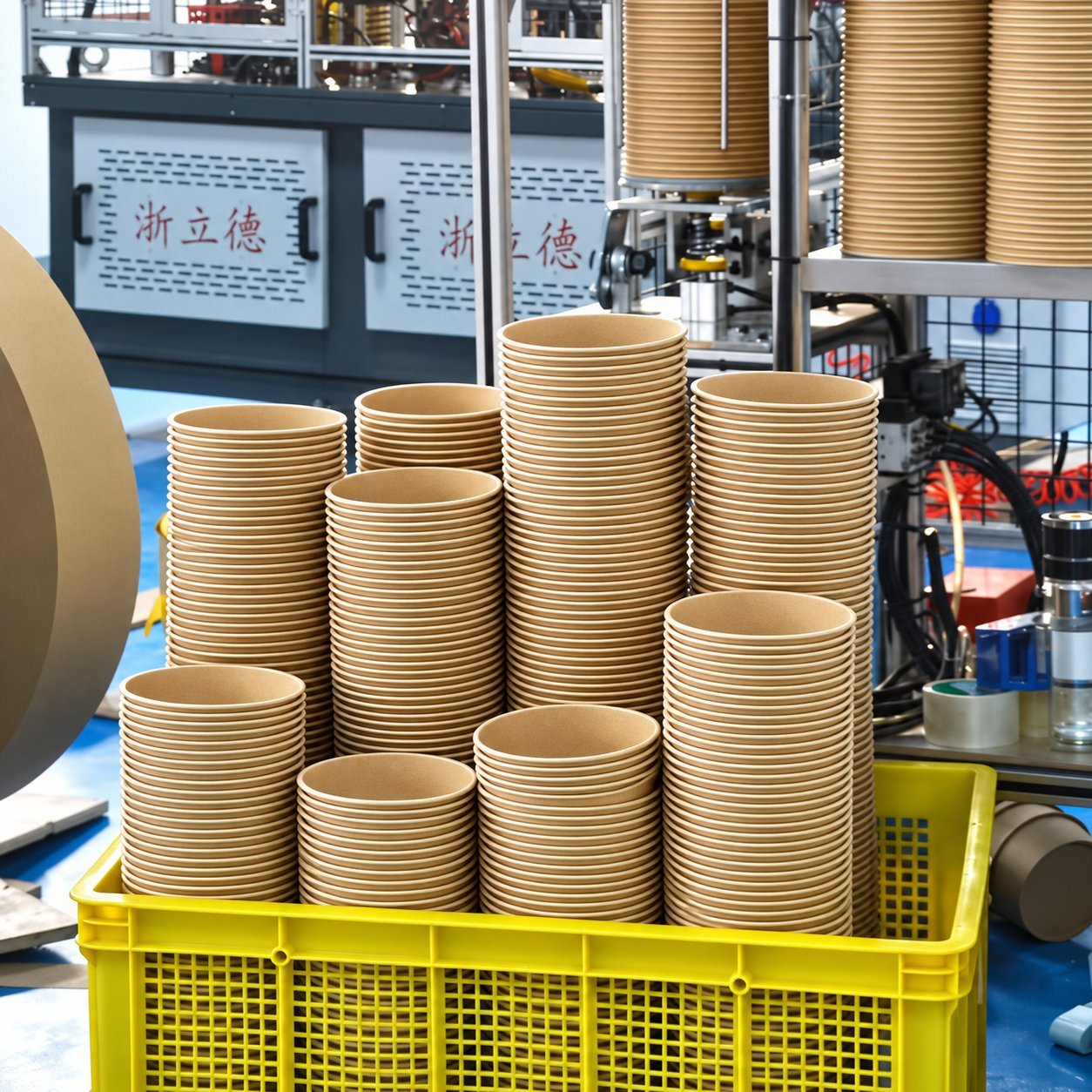
16. Incoming quality control checks basis weight and coating thickness. This is where your supplier catches a bad paperboard batch before it becomes your finished cup.
17. In-process quality control monitors print registration and forming precision during your run. Ask whether checks happen continuously or only at the start of a shift.
18. Outgoing quality control checks labeling, carton counts, and seal integrity. This is your last checkpoint before your cups leave the factory, and it should be a documented step, not an assumption.
19. Test equipment exists on-site for wet strength, leak resistance, or heat resistance. Ask to see this equipment during your visit, and ask when it was last used.
20. Calibration records for measuring instruments are current. An expired calibration date means your supplier’s own measurements may not be reliable for your spec.
Traceability and records
21. Batch records link your finished cartons back to a specific raw material lot. If a defect surfaces later, this is what lets your supplier trace the cause instead of guessing.
22. A documented pest-control program is active, not just claimed verbally. Ask your supplier to show the actual log, including bait station locations and inspection dates.
23. Written employment contracts and working-hour records are on file. This protects you too, since labor violations at your supplier can become your compliance problem downstream.
24. Quality management certification status is independently verifiable. A certificate on the wall means little if you can’t confirm it with the certifying body directly.
25. A complaint and corrective-action procedure exists, with evidence it’s actually been used. Ask for one real example of a past complaint and how your supplier resolved it.
Reading your results: green flags and red flags
A strong audit doesn’t need a perfect score on all 25 points. It needs consistency between what you’re told and what you can verify.
Green flags worth noting: your supplier answers specific questions with specific documents, not general reassurance. Records exist without being requested twice. Staff other than the sales contact can answer basic quality questions when you ask them directly. A supplier that walks you through a clear order sequence — requirement confirmation, design proof, your final sign-off, production, then quality checks before shipment — is showing you a documented process, not an improvised one.
Red flags worth stopping over: any request to route payment outside a corporate account. Vague answers to direct questions about subcontracting or capacity. Certificates you can’t independently verify. A factory that discourages you from seeing the production floor at all.
One or two minor gaps don’t necessarily disqualify a factory. A pattern of vague answers across multiple categories usually does, and you should trust that pattern over a single reassuring conversation.
What a checklist can’t verify
This checklist tells you what to check, not what you’ll find. A factory can pass every visible item on your visit and still cut corners once your production run starts, since a one-day audit is a snapshot, not ongoing supervision.
Consider a third-party inspection at key production milestones for your actual order, not only at the sourcing stage. That gives you visibility your initial audit can’t, since it checks your specific cups, not a general impression of the factory. A supplier confident in its own operation should welcome that conversation and help you plan where an inspection milestone fits into your production schedule.
FAQ
Do I need to visit the factory in person, or is a video call enough?
A video call can verify some items on this list, but a physical visit lets you check things a call can’t, like actual floor space, real inventory, and equipment condition.
How many red flags should make me walk away?
One serious red flag, like payment routed to a personal account, is enough on its own. Multiple vague answers across different categories should concern you even without one single dealbreaker.
Should I audit a factory before or after requesting samples?
Request samples first, since a factory unwilling to produce a reasonable sample isn’t worth auditing further. Audit before you commit to a production order and deposit.
Can I trust a certificate your supplier shows you during the visit?
Verify it independently with the certifying body rather than trusting the physical document alone. A certificate can be outdated, scoped narrowly, or, rarely, fabricated.
Is a smaller, less automated factory automatically a worse choice for you?
Not necessarily. Scale doesn’t guarantee quality control discipline. A smaller factory with strong documentation and consistent answers can outperform a larger one that’s vague about its own processes.
Request your own factory verification
Ask your prospective supplier which items on this checklist you can verify by video call, and which require an in-person or third-party visit. XINNENG, which has operated as a self-run paper cup factory for over 20 years by its own account, is one example of a supplier set up to answer that kind of question directly, and any supplier confident in its own operation should welcome the conversation rather than resist it.
Bring your specific cup spec, target volume, and destination market to that conversation. That context helps you focus your audit on the parts of this checklist that actually matter for your order, rather than treating all 25 points as equally urgent for every buyer.
Talk to a factory that can answer those questions
Send your cup specification, target volume and destination market, and we’ll tell you which points on this 25-item list we can verify remotely, which require an in-person visit, and where a third-party inspection milestone fits in your production schedule.