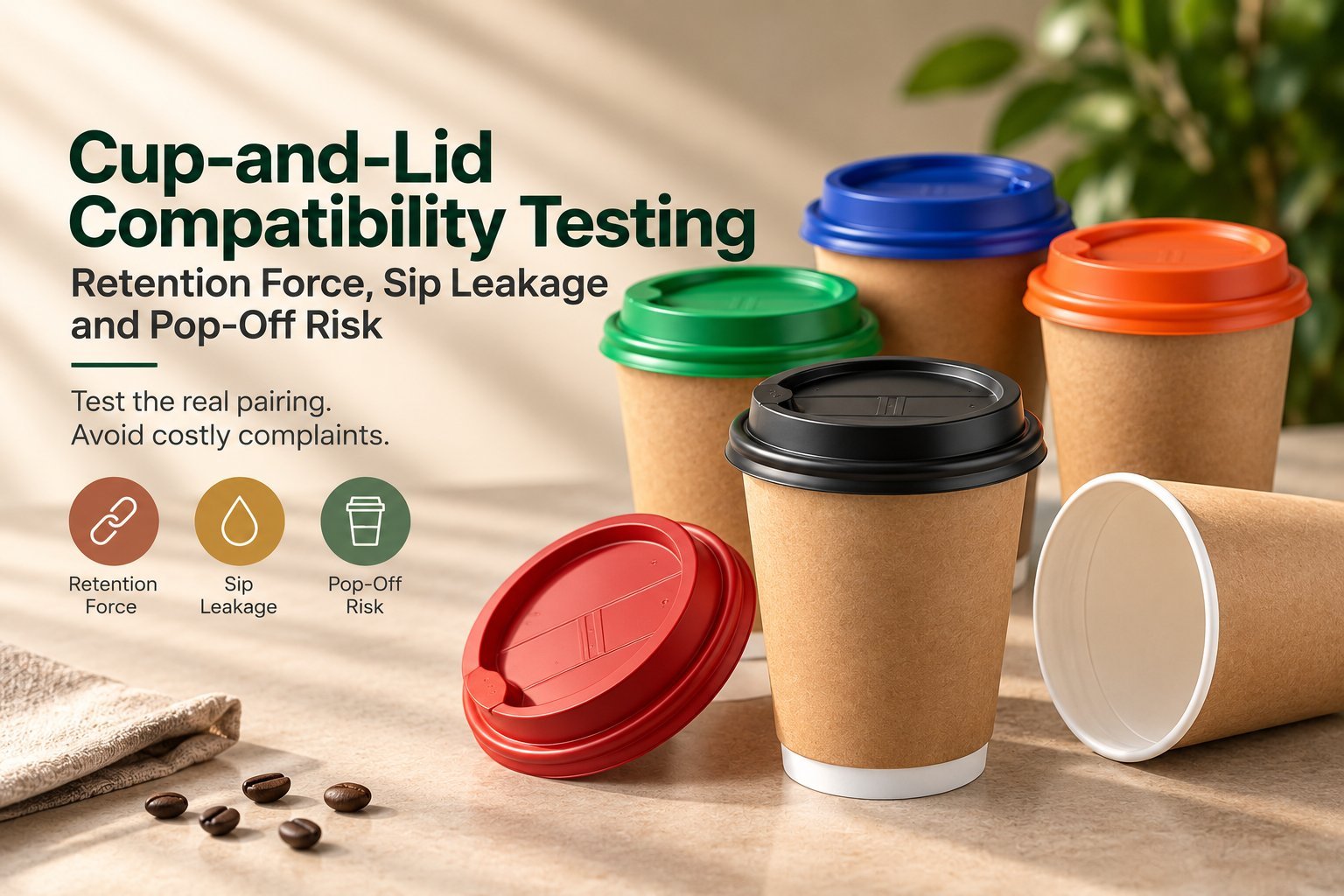
A cup and lid that each pass their own quality check can still fail together. Pop-off happens when retention force is too low for handling stress. Sip leakage happens when the seal looks fine but liquid still escapes through a gap. Testing them as a pair, not separately, is what actually catches both risks before your customer does.
The two ways your cup-and-lid pairing actually fails
You approve of a cup. You approve of a lid. Both look correct on their own spec sheet. Then a barista reports a lid popping off during a to-go handoff. Or a customer says their cup dripped despite a lid that seemed to seat properly.
These are two different failure modes, and they need two different explanations. Pop-off is a retention force problem, your lid separates from the rim under normal handling stress. Sip leakage is a seal problem, liquid escapes through a gap even when the lid stays attached. A cup and lid can fail at either one independently of the other.
Testing your cup and lid together, under conditions close to your actual service, is the only way to catch both. Testing each part alone tells you less than you’d assume. For the basics of cup-and-lid sizing in the first place, see our guide on 12 oz paper cup dimensions and lid fit.
XINNENG’s own guidance to buyers names these exact two risks for you. Different factories run different rim and lid tolerances. Skipping a joint test risks precisely what this article covers: leakage, or the lid popping off. That’s a real supplier confirming both failure modes by name, not a generic warning.
Failure mode 1: Pop-off, when retention force is too low
Pop-off happens when the force holding your lid to the rim can’t withstand normal handling, a bump during a delivery handoff, a customer’s grip shifting, or a cup set down harder than expected. The mechanical property behind this is retention force, essentially how much pull it takes to separate your lid from your cup.
Published guidance points to rim consistency, not lid design alone, as the more common root cause. Heavier, stiffer board can resist deformation during handling, but stiffness alone doesn’t guarantee a consistent rim. Rim curl profile, forming quality, and coating adhesion all affect whether your lid actually seats the same way, cup after cup.
Heat makes this worse. Published testing guidance recommends checking lid fit specifically within the 150°F to 170°F range. That matches typical espresso and drip coffee service temperature. Heat can soften your cup wall enough to shift the rim profile after filling. A lid that seats perfectly on a cool, empty sample can still pop off once your actual hot beverage is inside. The mechanisms behind that wall softening are covered separately in our soft-cup guide.
Retention force is measurable with a tensile tester or force gauge. That’s the same equipment used across broader packaging testing to measure lid opening force. No single published threshold applies universally across the paper cup industry. Ask XINNENG for their own retention force data on your specific pairing, rather than assuming a generic number applies to your order.
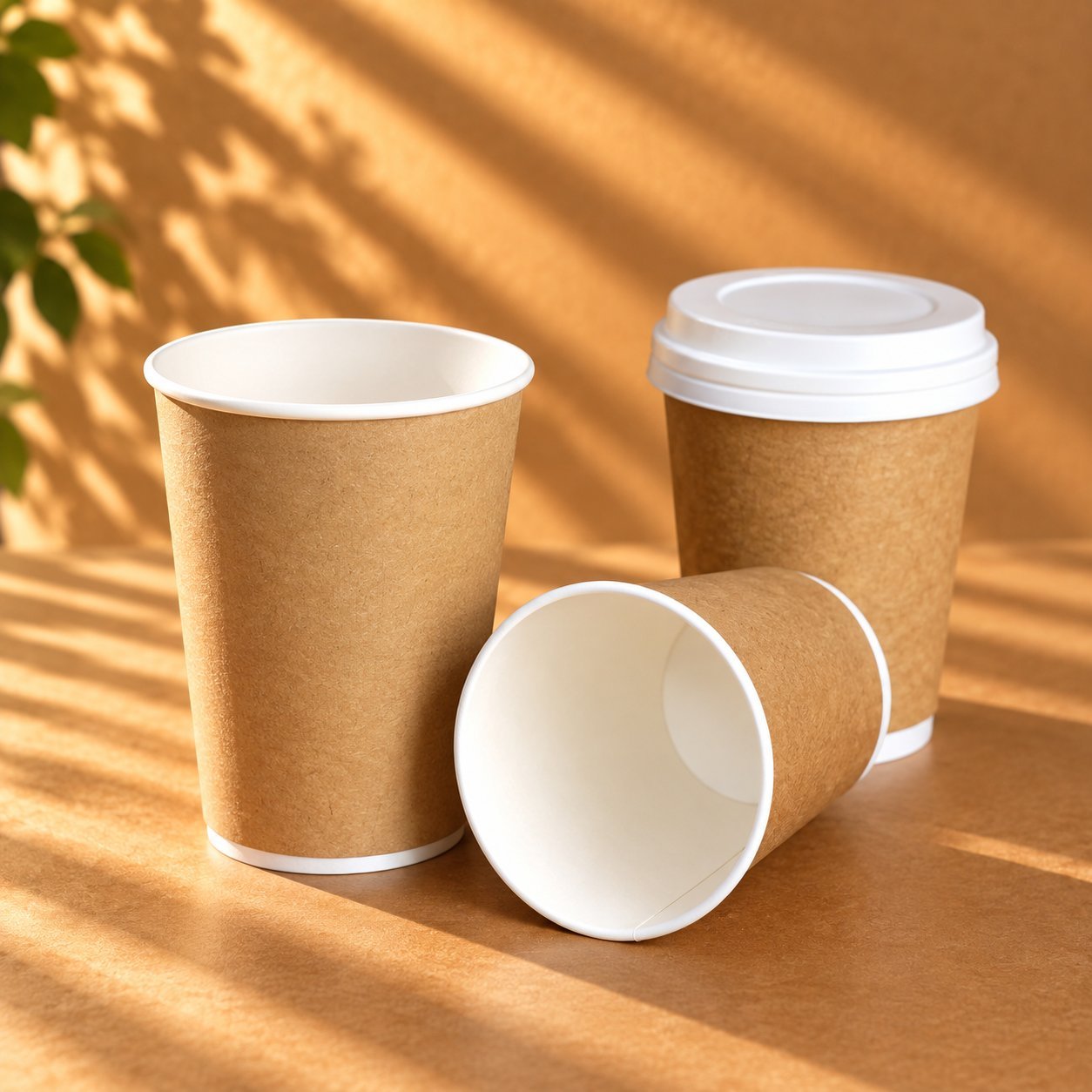
Failure mode 2: Sip leakage, when the seal has a gap
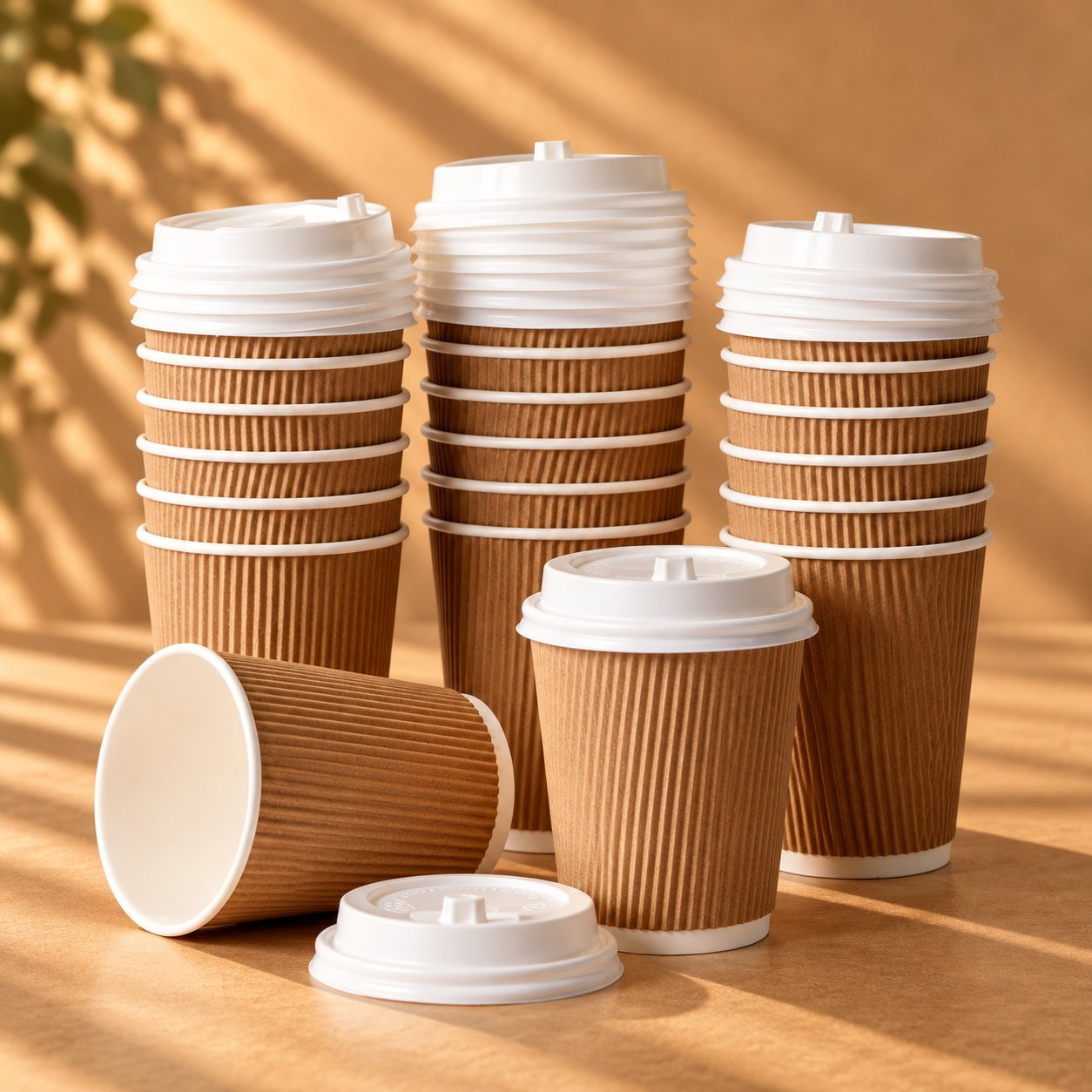
Sip leakage happens even when your lid stays firmly attached. Liquid escapes through a small gap between the lid and the rim. It usually happens during tilting, walking, or carrying, not while your cup sits still on a counter.
One published engineering study tested this for you already, across several major commercial cup-and-lid combinations. Cups held at a 40-degree angle for one full minute, weighed before and after, showed exactly how much fluid escaped. The results varied meaningfully across combinations, ranging from roughly 0.07 ounces to 0.35 ounces of liquid lost in that single minute.
The most striking finding wasn’t about brand quality. It was about seam alignment. The same study repositioned the lid’s sip opening 180 degrees from the cup’s manufacturing seam. Drip loss dropped to roughly one-tenth of the original amount. Some combinations showed no measurable leakage at all. Your cup’s seam location relative to your lid’s opening matters more than most buyers ever consider.
That single finding gives you a nearly free fix. If your lid design allows it, train your staff on one simple habit. Seat the lid with the sip opening facing away from the visible cup seam. It costs nothing and published research shows it meaningfully cuts your leakage risk.
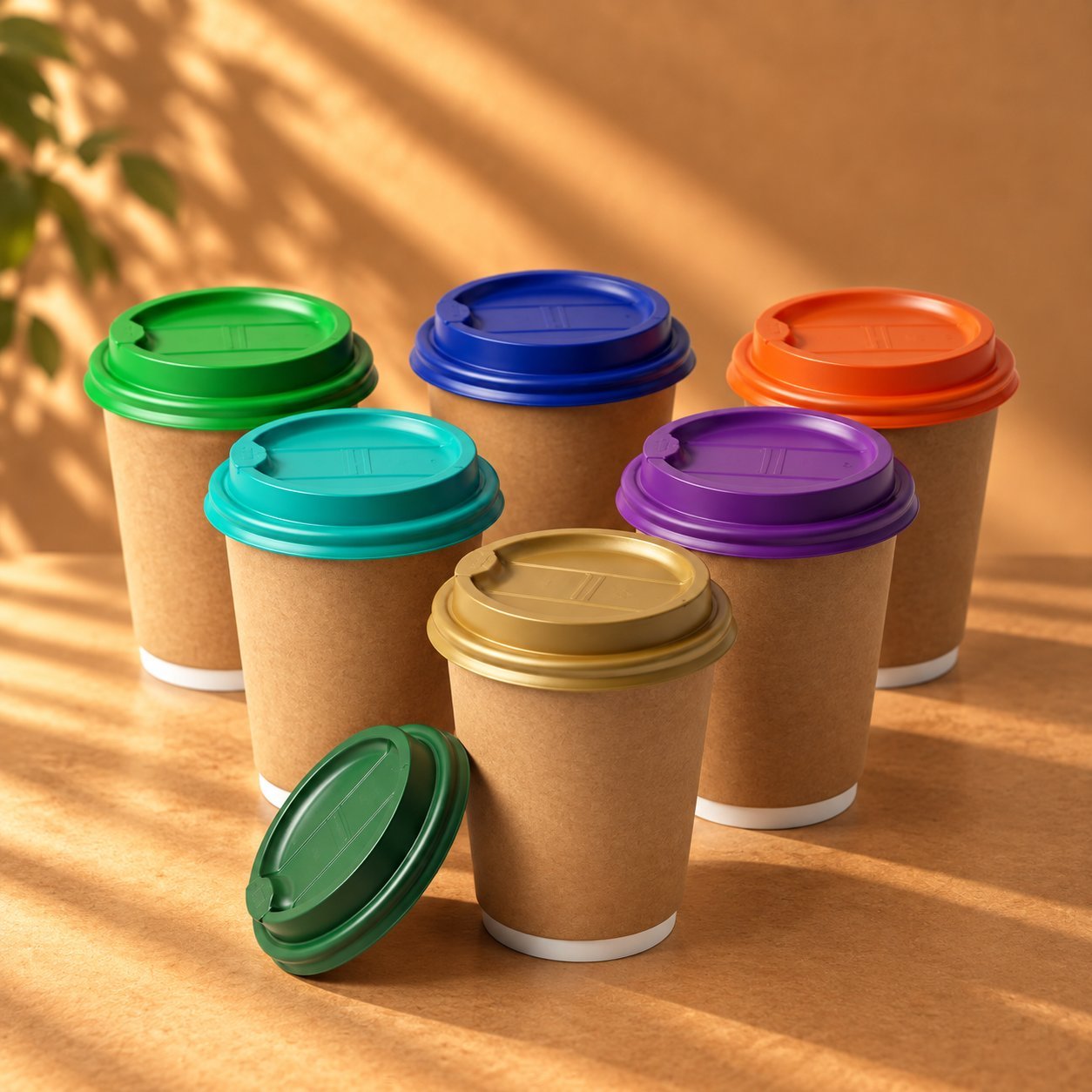
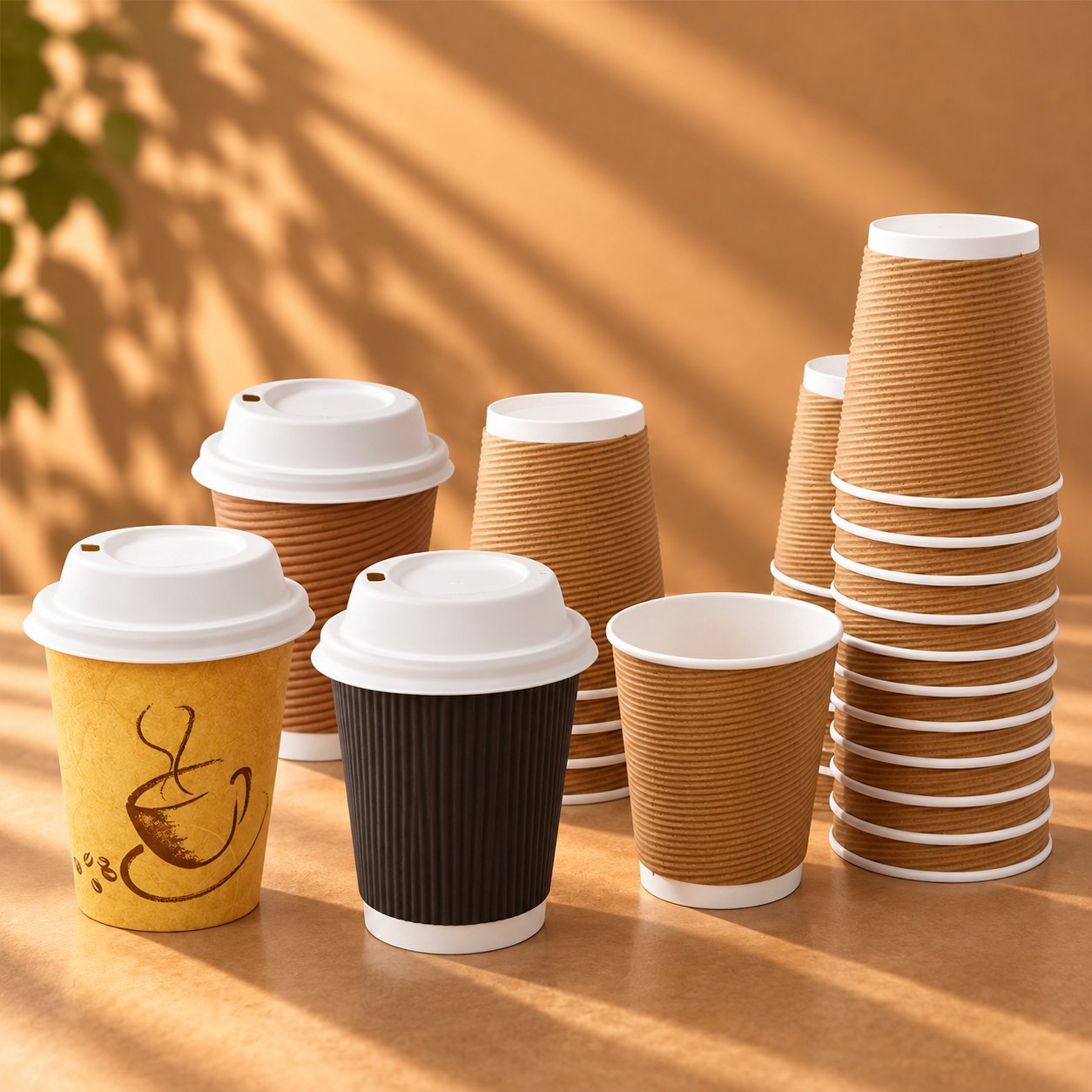
What connects both failure modes back to one root cause
Both pop-off and sip leakage trace back to the same underlying issue more often than buyers expect: an inconsistent rim. A rim that varies in diameter, curl tightness, or roundness from cup to cup gives your lid a different fit every time. That happens even within the same production run.
This connects directly to your board and coating choices too. A board that softens under sustained heat, a topic covered in depth in our soft-cup guide, can shift your rim profile mid-service. That undermines a lid fit that tested fine when you approved your sample. Ask XINNENG how they control rim consistency batch to batch, not just on your approval sample.
How to test your own cup-and-lid pairing before you approve an order
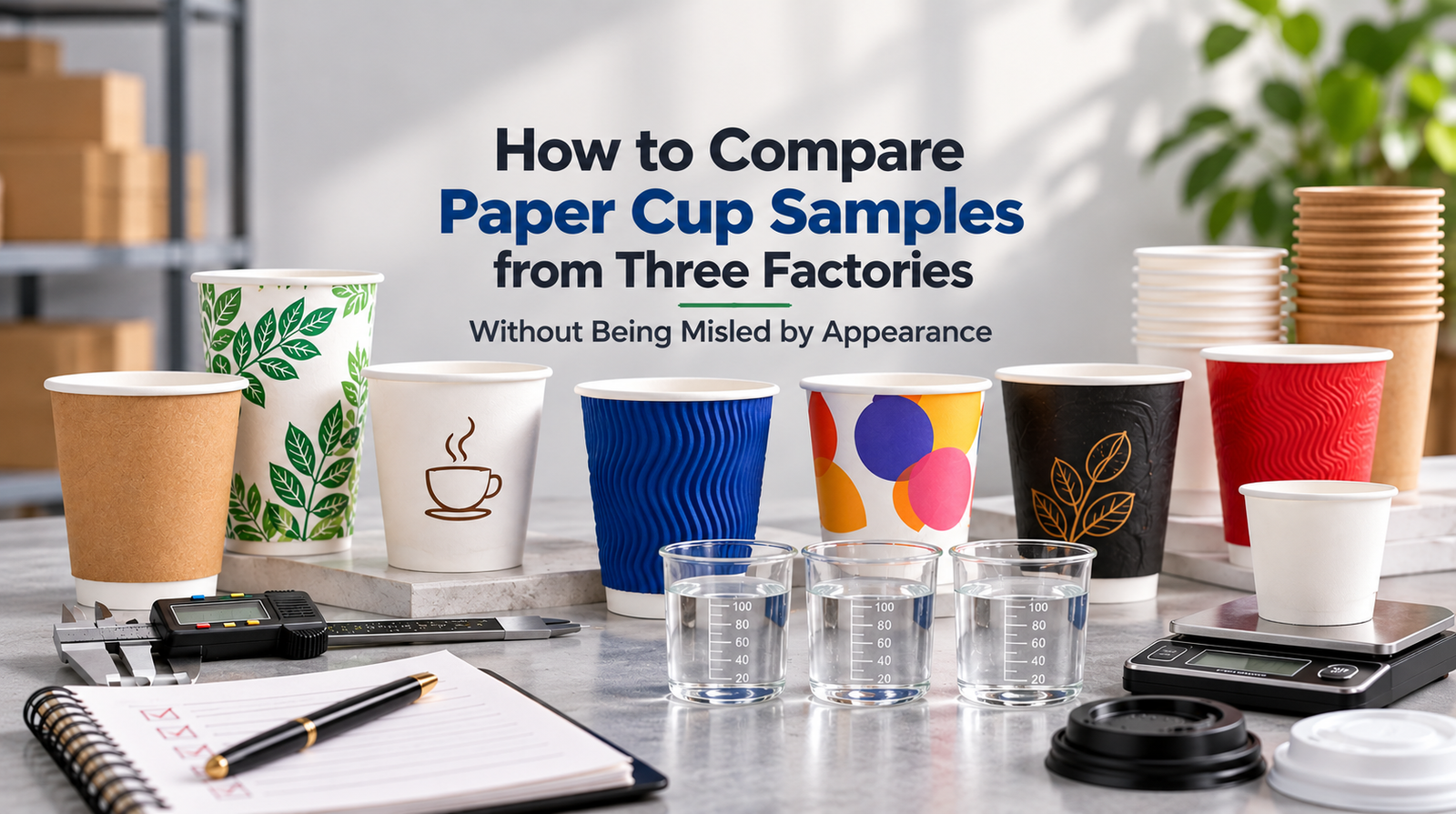
Pull 10 to 20 cups from different positions in your stack, not just the top. Pair each one with your actual lid, not a substitute, and fill with your real beverage at your actual serving temperature.
Hold each filled cup at a noticeable tilt, roughly 40 degrees, for a full minute, and note any visible seepage. Weigh the cup before and after for a precise figure. Or simply watch for moisture if a rough pass or fail is enough for you.
Test with the sip opening both aligned with your cup’s seam and facing away from it. If you see a meaningful difference, that’s a free adjustment you can train your staff to make immediately.
Have your staff apply lids at actual rush pace, not carefully and slowly. A fit that looks fine under careful, deliberate handling can still fail once your team is moving quickly during a real service rush.
Where this guidance doesn’t generalize
No universal industry standard sets a required retention force or leak threshold for your paper cup lids, unlike some standards that govern food-contact materials. The figures in this article come from published engineering research and industry testing guidance, not a confirmed XINNENG specification.
Your actual risk depends on your specific cup, lid, beverage, and how your staff physically handles cups during service. Confirm performance with your own sample testing before committing to a full production order.
FAQ
What’s the real difference between pop-off risk and sip leakage?
Pop-off means your lid separates from the cup under handling stress. Sip leakage means liquid escapes through a gap while your lid stays attached. They need different fixes, so diagnose which one you’re actually seeing.
Does seam alignment really make that much difference to your leakage risk?
Published research found leakage dropping to roughly one-tenth. That’s when the sip opening faced away from the cup seam, versus aligned with it. It costs nothing to test on your own cups and lids.
Is there a standard retention force number I should ask my supplier for?
No universal published threshold applies across the industry. Ask XINNENG for their own test data on your specific pairing instead of expecting one number to apply everywhere.
Should I test my cup and lid cold, or at actual serving temperature?
At your actual serving temperature. Heat can shift your rim profile enough to change lid fit, so a cool, empty test won’t tell you what your customer experiences.
How many cups should I pull for my own compatibility test?
Published guidance recommends 10 to 20 cups. Pull them from different positions in your stack, not just a handful from the top. Forming consistency can vary across a production run.
Can a lid that fits perfectly at the counter still fail during delivery?
Yes. Handling stress, tilting, and movement during delivery create conditions your counter test may never simulate. Test under conditions closer to how your cup actually travels.
Test Your Specific Pairing Before Your Next Production Run
Tell XINNENG your cup size, your lid type, and your typical serving temperature. Ask for retention force data and leak-testing results on that exact combination, not a generic industry figure.