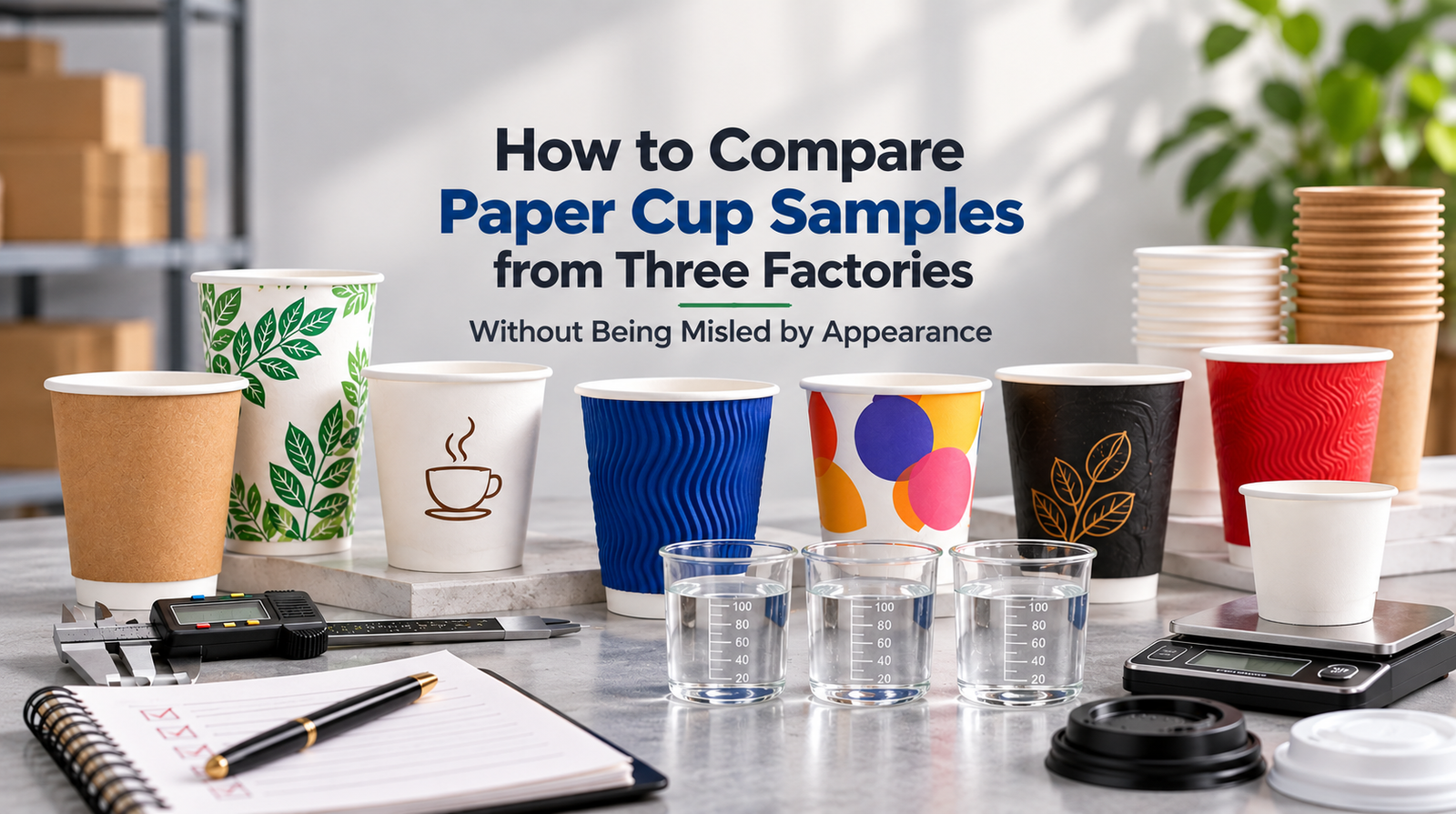
You compare paper cup samples with a weighted scorecard, not a visual preference. Three cups can look nearly identical on a table and still differ meaningfully in rim diameter, seam strength, leak resistance, or GSM — the properties that actually determine performance at the counter. A repeatable, scored comparison catches what a glance won’t.
The problem you’re actually solving
You lay three suppliers’ samples side by side. They all look clean, feel similar, and seem fine. You pick one based on that impression, place your order, and find out three months later that the winner had the weakest seam or the least consistent rim.
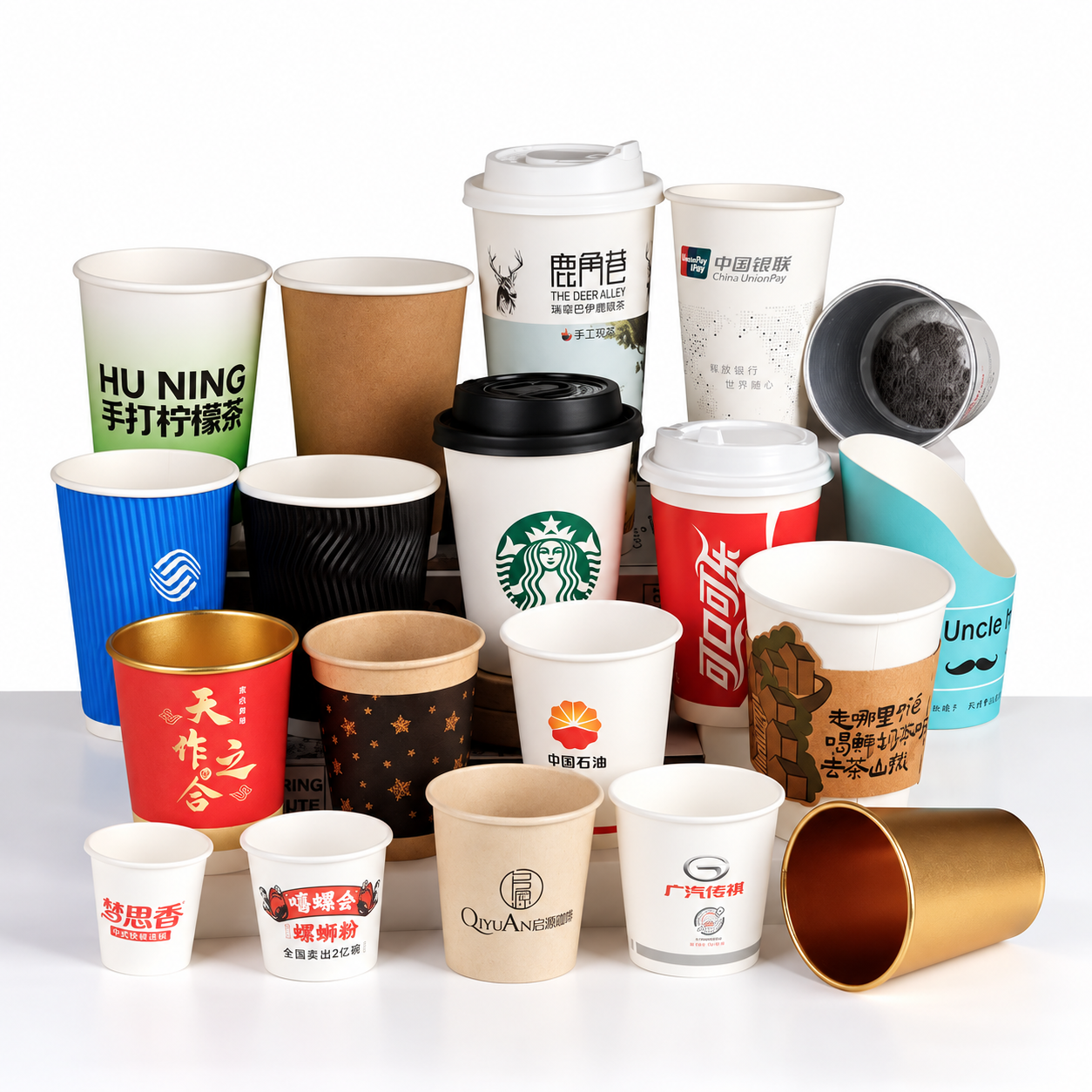
This happens because appearance and performance aren’t the same thing. A cup can look polished and still fail on dimensional consistency, compression strength, or lid fit — properties you can’t judge by eye. Without a structured, weighted comparison, you’re effectively picking based on whichever sample happened to look best in the room, not the one that will perform best in your operation.
The weighted scorecard
Score each supplier’s sample from 1-5 on each criterion, multiply by the weight, and total the result. This gives you a single comparable number per supplier instead of a subjective impression.
| Criterion | Weight | What to measure | Method |
|---|---|---|---|
| Dimensions (height, top/bottom diameter) | 8% | Consistency against the stated spec | Caliper measurement across multiple samples |
| Weight / GSM | 8% | Basis weight consistency | Scale measurement; reference method ISO 536 / TAPPI T 410 |
| Capacity accuracy | 8% | Brimful volume vs. nominal label | Water-fill test to the rim, measured by volume |
| Rim diameter and consistency | 12% | Top opening diameter across samples | Caliper measurement, multiple samples, not a single cup |
| Lid fit | 12% | Physical seating and retention | Test with your actual intended lid, not a generic one |
| Seam integrity | 10% | Side seam and bottom seal strength | Visual inspection plus a manual pull/peel check |
| Leak resistance | 12% | Performance under realistic hold time, not just a static test | Timed leak test under your actual serving temperature and hold duration |
| Compression / stack strength | 8% | Resistance to crushing under load | Top-load compression test |
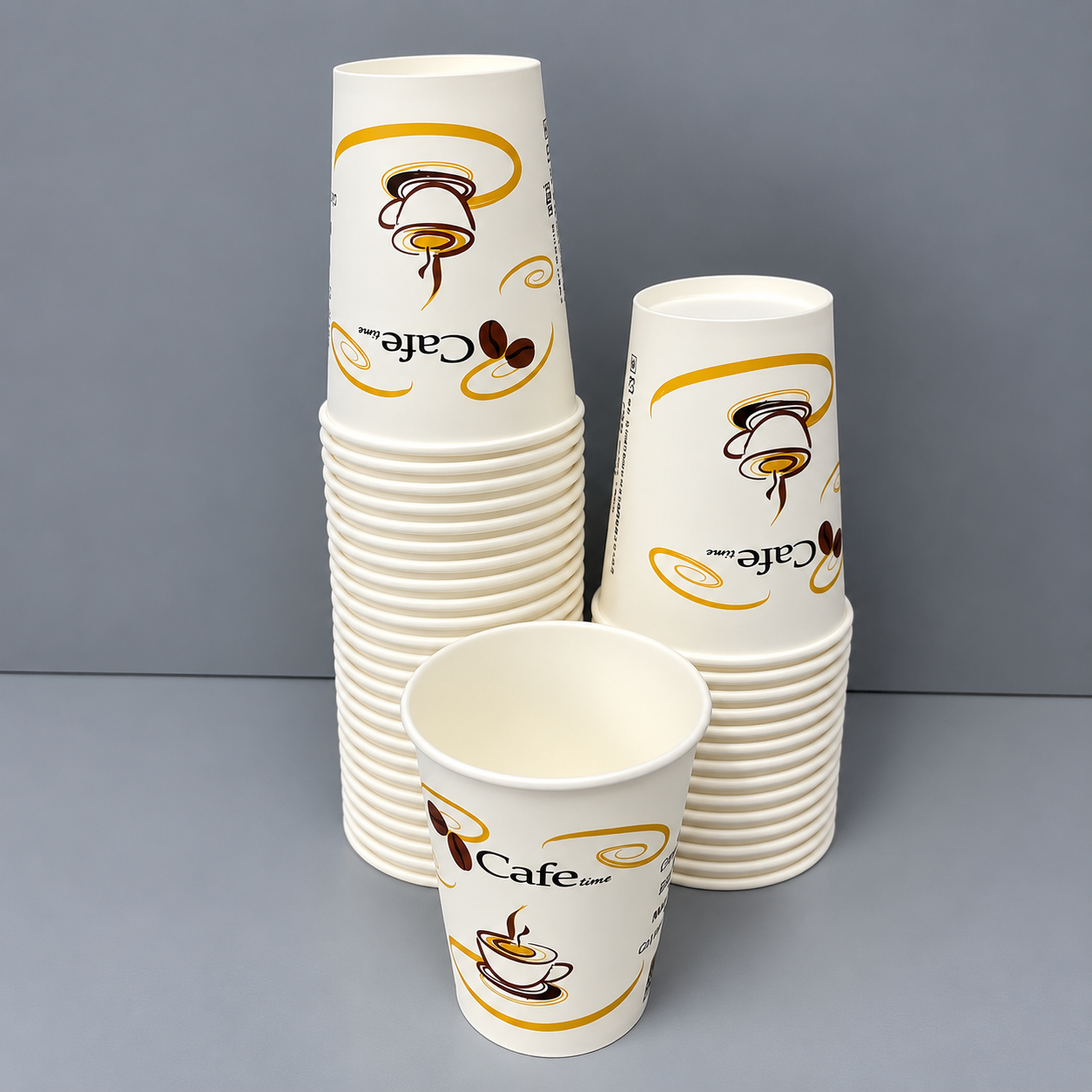
| Nesting consistency | 6% | Stack height variation across a set quantity | Stack 10-50 cups and measure total height variance |
| Print quality and registration | 8% | Color accuracy and position consistency | Visual inspection against a reference proof; position tolerance measurement |
| Odor | 4% | Absence of off-odor from board, ink, or coating | Sensory panel check across multiple samples |
| Carton accuracy | 4% | Quantity and packing consistency | Physical recount against stated carton quantity |
Total the weighted score for each supplier. The highest total isn’t automatically your final decision, but it gives you a defensible, repeatable basis for comparison instead of a visual impression.
Why some of these checks need more than a glance
Rim diameter deserves particular attention, since two cups sharing the same capacity label can still have different rim diameters — this is exactly the failure mode behind mismatched lids, and it’s not something you can catch by looking at the cup. Measure it directly with calipers, on more than one sample.
A static leak test alone isn’t enough either. A cup that holds up fine in a short, room-temperature test can still fail once it’s filled hot and held for your actual serving time — heat and dwell time both affect seam and coating performance in ways a 30-minute static check won’t reveal. Test leak resistance under conditions that match your real use case, not a shortened lab convenience test.
Compression and nesting matter more than they first appear, especially for stacked storage or dispensing systems. A cup that nests unevenly can jam a dispenser, and a cup with weak compression resistance can crush under normal stacking during transit or storage, even if it looked structurally sound in a single sample.
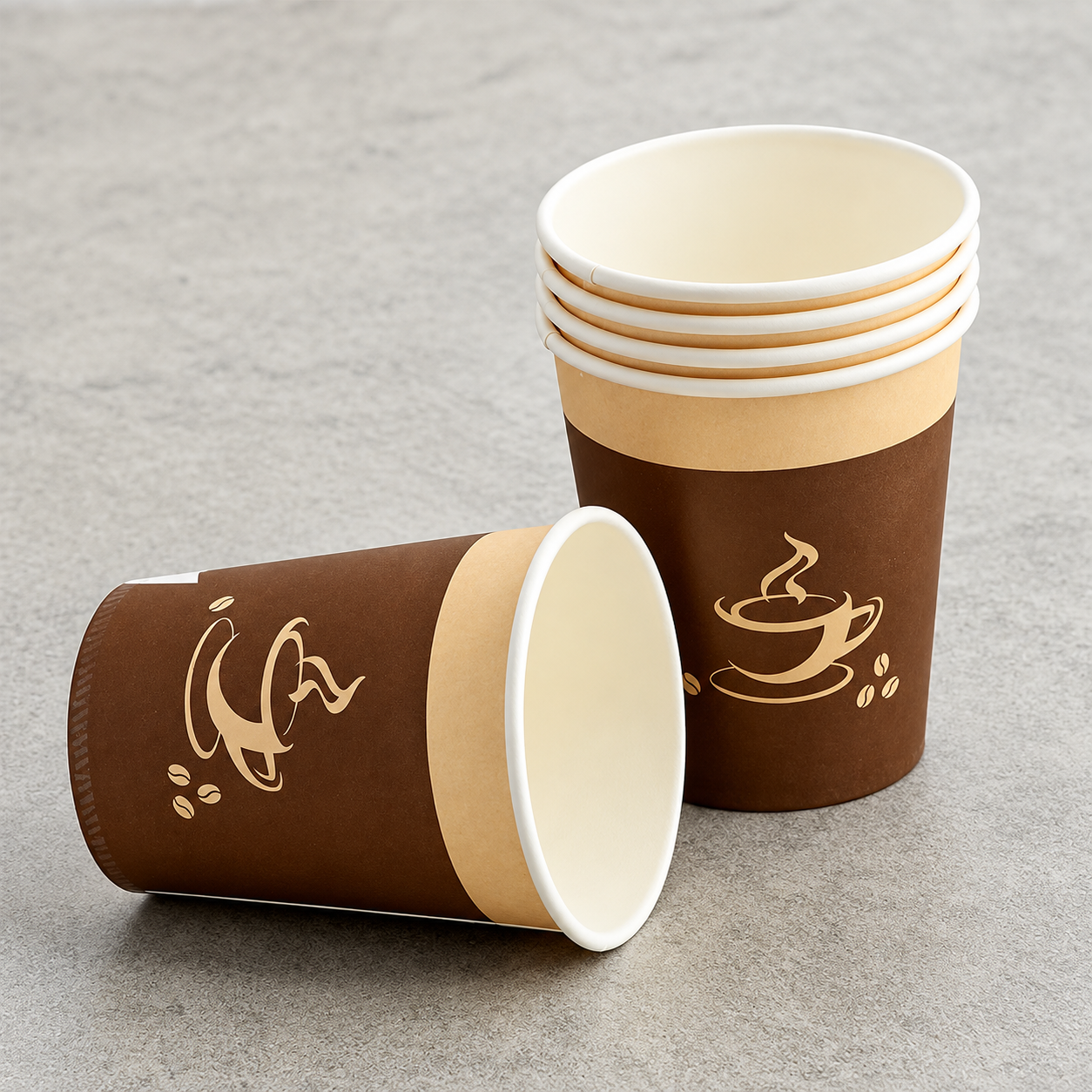
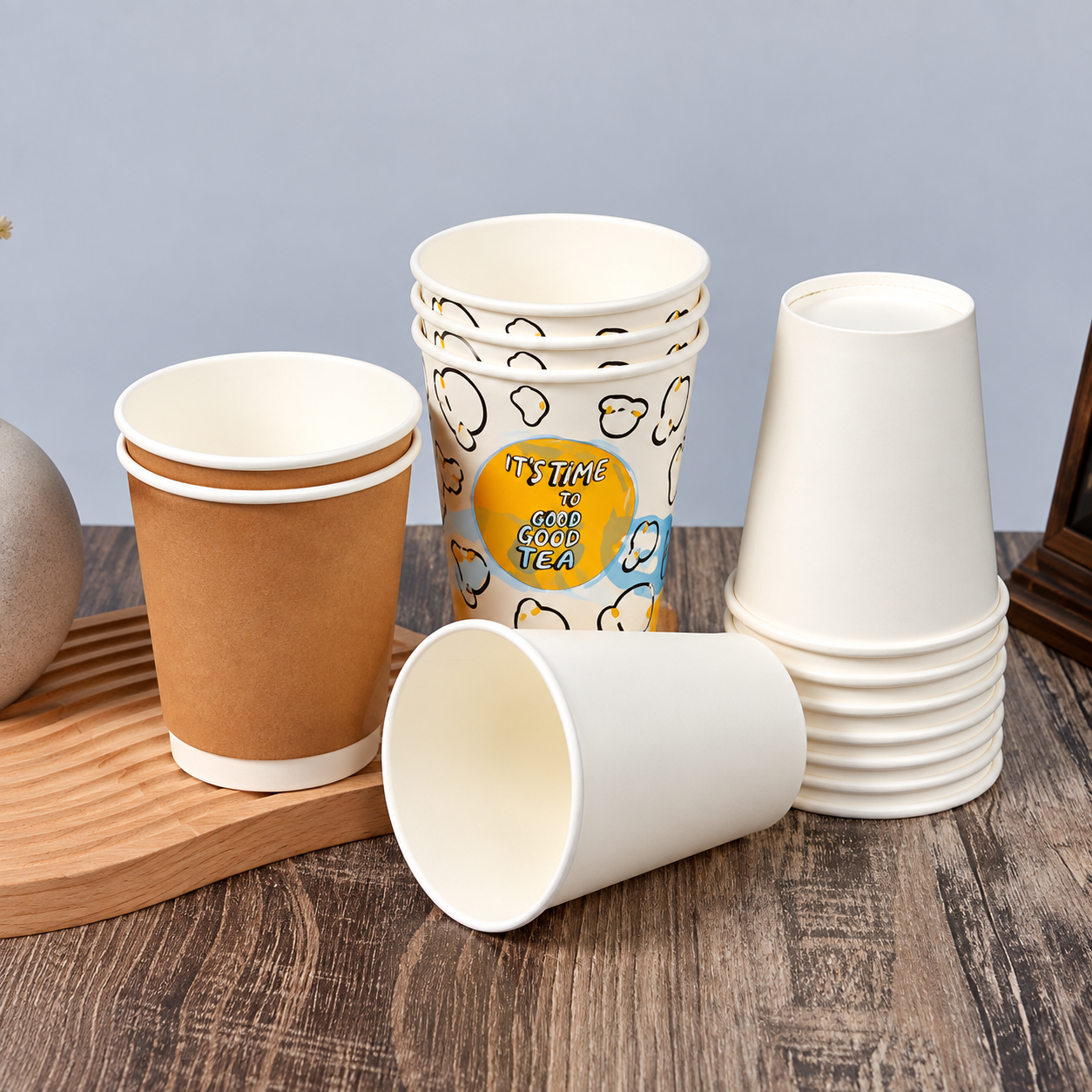
What to request when you ask for samples
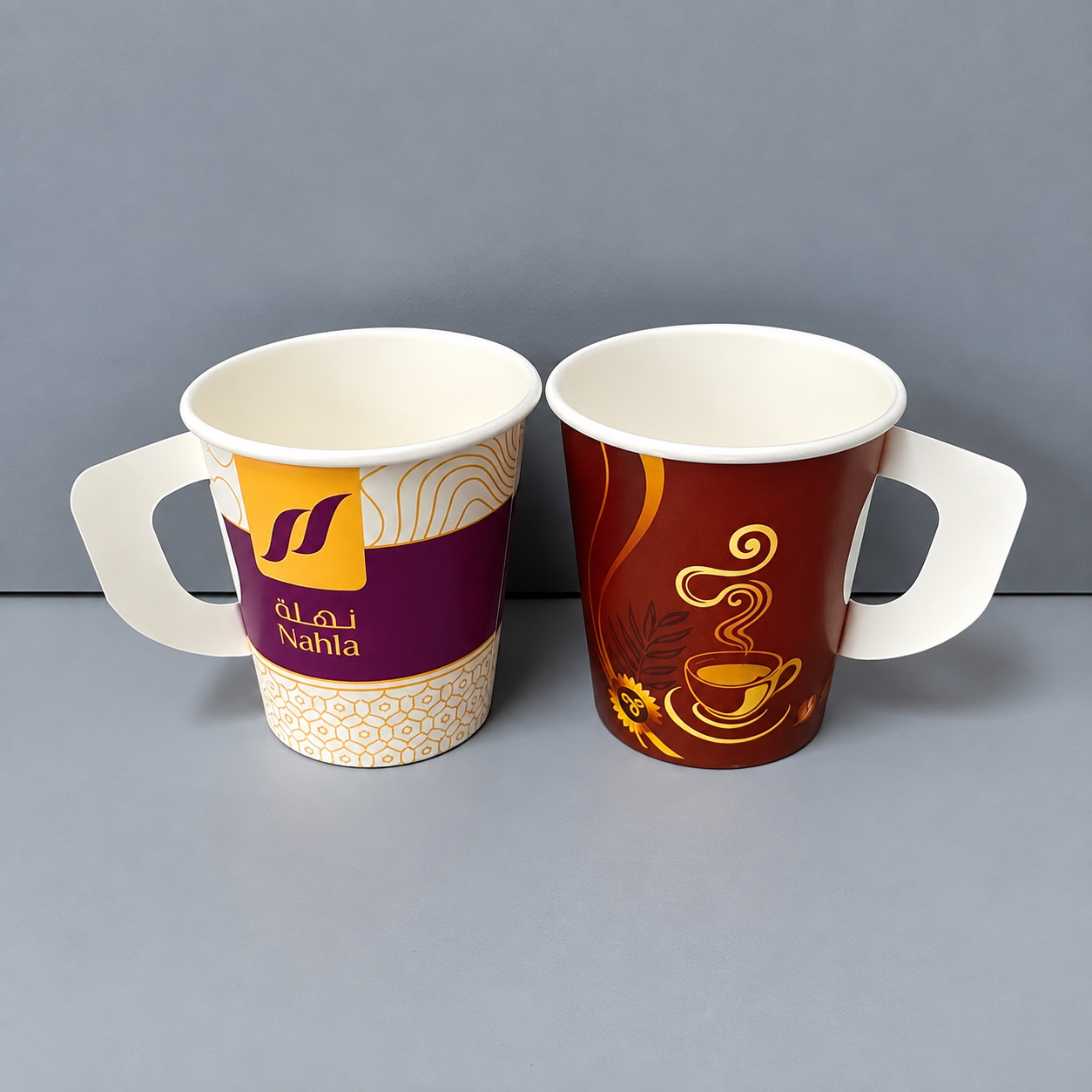
Ask each supplier for multiple samples per SKU, not a single hand-picked cup — a single sample tells you nothing about batch consistency. Ask for samples pulled from different points in their production run if possible, since forming variance can differ across a single run, not just across suppliers.
Request the technical data sheet and any test reports behind their stated specifications alongside the physical samples. A supplier who can produce documentation behind their numbers, not just the samples themselves, is giving you more to verify against.
We can send benchmark samples for direct comparison against your current supplier, or run a specific comparative test against criteria you define. Reach us through our Contact Us page to request either one.

Where this guidance doesn’t generalize
This scorecard gives you a repeatable structure, not a universal pass/fail standard. Acceptable tolerances vary by your specific use case, order volume, and risk tolerance — a café serving dine-in coffee has different priorities than a delivery-focused brand shipping filled cups.
The weights suggested here are a starting point. Adjust them to reflect what matters most for your specific application — a brand prioritizing print consistency for retail shelf presence might weight print quality higher than the default above.
FAQ
How many samples should I request per supplier?
More than one, and ideally pulled from different points in a production run. A single hand-picked sample doesn’t tell you anything about consistency across a real order.
Should the cheapest-scoring supplier always win?
No — this scorecard measures performance consistency, not price. Weigh your scorecard results against price and lead time separately, as part of your overall sourcing decision.
Can I skip the leak test if the cup looks well-formed?
No. Leak performance depends on seam integrity, coating quality, and heat/dwell-time behavior, none of which are reliably visible from the outside of a well-formed cup.
Do I need lab equipment to run these checks?
Not for most of them. A caliper, a scale, and a stopwatch cover most of this scorecard. GSM and stiffness testing to a recognized standard like ISO 536 needs lab equipment, but you can still check basis-weight consistency with a standard scale for a practical comparison.
How do I compare samples fairly if the suppliers use different cup constructions?
Score each on the same criteria regardless of construction, but note construction differences separately — a double wall and single wall cup aren’t going to score identically on stiffness or weight, and that’s expected, not a defect.
Request benchmark samples or a comparative test
Tell us what you’re comparing against, and we’ll send benchmark samples or run a comparative test against your specific criteria.