A paper cup that smells or tastes off usually traces back to one of three places: the raw material and ink, the manufacturing process, or storage and shipping conditions. EU food-contact regulation explicitly requires that packaging not alter a food’s organoleptic characteristics. Knowing which stage caused your complaint tells you what to actually ask your supplier to fix.
The complaint that’s rarely just “bad quality”
A customer says their coffee tastes like cardboard, or a QA sample smells faintly chemical straight out of the carton. Your instinct is to flag the whole order as low quality. That instinct usually points you in too broad a direction to act on.
Odor and taste complaints almost always trace to one specific stage in your supply chain, not a general quality failure. Ink solvents, coating resin, board pulp, warehouse humidity, and shipping conditions each leave a different signature. Finding which one is responsible is what actually gets your next order fixed.
XINNENG’s own guidance to buyers lands on the same three-part diagnosis. Odor can come from base paper, ink, coating, production drying, storage, or transit. It isn’t automatically “bad quality.” Its own advice is to check when you notice the smell, what drink the cup holds, and how long it was stored. That’s exactly the diagnostic approach this article walks you through next.
Three places the smell actually comes from
Raw material and ink
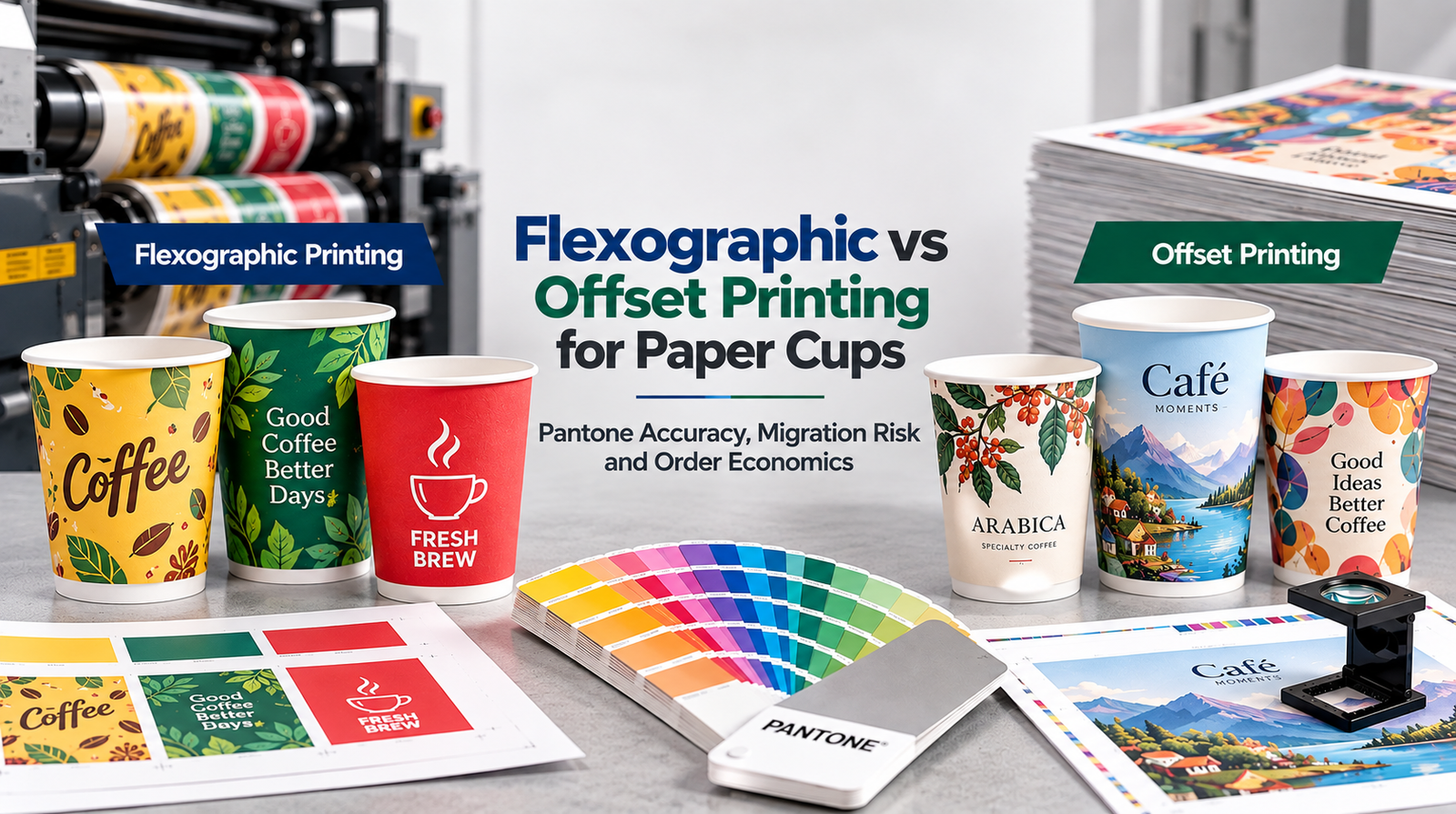
Flexographic printing inks use carrier solvents that need full evaporation during drying, before your cup ever reaches you. Published industry reporting on wholesale paper cups found that a meaningful share of tested inks contained excessive levels of cyclohexanone and toluene. Both solvents can transfer into your hot beverage if they haven’t fully evaporated.
Board pulp quality matters too. Poor-quality recycled fiber can carry chemical residues into your finished cup. So can substandard processing chemicals, including wet-strength and whitening agents. Ask XINNENG which pulp grade and ink chemistry your order actually uses, not just whether it’s “food grade.”
In XINNENG’s own experience, printing is the most common source when a real odor complaint does come in. That lines up with the solvent-evaporation risk above. It’s worth asking your supplier directly whether they see the same pattern on their own line.


Manufacturing process
Even good raw materials can produce a smelly cup if your factory’s process falls short. Published manufacturing guidance points to drying tunnel temperature and dwell time as the key variables for ink solvent evaporation. Too low or too short, and solvent odor persists in your finished product.
Coating resin quality plays a similar role in your cup. Virgin food-grade polyethylene is essentially odorless. Recycled or lower-purity resin, used to cut cost, can release volatile compounds once it contacts your hot beverage. This is the same coating-quality issue that drives some softening complaints, covered in depth elsewhere in this series.
Storage and shipping
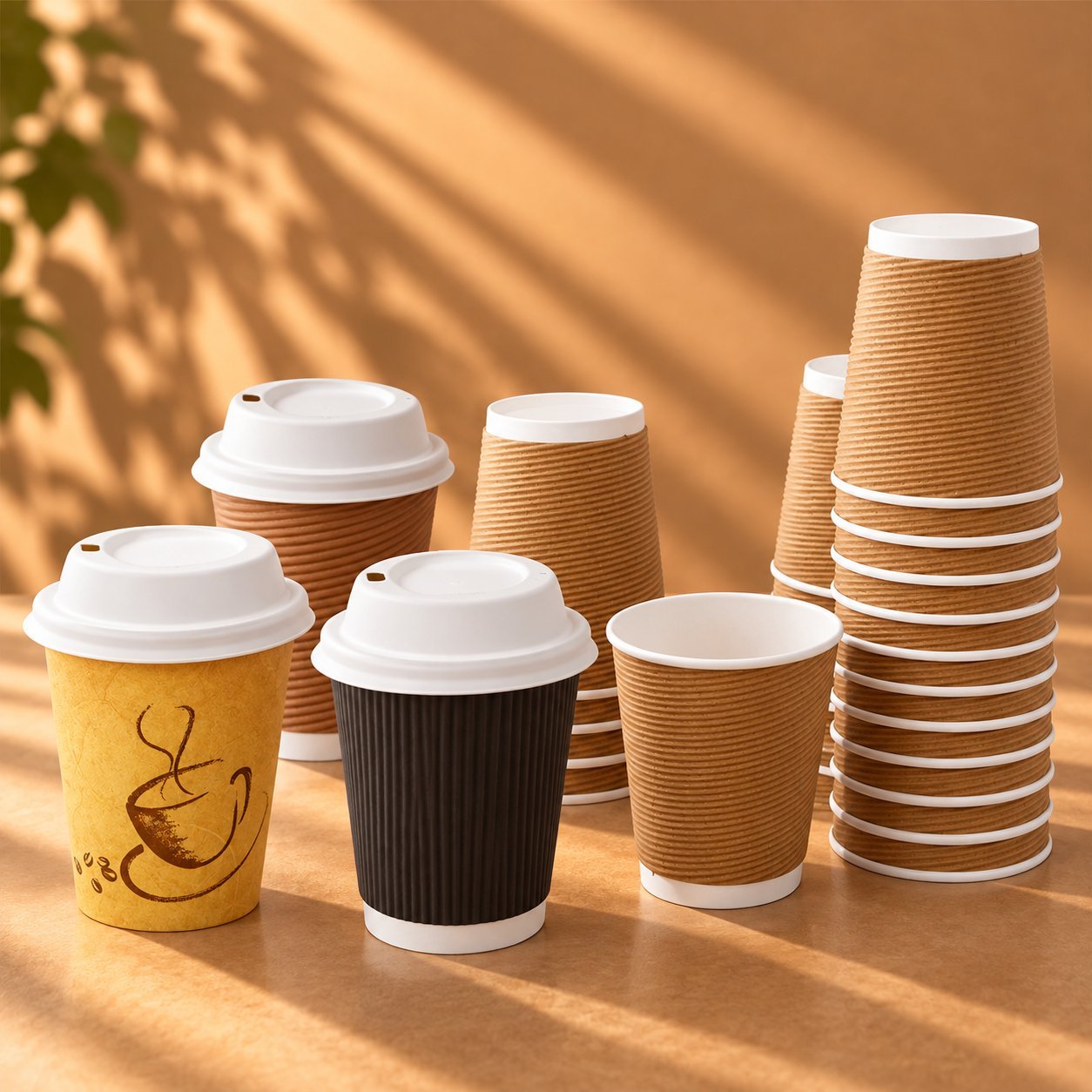
A cup that left your factory clean can still pick up odor before it reaches you. Paper is absorbent, and published guidance recommends storing cups at relative humidity below 65 percent, away from anything strong-smelling. Damp stacking conditions specifically can let mold develop. More than one industry source reports the resulting musty smell as a common complaint your customers notice after storage.
Shipping conditions compound this risk. A container sitting in transit for weeks gives odor absorption and moisture more time to work. That risk grows on a humid or high-heat route. Ask XINNENG how your cups are packed for transit, not just how they’re packed at the factory gate.

What “compliant” actually means here
This isn’t just a quality preference. EU Regulation (EC) No 1935/2004, Article 3, sets a real requirement here. Food-contact materials must not cause “a deterioration in the organoleptic characteristics” of the food or beverage they touch. A cup that transfers an off-taste to your coffee isn’t just unpleasant. In an EU-facing market, it touches a real regulatory requirement.
Formal sensory testing for this exists as an established discipline. You don’t need to invent a test method yourself. Independent testing labs use panel-based sensory evaluation alongside GC-MS analysis to identify specific volatile compounds. Recognized methods you can point to include ISO 13302, EN 1230-1, and DIN 10955. All are built to test whether packaging changes a food’s taste or smell.
You don’t need a full lab panel for every order. Knowing that this testing tradition exists gives you a reference point. Ask XINNENG what odor testing, if any, happens on your specific production run.
Diagnosing your complaint by when you noticed it
If the smell is there straight out of a sealed carton, your cause is most likely raw material or manufacturing, not storage. Ink solvent, coating resin quality, or pulp contamination are your most likely suspects.
If cups smelled fine on arrival but developed odor in your own storage, look at your warehouse conditions first. Humidity above the recommended threshold, damp stacking, or storage near strong-smelling materials are common triggers you can control directly.
If the smell or taste only shows up once you add a hot beverage, heat-triggered off-gassing from your coating is the most likely explanation. This points back to coating resin quality specifically, since heat is what releases the volatile compounds a cool, empty cup won’t reveal.
How to catch this before you approve a full order
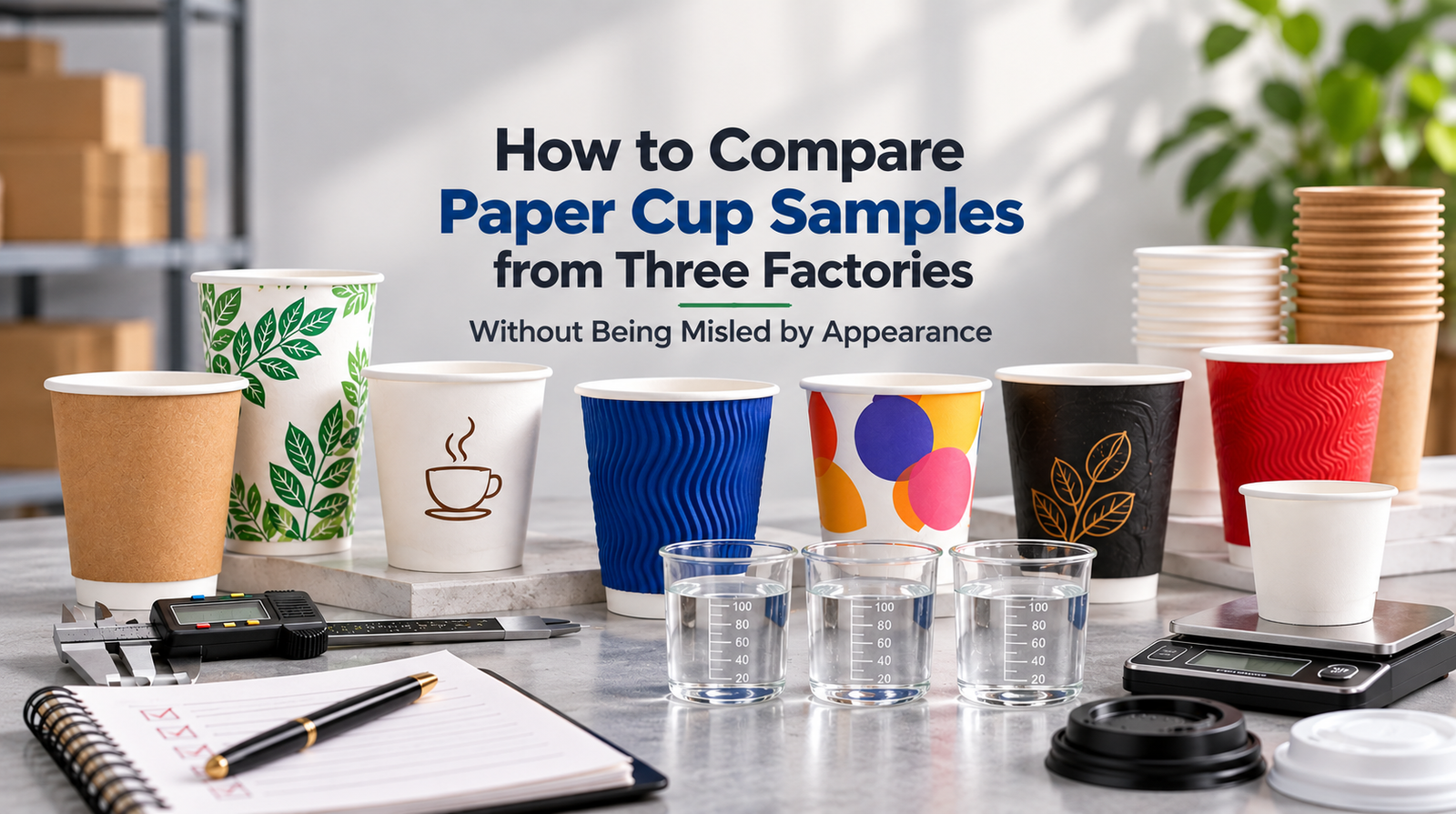
A quick check costs you almost nothing. Smell your sample cup straight from its packaging. Then fill it with hot water or your actual beverage and check again after a few minutes. One published QC benchmark sets “no detectable odor at 5 minutes” as the pass criterion after hot water contact.
For a more rigorous check, ask whether a formal sensory panel test has been run on your order. Request the result. This matters most on a new supplier relationship or after a material change. That single question tells you whether your supplier treats odor as a tracked quality metric or an afterthought.
Where this guidance doesn’t generalize
Odor and taste sensitivity vary by beverage type, individual sensitivity, and your specific storage and shipping route. The causes and standards referenced here come from published industry and regulatory sources, not a confirmed XINNENG test result.
A cup that passes a quick smell check can still develop an issue later. Your own extended storage or an unusually long shipping delay can cause that. Treat this article as a framework for diagnosing a complaint, not a guarantee that covers every condition your cups might face.
FAQ
Why does my coffee sometimes taste like cardboard from a paper cup?
This usually points to raw material or ink issues, particularly residual solvents or lower-grade pulp. Ask your supplier about their ink chemistry and pulp grade if this happens consistently.
Is a musty smell after storage a manufacturing defect?
Not necessarily. Musty odor after storage often points to your own warehouse humidity or damp stacking conditions, not a factory-side defect. Check your storage environment before assuming a bad batch.
Does heat-triggered odor matter for your cold cups too?
Less so. Heat-triggered off-gassing is specifically a hot-beverage risk, since heat releases volatile compounds a cool cup won’t show. Your cold-cup odor complaints more often trace to storage or raw material issues instead.
What test can I run myself before approving a full order?
Smell a sample straight from its packaging. Then fill it with your actual hot beverage and check again after several minutes. This simple test catches many of the most common odor issues.
Are there real standards for testing packaging odor and taste for your reference?
Yes. ISO 13302, EN 1230-1, and DIN 10955 all address sensory testing of food-contact packaging. EU Regulation 1935/2004 sets a legal requirement that packaging not alter a food’s organoleptic properties.
Should I worry about odor complaints if I only sell domestically outside the EU?
The regulatory requirement is EU-specific, but the underlying quality issue isn’t. A customer complaint about taste affects your business regardless of which regulation technically applies to your market.
Which single cause should I ask my supplier about first?
Printing, per XINNENG’s own experience with real complaints. Ask about ink chemistry and drying control before you assume the board or your storage is at fault.
Get Your Specific Cause Identified Before Your Next Order
Tell XINNENG when you noticed the smell or taste — straight from the carton, after storage, or only with a hot fill. That detail alone points toward raw material, process, or storage as the likely cause. Ask for your ink chemistry, coating resin grade, and any sensory test results on your specific production run.