
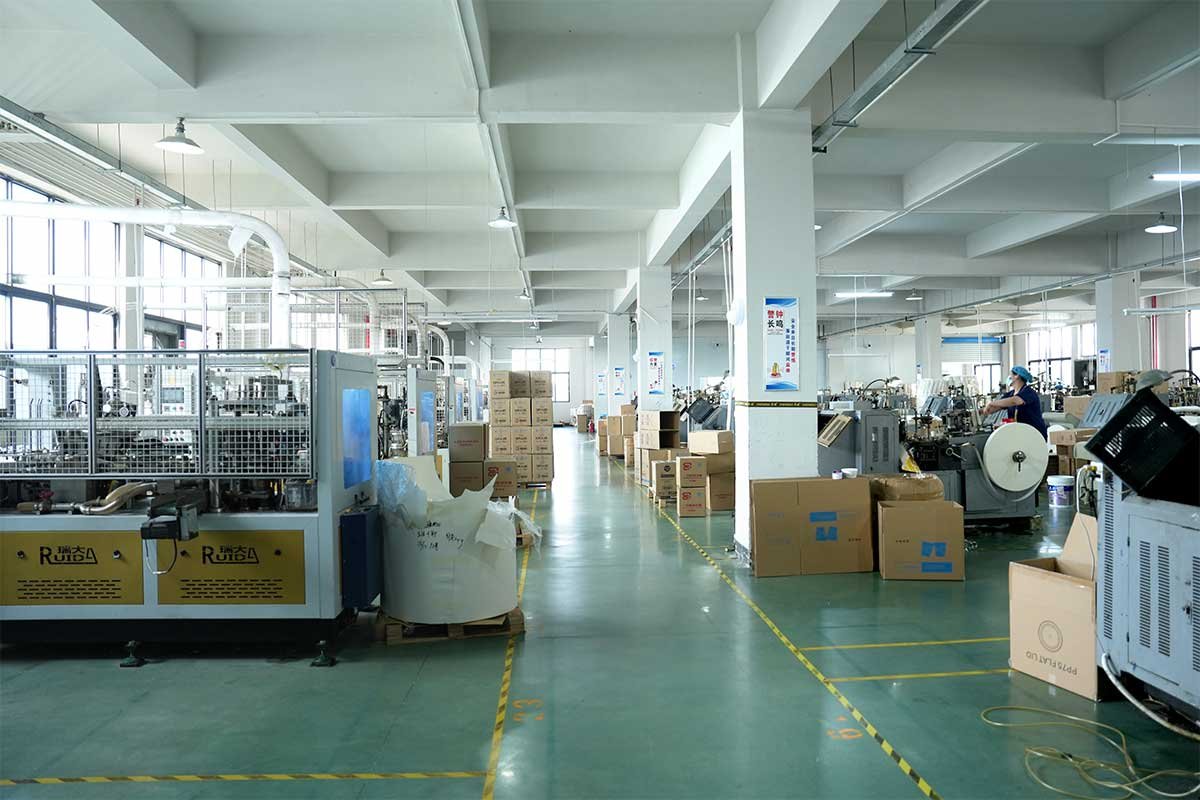
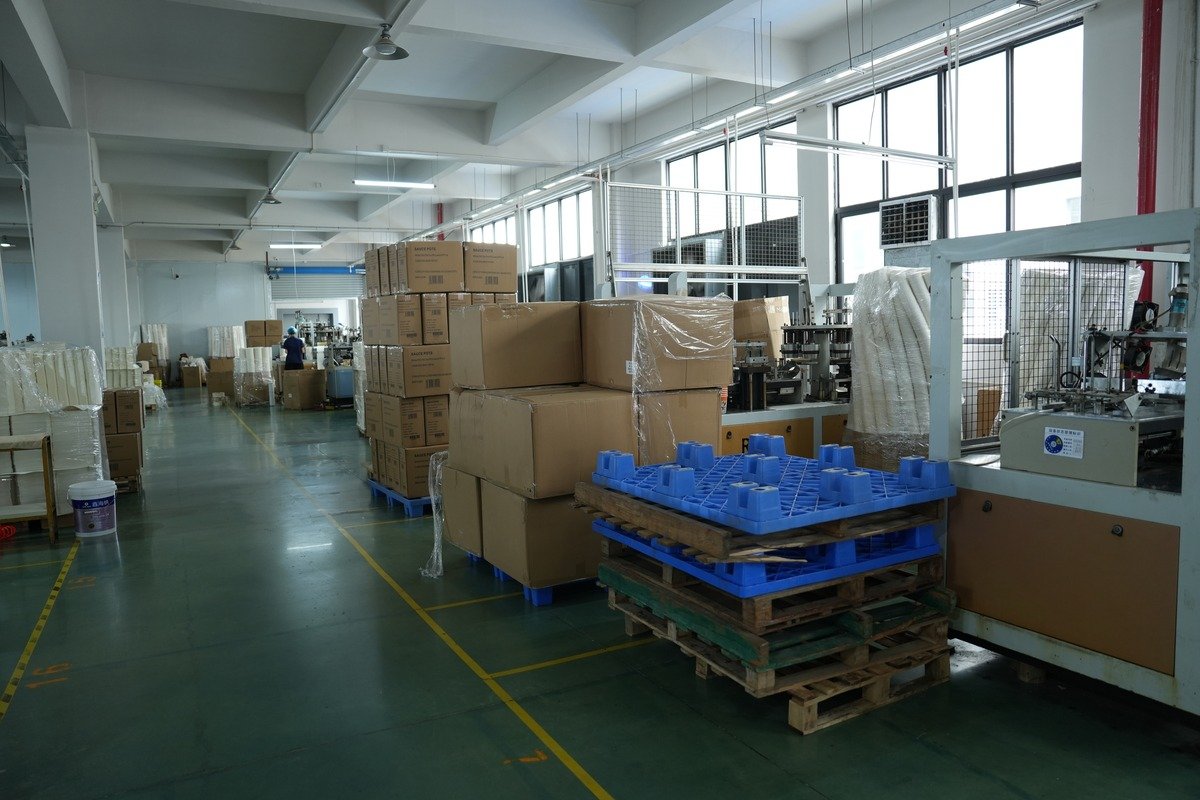
XINNENG makes custom paper food containers at its Foshan plant in Guangdong, China. We specify the base and lid together for takeaway, meal prep, and delivery.
Your portion weight and tallest topping help us select the container depth. Your menu guides the coating choice for dry, oily, or sauced dishes. We review artwork with the lid fitted so your branding stays visible.
- Experiencia en fabricación desde 2009
- Fábrica de 6,000 m² en Foshan
- Formatos de pared simple, doble y ondulada
- Muestras disponibles en 3–5 días
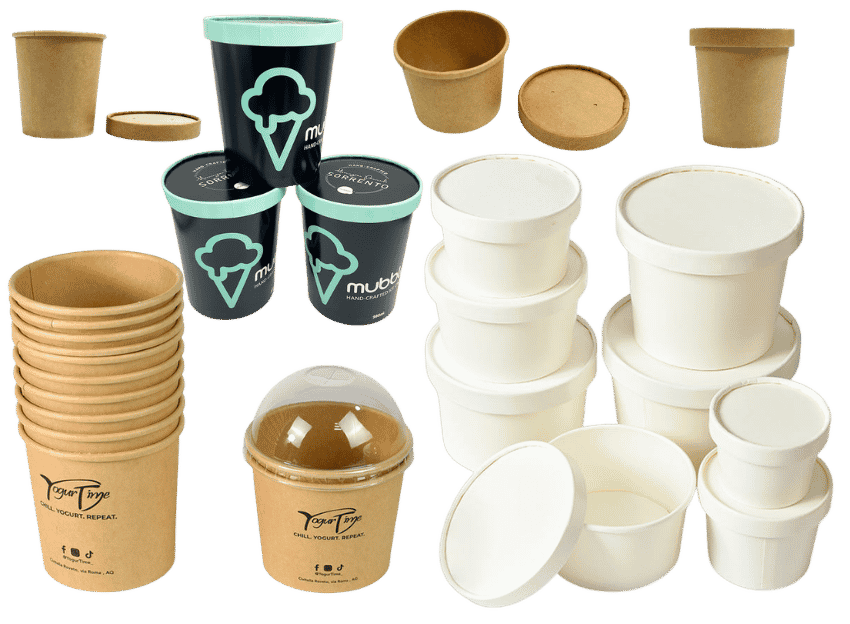
15+ yrs
Experiencia en empaque de papel
6,000 m²
Base de producción en Foshan
300+
Paper Food Containers Specs
OEM / ODM
Del arte a la producción en masa
Global
Soporte de empaque para exportación
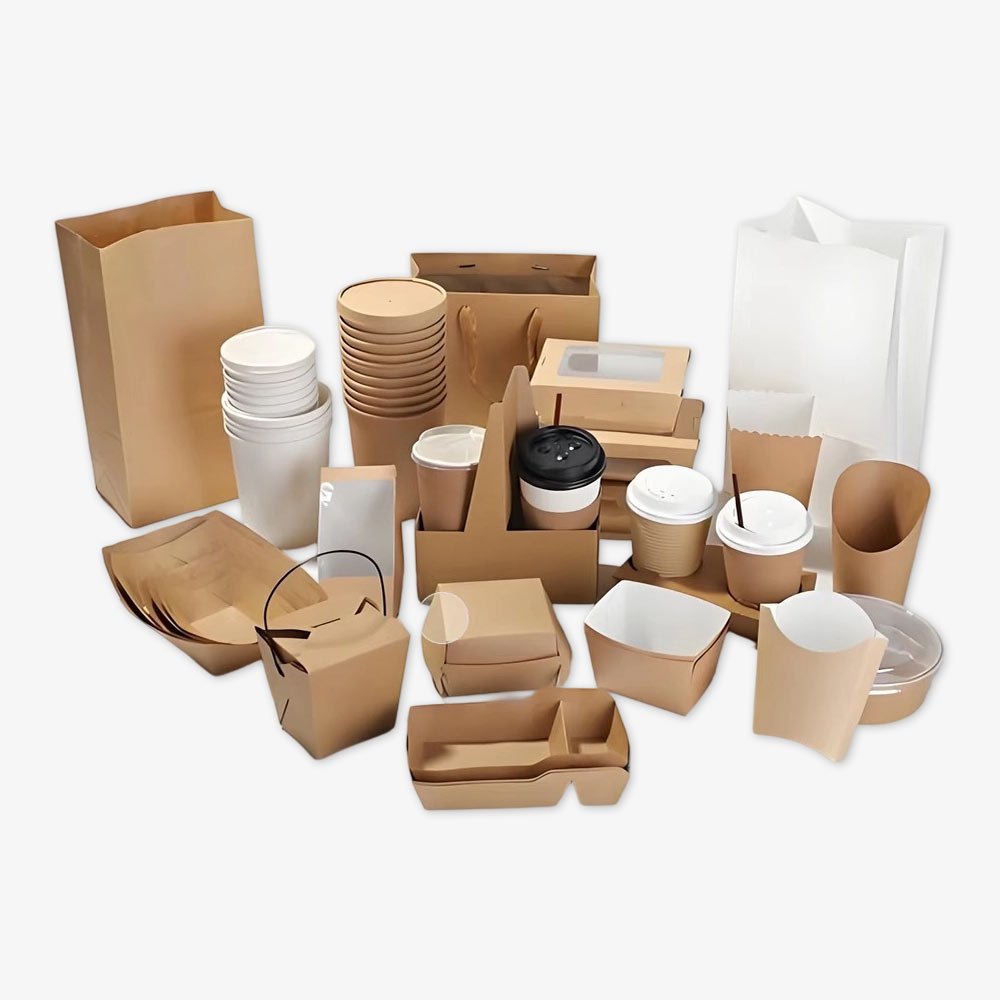
What is a paper food container?
A paper food container holds solid food and pairs with a lid for transport. XINNENG specifies the base and lid together under one quality control record. When choosing disposable paper food containers, start with a portion from your own menu. A rice meal with separate sides needs a different shape than noodles with broth. For dishes served in deeper containers, explore our tazones de papel para sopa and paper noodle bowls.
Base shape
A deep bowl keeps loose ingredients together and leaves room for stirring. Choose a compartment tray when sides should stay separate until customers eat.
Fill space
Pack your usual serving, including sauces, garnishes, and the tallest topping. Close the lid and check whether its underside touches or flattens the garnish.
Lid fit
Press the lid into place around the entire rim of the filled base. Check each edge for gaps before packing the meal for delivery. Lift the container and check whether any edge loosens.
Packed meals
Stack filled containers inside the bag your team uses for customer orders. Lift the bag and check whether the lower lids bend under load. Open the bottom container and check for flattened toppings.
Choose the container format before the size
Start with the food, not the capacity number. XINNENG reviews how you portion, pack, and serve each dish. Your menu helps us match the container shape and closure to your packing routine.
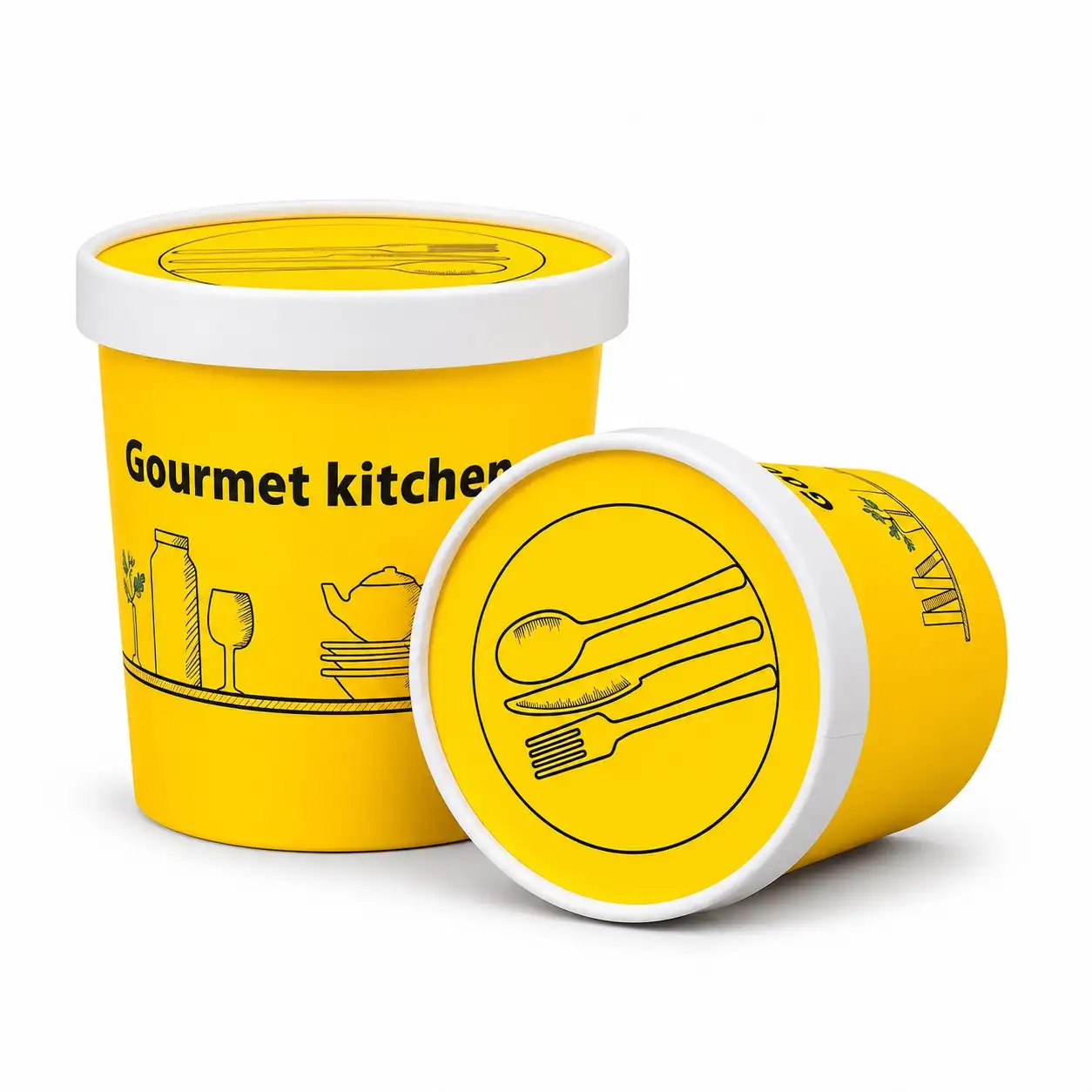
A deep bowl holds noodles and broth together while leaving room for toppings. Choose an opening wide enough for customers to reach the noodles. Check that taller toppings sit below the closed lid.
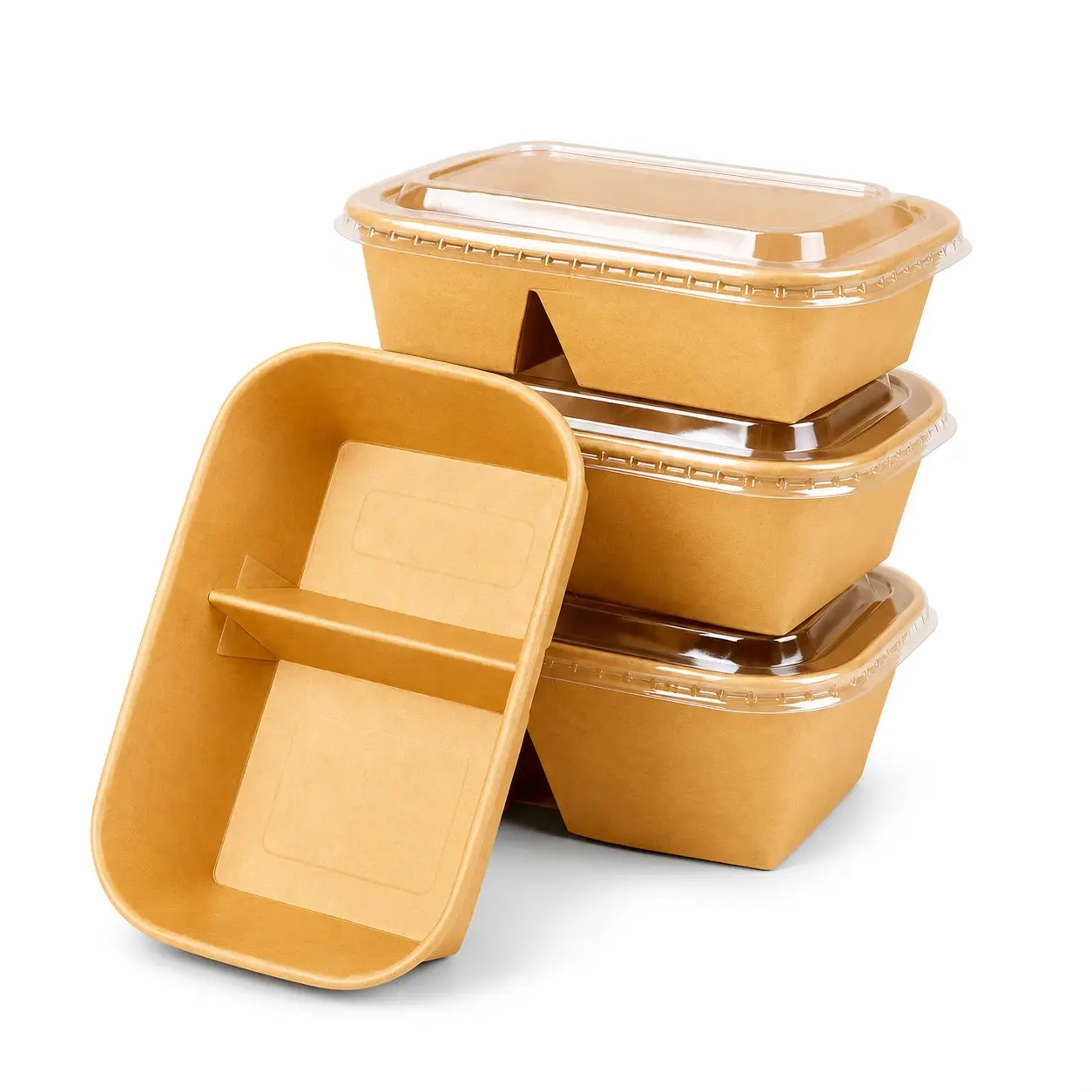
Divided trays
A divided tray keeps your main dish and sides in separate portions. Give rice the larger compartment and place vegetables in a smaller one. Check each compartment against the scoop your kitchen uses.
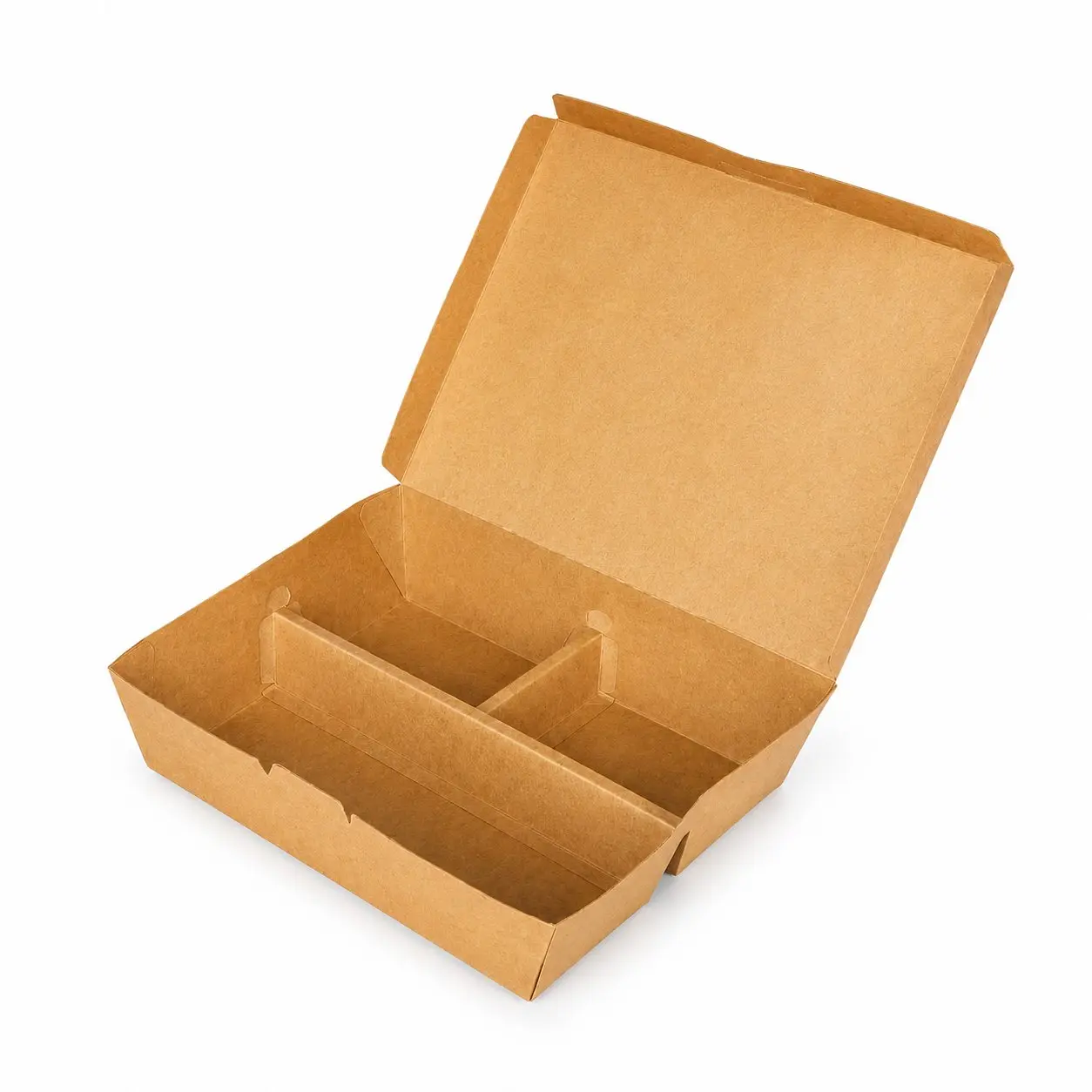
Takeaway boxes
Choose a flat box for pastries or chilled wraps that need a level base. For burgers, a hinged clamshell keeps the lid attached during packing. Check the closed lid clears your tallest item.
Share a photo of your usual portion and tell XINNENG how you pack it. We can review bowl depth, tray compartments, or box height around your meal.
Match the lid to the base, not just the opening
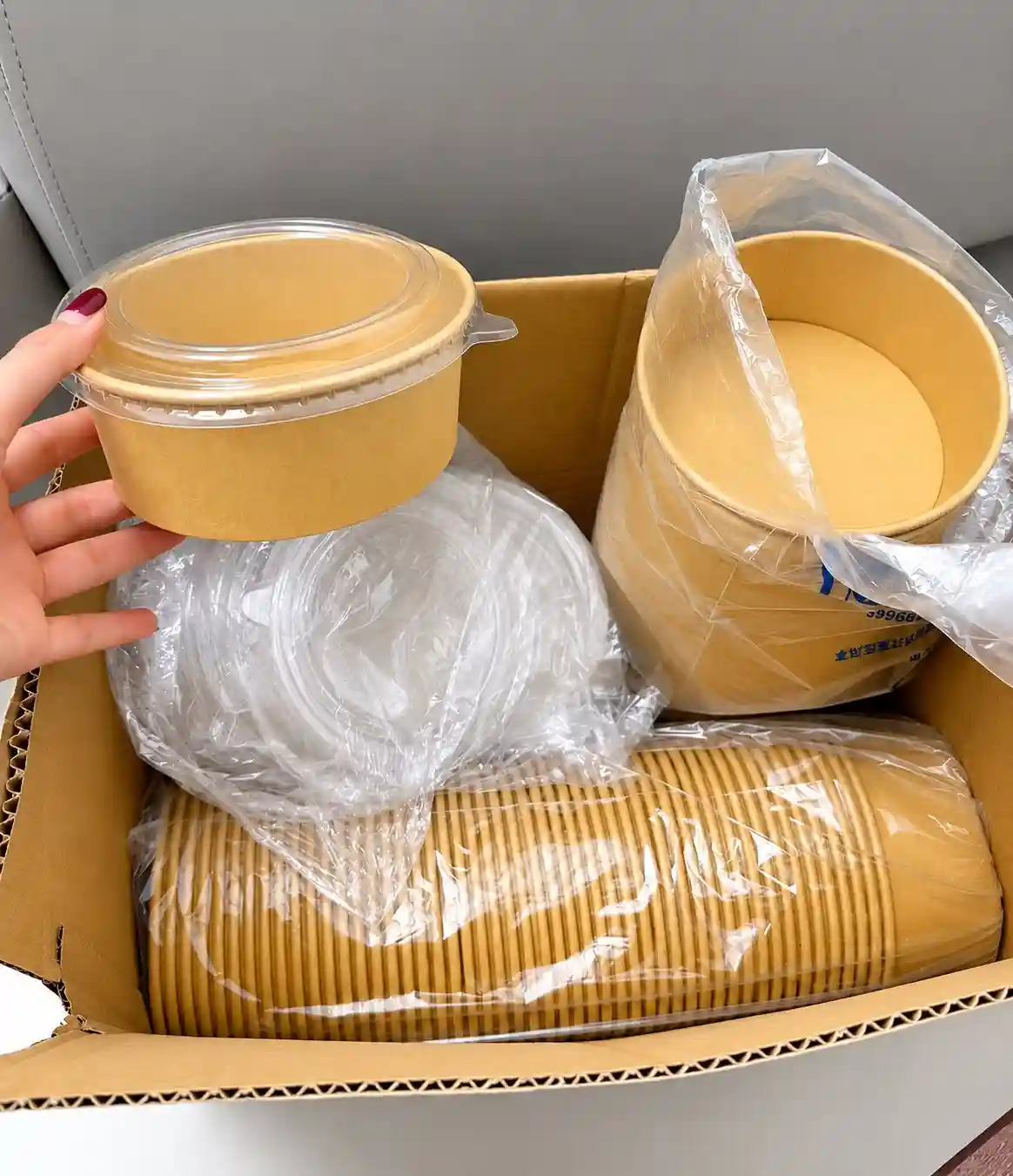
A lid must fit the rim, the fill and the journey. When choosing paper food containers with lids, start with a portion your kitchen serves. A lid can sit evenly on an empty base yet press against a garnish.
What does the lid need to do?
For a topped meal, leave enough clearance to preserve the presentation. For a sauced dish, check the rim for seepage after carrying the container. If staff stack meals, check whether the lower lid touches the food.
Why base-and-lid matching matters
XINNENG records your base and lid together under one specification. Both components share one quality control record. When reordering, reference the approved pair so your kitchens receive the same combination.
Where to learn more
For round portions, start with the bowl and lid fit guide. For display counters, see how customers view portions through different lids. Bowl shape and lid clarity
Check the lid against your filled container
Send XINNENG your base dimensions and a side photo of your usual portion. Tell us how many filled containers you stack in each delivery bag.
Size the container by fill weight, not by name
A fluid-ounce rating tells you the container’s volume. Your serving weight and food shape determine how much space the meal needs. A rice portion may sit below the rim while a lighter garnish touches the lid. XINNENG reviews your filled portion and lid together when sizing a paper food container.
What to measure for your portion
| Portion or format | Qué medir | What to check with the lid |
|---|---|---|
| Round containers for sauced meals | Weigh the noodles and toppings. Measure the broth your kitchen adds per serving. | Close the lid over your tallest topping. Check whether it presses into the food. |
| Small portions and tasting sizes | Weigh one serving from your usual scoop. Include any garnish packed on top. | Close and reopen the container. Check whether dressing or garnish transfers to the lid. |
| Large portions for catering | Weigh the full catering portion. Measure its height where the food sits highest. | Stack filled containers as your team packs them. Check whether lower lids touch the food. |
What to measure for your portion
XINNENG lists different capacities for open bowls and matched-lid soup containers. Both include a 16 oz option, so specify the format alongside your portion size.
| Capacidad | Container format | Portion to try | Lid arrangement |
|---|---|---|---|
| 8 oz | Open paper bowl | A tasting portion, fruit side, or single scoop of pasta salad. | Order a matching lid for takeaway service. |
| 12 oz | Open paper bowl | A side salad with dressing or a small grain bowl. | Select the lid separately and check garnish clearance. |
| 16 oz | Open paper bowl | A single rice or pasta portion served at the counter. | Specify a separate lid for takeaway orders. |
| 16 oz | Paper soup container | An individual soup portion packed for pickup or delivery. | Container and matching lid form one set. |
| 24 oz | Paper soup container | Noodle soup with sliced vegetables, broth, and a small garnish. | Check garnish clearance beneath the matching lid. |
| 26 oz | Open paper bowl | A full grain bowl with rice, protein, and leafy toppings. | Choose a separate lid around your tallest topping. |
| 32 oz | Paper soup container | A larger ramen portion or stew with chunky ingredients. | Check the matching lid with the full portion inside. |
| 48 oz | Paper soup container | A sharing portion of soup packed alongside a family meal. | Assess the filled set inside your delivery bag. |
| 64 oz | Paper soup container | A catering portion of broth or stew for serving across several bowls. | Specify the container and matching lid together. |
Find a container for your serving size
Send XINNENG your menu item, portion weight, and a side photo showing topping height. Include the broth volume if your team adds it separately.
Paperboard and coating by food type
Dry, oily and liquid foods need different barriers. A dry pastry mainly touches the base where it rests. Salad dressing can collect along the bottom edge during delivery. XINNENG reviews your menu and holding time when specifying the board and coating.
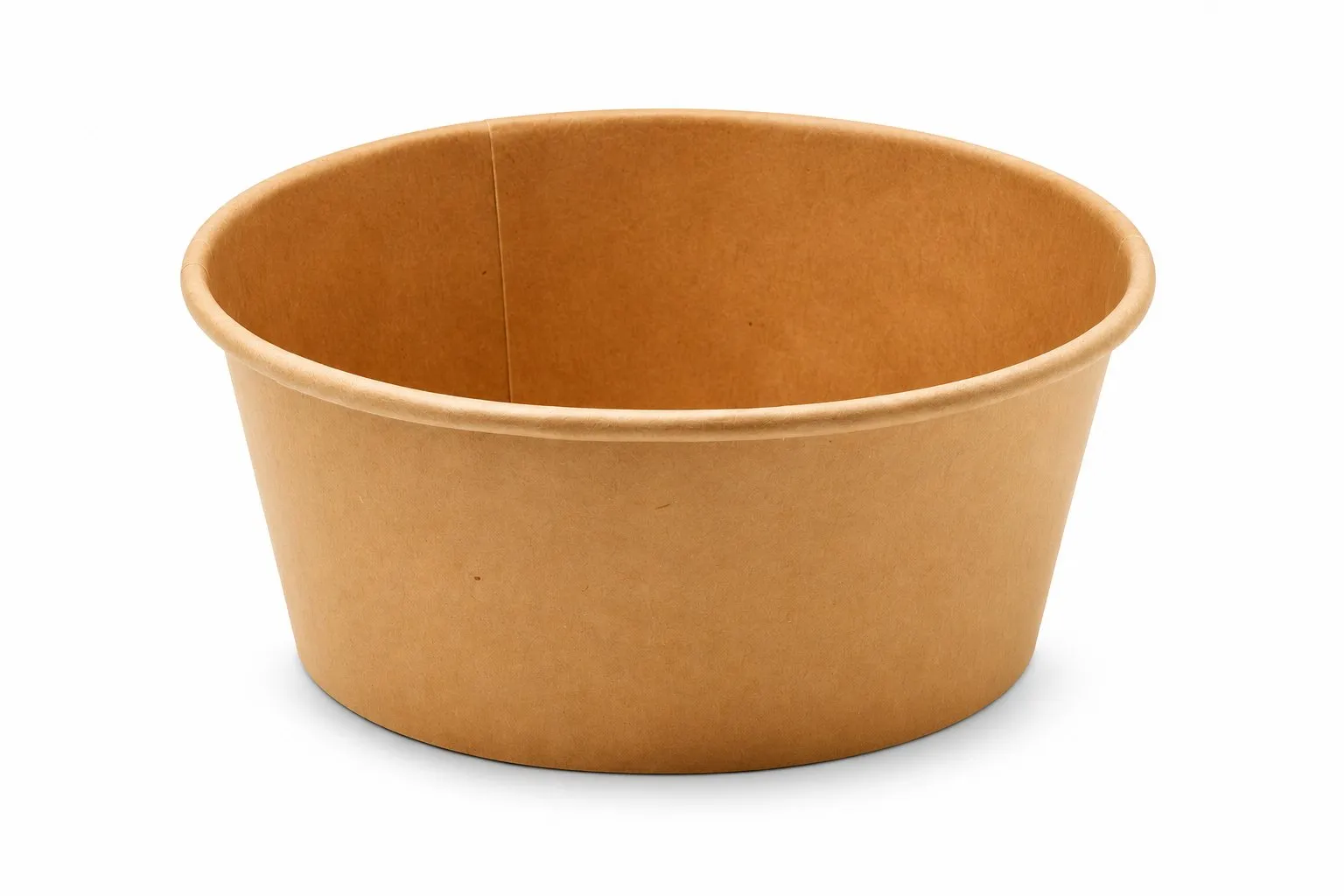

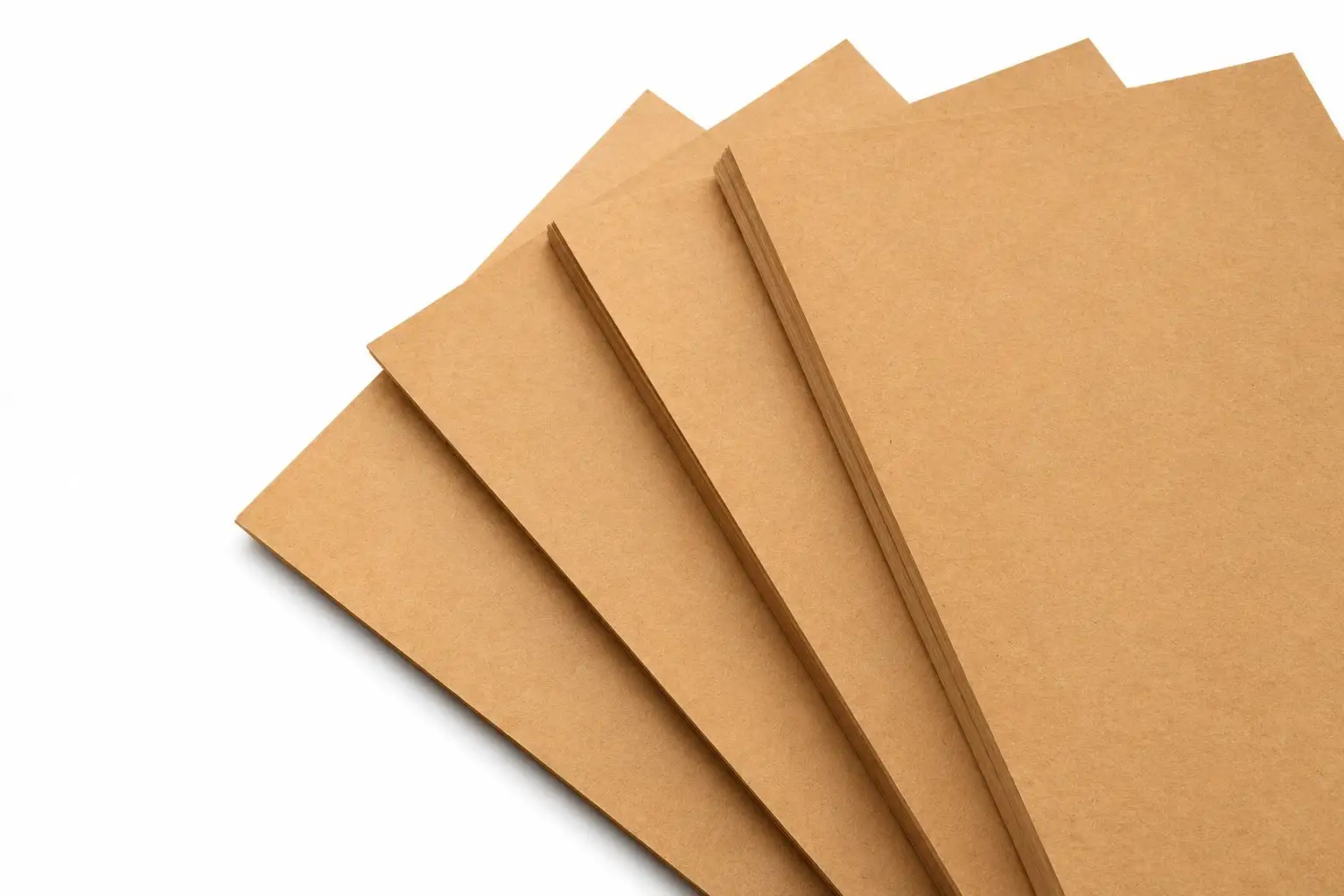
01
Cartón kraft
Kraft board gives the outside of your container a natural brown finish. For fried foods, check the base for grease marks after packing your usual portion.
02
White and brown options
Choose white or brown board around your artwork and food presentation. For dressed salads, check where liquid collects after the container travels in your delivery bag.
03
Recycled fiber
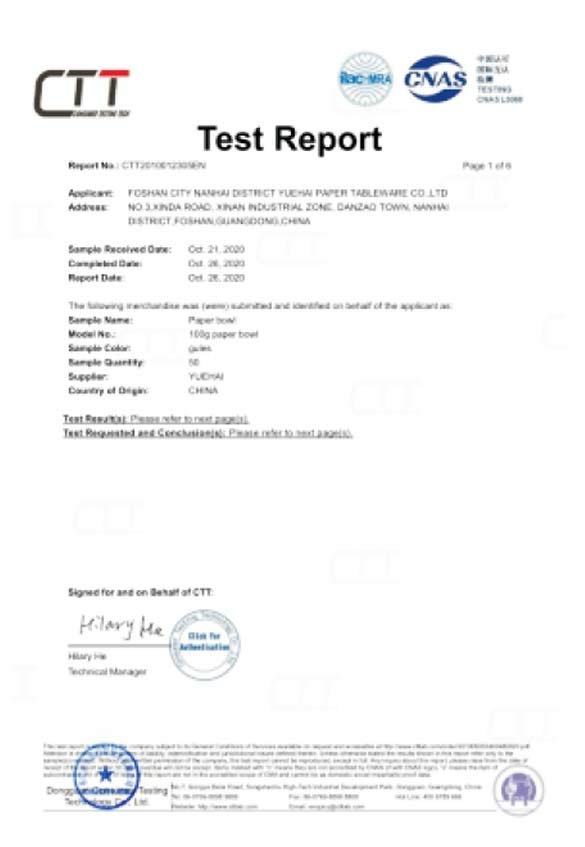
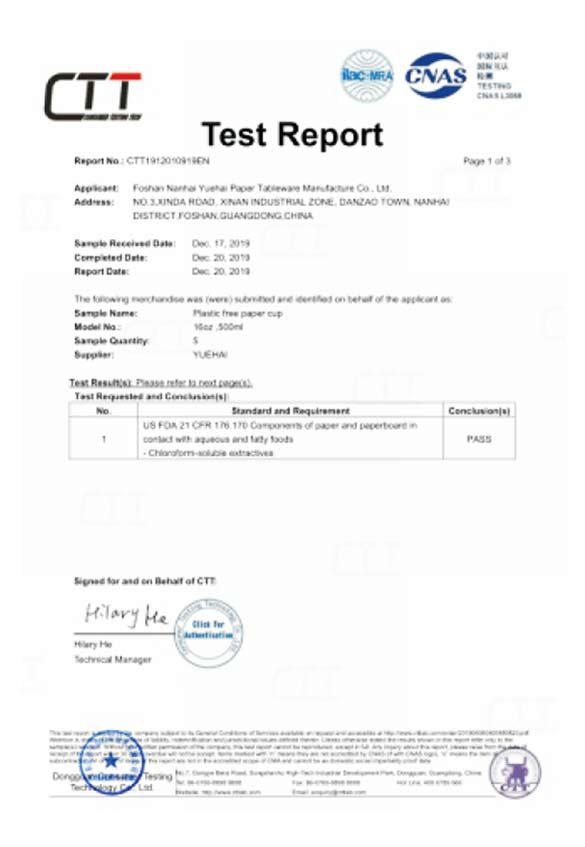
If your brief specifies recycled fiber, request documentation for the board. Check that the document identifies the component and covers contact with your food.
Match the coating to your menu
Tell XINNENG which food touches the board and how long it stays packed. Include your preferred board color and any documentation your market requires.
Cómo los vasos de papel aislantes reducen el calor que llega a su mano
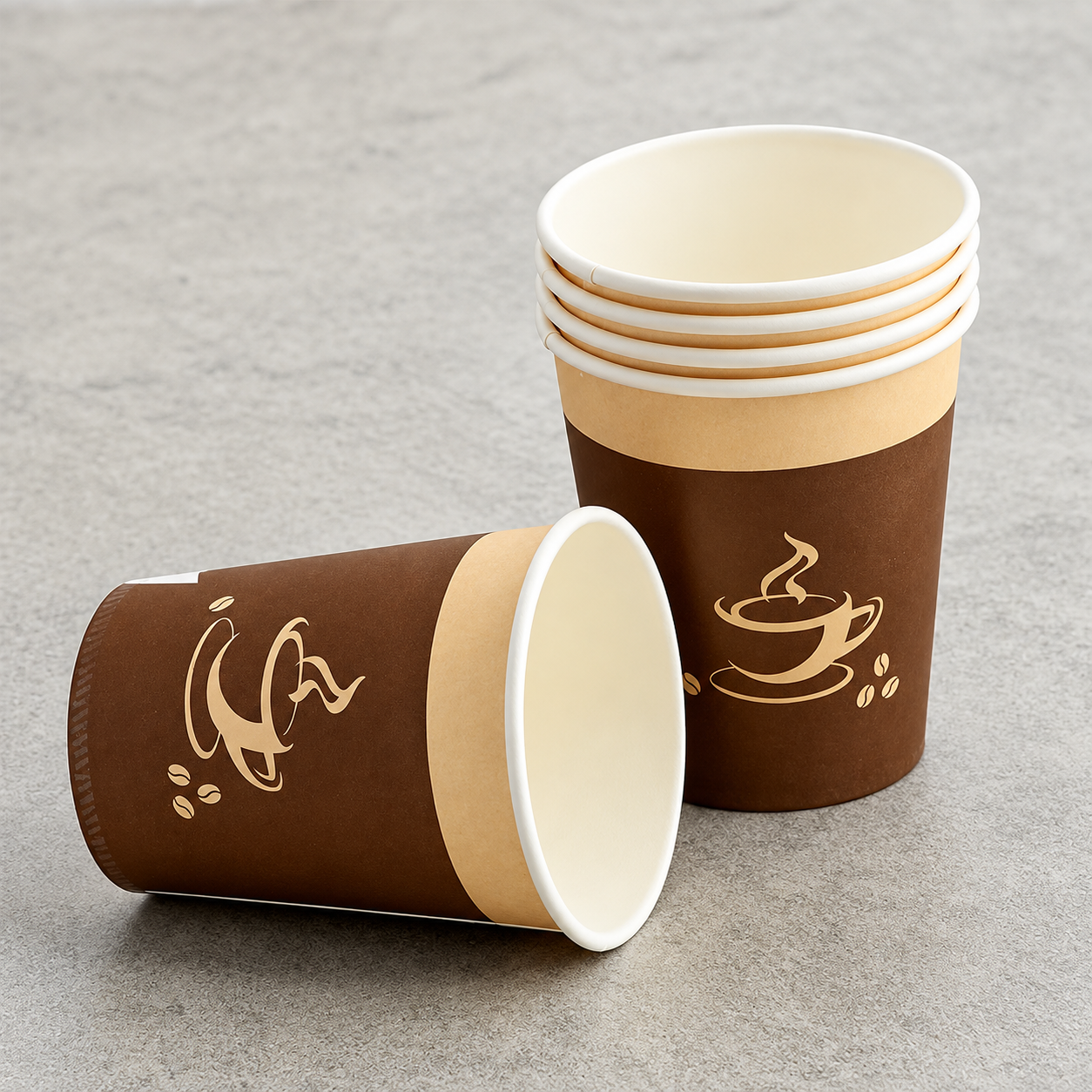
Print belongs where the buyer sees it first. A lid graphic faces customers looking down at a display. A side panel stays visible when staff stack meals on a pickup shelf. XINNENG reviews your artwork against the assembled container so you can assess both views.
What to print
Give your logo a clear spot on the front panel. Place the dish name where staff can read it without opening the container.
What to send
Send your vector artwork, brand color reference, quantity, and delivery destination. Identify the container and lid so XINNENG can review the correct layout.
How to review
Fit the lid onto your printed sample before approving the artwork. Check whether the lid edge covers lettering near the top of the base.
For help preparing your logo files, read our packaging artwork guide.

Built for takeaway, delivery and meal prep
Takeaway containers must withstand stacking throughout the holding period. XINNENG reviews your food, packing routine, and handover when specifying paper takeaway food containers. A curry traveling by bike puts different demands on its lid than a counter order.
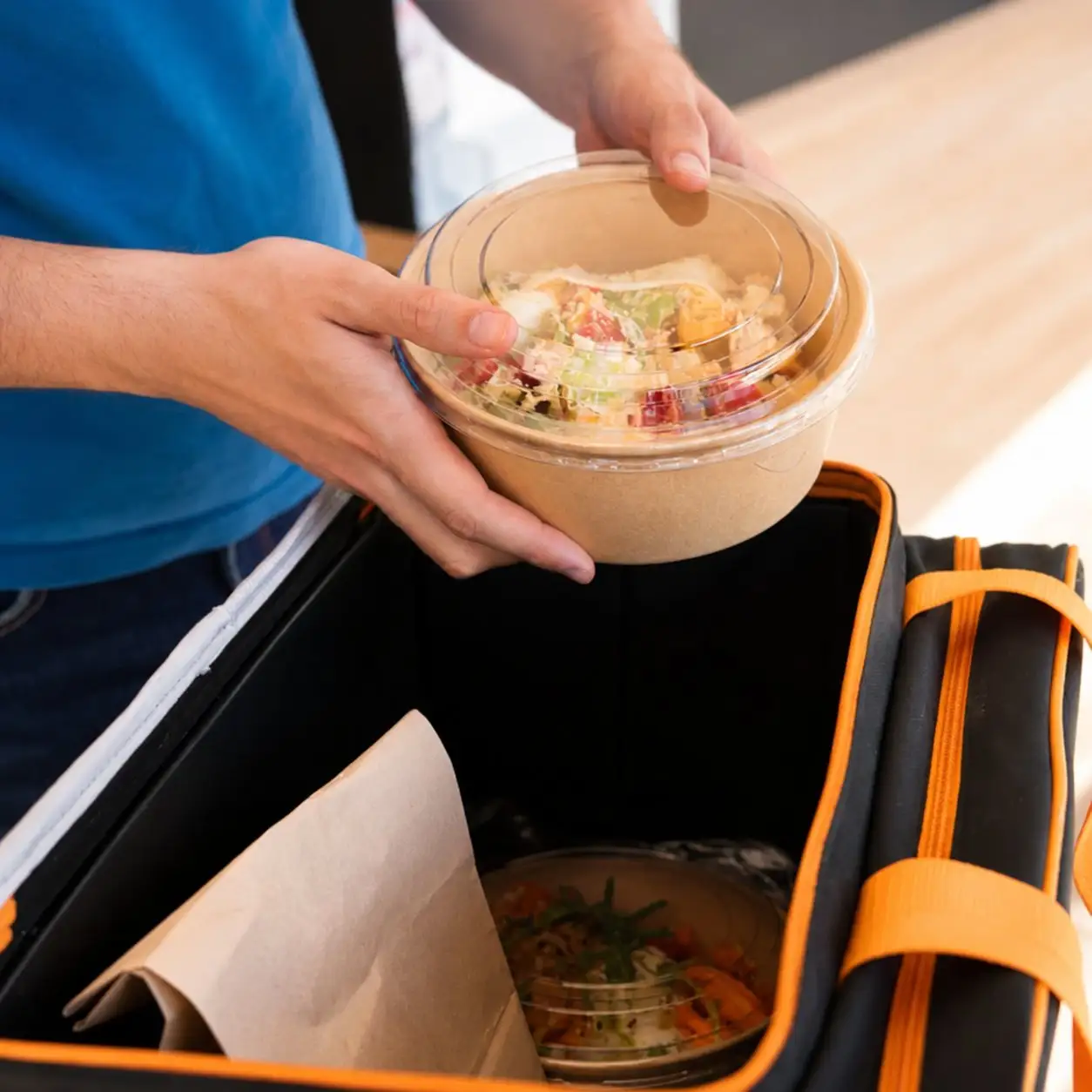
Fill a container with your usual rice portion, curry, and garnishes. Pack it alongside other orders in your delivery bag. Check the rim for spills at handover.

Meal kits
Label each dish as your team portions meals for each location. Stack the containers in their delivery crates. Check that staff can read every label without unstacking.

Event counters
Face each menu label toward staff at your stadium pickup counter. Arrange closed containers by dish before service. Leave enough space to lift each order during rushes.
Plan your takeaway packaging
Tell XINNENG what you serve and how long each meal stays packed. Include your bag dimensions and the number of containers you stack per order.
Can Paper Food Containers Go in the Microwave?
Only when the complete construction supports reheating. Paper alone does not make a container microwave safe. The base, coating, lid, print and food all matter. Test the filled container under your own microwave settings before approval. Ask us for written guidance with your specification.
What to check before reheating
Confirm the base, lid, food and print together.
| Componente | Qué confirmar | Por qué importa |
|---|---|---|
| Container base | Confirm the selected base supports your reheating conditions. | Heat passes through the base into the food. |
| Lid | Check lid instructions before heating a filled container. | Lid materials can need different heating conditions. |
| Food and duration | Assess oil, sugar, moisture, fill depth and heating time. | Each food type can stress the container differently. |
| Print details | Exclude metallic accents unless the printed container is tested. | Decorative details become part of the finished container. |
| Revisión de muestra | Test approved samples with your food and microwave settings. | Your routine gives the most relevant handling evidence. |
XINNENG can review your filled-food conditions against the selected base and closure. Read our microwave procurement guide before finalizing a reheat-focused container specification
Review your reheating requirements
Send XINNENG your food type, heating routine, and closure reference. Include your selected container for a relevant sample review.
Are paper food containers compostable or recyclable?
Neither claim follows from paperboard alone. Coating, print, residue and local collection decide it. Do not print disposal wording until evidence covers the finished container.
Compostability claims
A compostable claim must cover the complete container, including coating and print. Confirm the receiving facility accepts that exact construction before printing instructions.
Recycling routes
Local acceptance decides whether food-service paperboard enters paper recycling. Food residue and barrier materials can change sorting outcomes.
Separate components
Specify lids, sleeves, labels and containers as separate components. One shared order reference keeps every disposal answer traceable.
Review your reheating requirements
Send XINNENG your food type, heating routine, and closure reference. Include your selected container for a relevant sample review.
What a sample container proves
A sample connects your written specification with the container customers receive. Check the same base, coating, lid and artwork listed on your order.

Filled sample review
Fill the approved container with your usual meal. Inspect the rim and base after packing.

Lid fit check
Fit the selected lid around the full rim. Check every edge after closing.
Delivery bag check
Place packed containers in your delivery bag. Inspect the bases after normal carrying.
Artwork proof
Compare printed samples with the approved artwork. Check details near seams and lid edges.
Plan your sample review
Send XINNENG your chosen container, lid, food, and artwork reference. Include the observations your team needs before approving production.
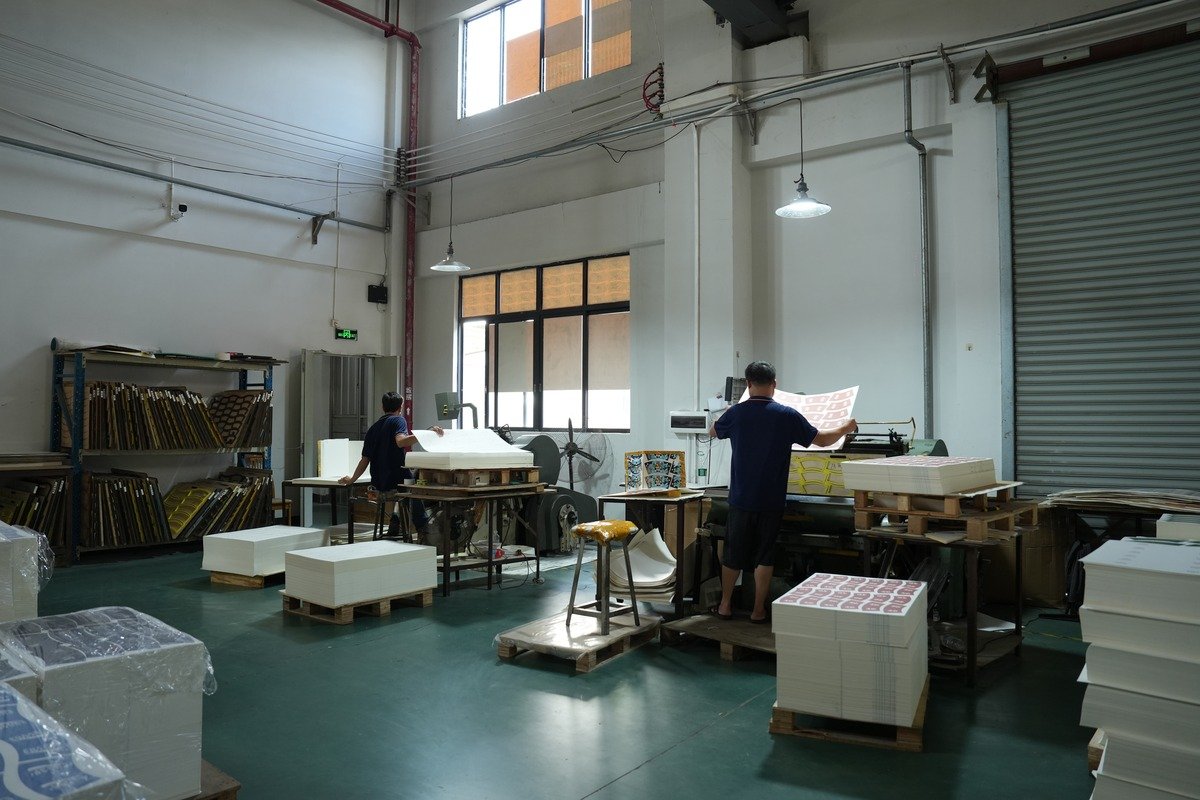
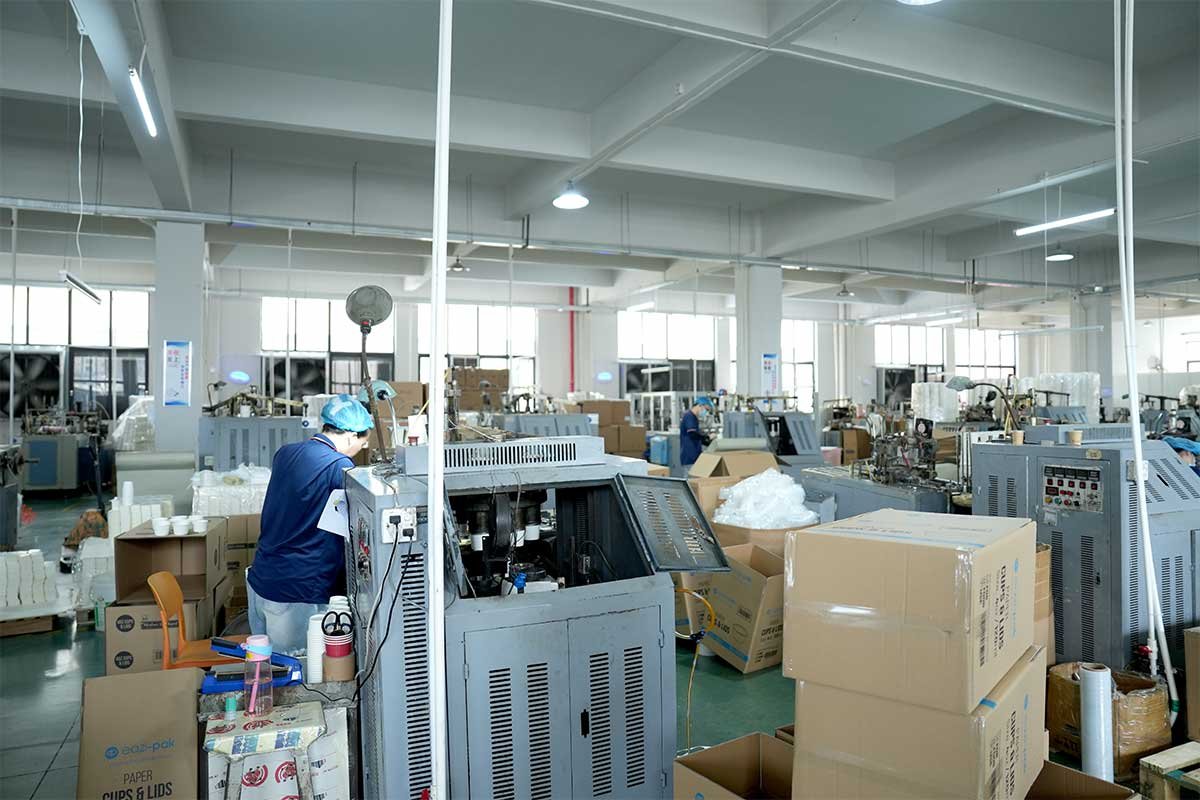
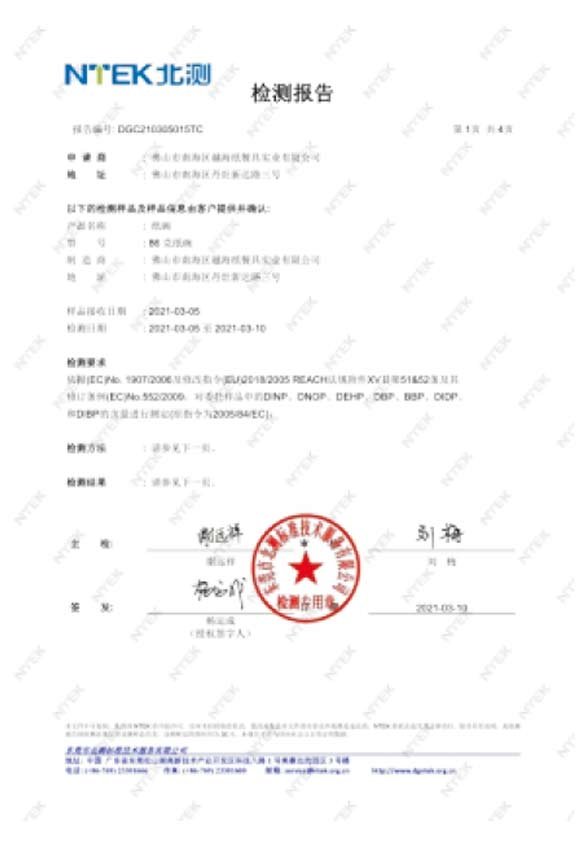
XINNENG records the approved container configuration before production begins at its Foshan plant. Keep each change linked to the relevant artwork, lid, and container reference.






Order brief
Share the container, lid, food, quantities, artwork, and delivery destination for quotation review.
Configuration
Review each quoted base, coating, lid, print, packing, and sample requirement before approval.
Artwork review
Confirm the selected artwork version, placement, colors, and text against the container reference.
Aprobación de muestra
Approve the identified sample after checking food, closure, artwork, and normal handling conditions.
Production checks
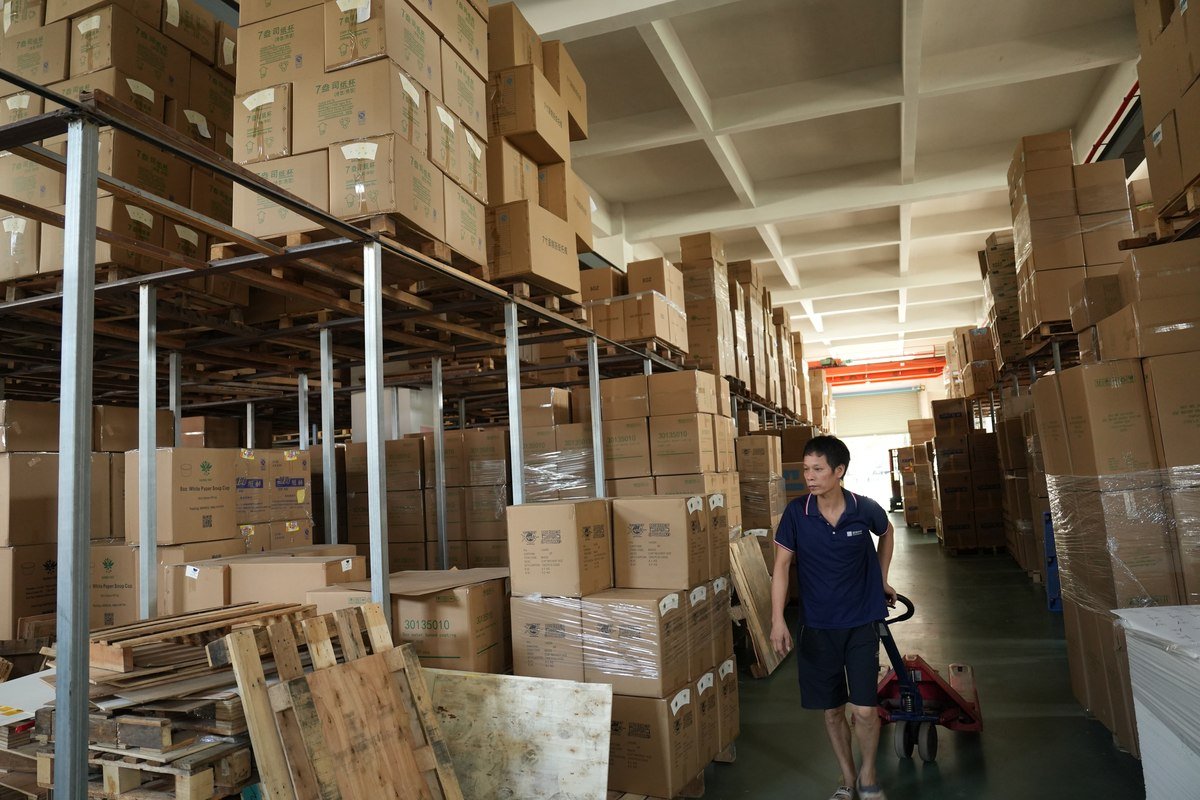
Production follows the approved configuration and records each finished container through inspection stages.
Packing stage
Completed containers are stacked, packed, and prepared around the agreed delivery and order requirements.
Prepare el desglose de su pedido
Send XINNENG your quantities, container references, lid requirements, artwork, and delivery destination. We can review the quotation scope with you.
Use this video when discussing your preferred paper food container format with XINNENG.
Notice the base shape, lid style, print treatment, and packing details.
Identify the configuration you want us to review.
Appearance alone does not confirm suitability for your meal, delivery bag, or heating routine.
Review the selected specification alongside a filled physical sample.
Share a timestamp with your container size, order quantity, and closure reference.
XINNENG can discuss the relevant configuration and sample checks.
Use a video timestamp to identify the container details you want to discuss.
Bring your paper food container order together
Send XINNENG your container format, lid reference, coating preference, artwork, and quantities. Include packing details and delivery destination for a clear quotation scope.
Paper food container FAQs
What are paper food containers used for?
Paper food containers pack prepared meals, sides, salads, rice dishes, and takeaway portions. Choose the base and lid around your actual menu and handover routine.
Can paper food containers hold hot food?
Paper food containers can hold hot food when the selected construction suits service. Review filling conditions, holding time, coating, and closure before approving an order.
Can paper food containers go in the microwave?
Microwave use depends on the selected base, coating, lid, food, and heating conditions. Check the complete container specification before providing reheating instructions.
How do I choose a paper food container size?
Start with your finished portion, including sauce, toppings, and required headspace. Fill a sample before confirming capacity for daily service or delivery.
How do I match a lid to a food container?
Match the lid to the container rim and selected base reference. Test the filled pair inside your usual delivery bag before approval.
Can I order custom printed paper food containers?
XINNENG can review custom printed paper food container artwork for your selected configuration. Send vector files, color references, quantities, and the relevant container reference.
How do coating choices affect paper food containers?
Coatings provide liquid resistance and must suit the selected food and service conditions. Specify the construction before making disposal or performance statements.
Are paper food containers recyclable or compostable?
Disposal routes depend on finished construction, food residue, and local collection systems. Review containers, lids, labels, and sleeves separately when disposal routes differ.
Should I approve a sample before production?
A filled sample helps assess the actual meal, closure, artwork, and delivery routine. Use the approved sample reference throughout quotation and production review.
What details does XINNENG need for a quotation?
Send container format, size, lid, coating, artwork, quantities, packing, and delivery destination. Separate requirements by design or destination when specifications differ.