You can’t verify FDA compliance from the words “food grade” alone. The FDA doesn’t approve or certify finished paper cups as a finished product. It sets standards for each material component instead: the paperboard, the coating, the ink, and the adhesive. Your supplier carries the compliance burden for each one, so you need to check compliance component by component, not cup by cup.
The problem you’re actually solving
A supplier tells you their cups are “FDA approved.” You accept that and move on. Then a customer, auditor, or retail buyer asks for the actual documentation behind that claim, and you have nothing to show them.
This happens because “FDA approved” isn’t accurate language for food packaging in the first place. The FDA doesn’t run a certification program that stamps finished packaging products as approved. It sets rules for individual food-contact substances, and the manufacturer is responsible for determining and documenting that each substance in their product meets those rules.
You carry real exposure here as the importer. If your supplier can’t produce component-level documentation, you’re the one holding an unverifiable claim when a customer or regulator asks for it.
Definitions: what actually determines compliance
Food contact substance. Any substance that’s reasonably expected to migrate into food from your packaging. This is the FDA’s actual unit of regulation, not “the cup,” but each substance in it that could reach the beverage.
Component-level compliance. A paper cup isn’t one material. It’s a substrate plus a coating plus an ink plus an adhesive, and each one needs its own compliance basis under the relevant part of 21 CFR. A supplier who documents only the paperboard substrate hasn’t documented the whole cup.
The four compliance pathways. A food contact substance reaches legal status in the US through one of four routes: a listing in the applicable 21 CFR sections, a Food Contact Notification (FCN) specific to that substance and use, GRAS status, or prior sanction predating 1958. Ask which pathway applies to each component in your cup. A real supplier can name one.
Intended conditions of use. Compliance isn’t unconditional. A substance’s approved status depends on the food type, temperature, and contact duration it was reviewed for. A coating cleared for cold, short-contact use isn’t automatically cleared for hot, long-hold beverages.
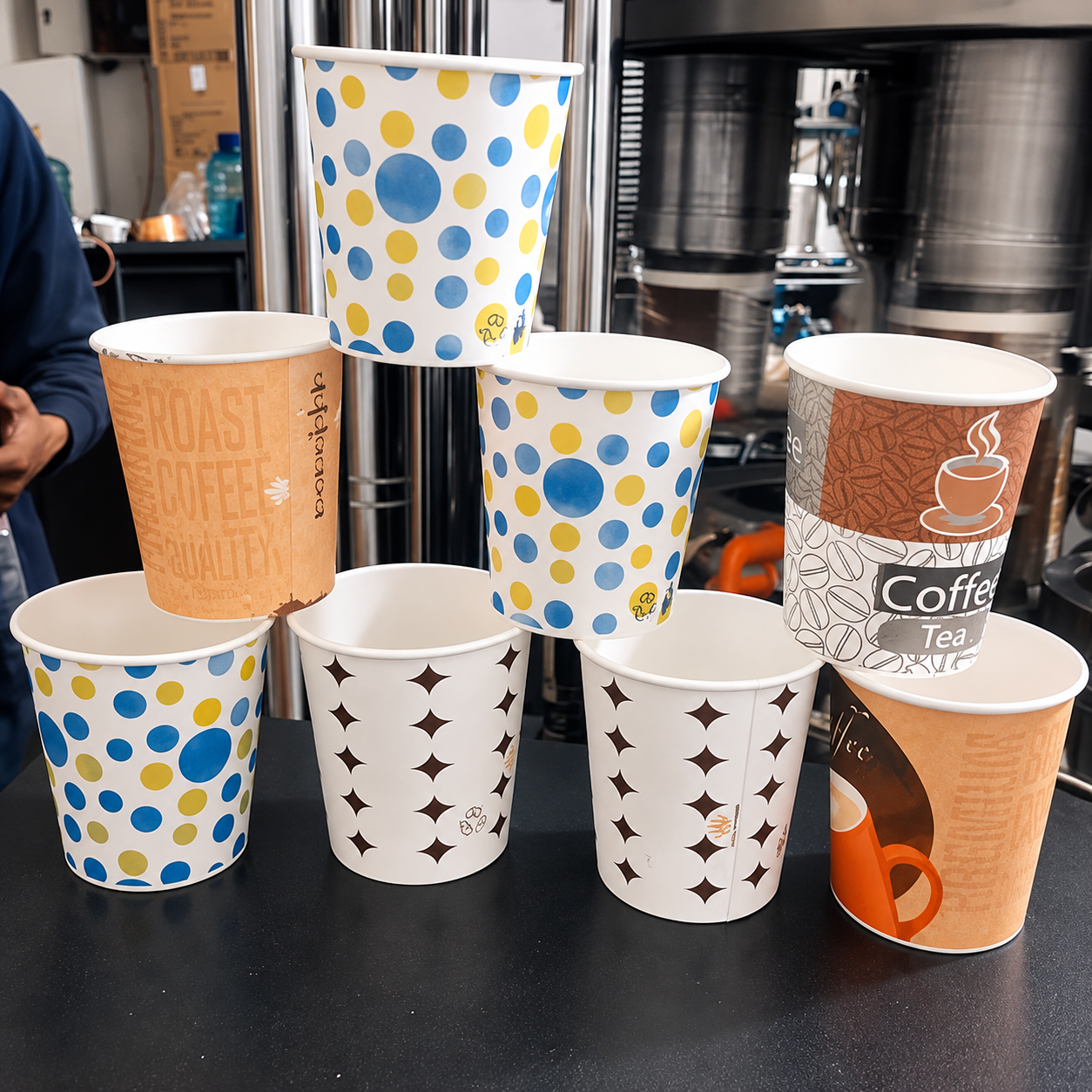
The four components you need to verify separately
Break your cup into its real material components before you ask for documentation. Each one sits under a different part of the regulation.
| Component | Typical material | Regulatory basis to ask about | What to request |
|---|---|---|---|
| Paperboard substrate | Virgin or recycled paperboard | 21 CFR 176.170 for aqueous/fatty food contact or 176.180 for dry food | Substrate compliance statement citing the specific section |
| Coating / lining | PE, PLA, or aqueous barrier coating | 21 CFR 175 for coatings or 177 for polymers, or an FCN specific to that coating | Coating supplier’s compliance letter, matched to your intended beverage type and temperature |
| Printing ink | Exterior surface ink | Migration and set-off control, not direct food-contact approval, since cup printing is normally on the outside surface only | Confirmation of where the ink sits and any migration testing on file |
| Side seam / bottom seal adhesive | Food-contact adhesive | 21 CFR 175.105 | Adhesive compliance statement for food-contact use |
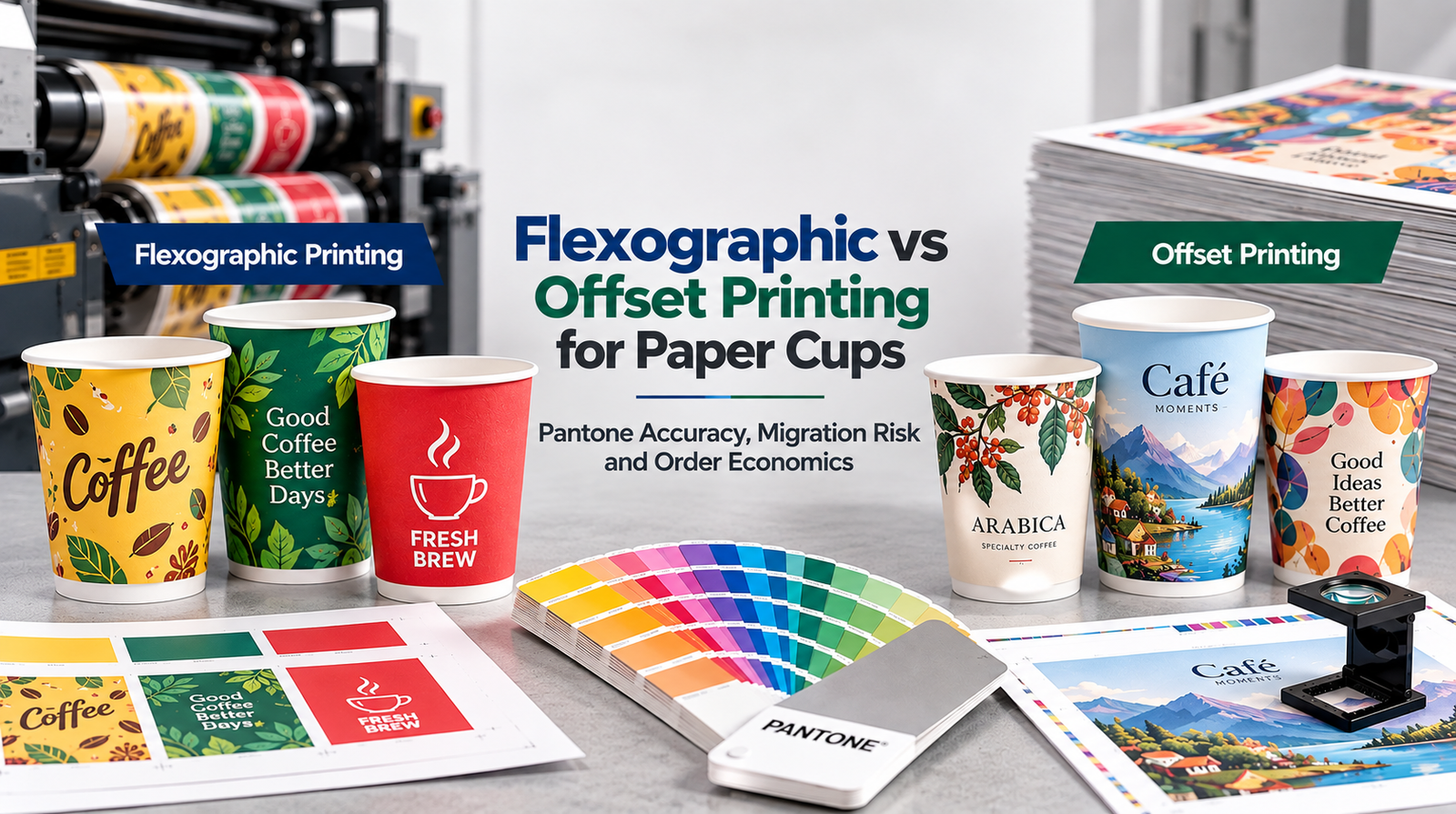
Cup printing is a useful example of why this component split matters. Printing ink sits on the outside of most paper cups, not the food-contact surface, so its compliance question is about migration and set-off control, not the same food-contact substance rules that apply to the coating your beverage actually touches. Treating “the cup” as one compliance question instead of four is exactly how a real gap gets missed.
What to actually request from your supplier
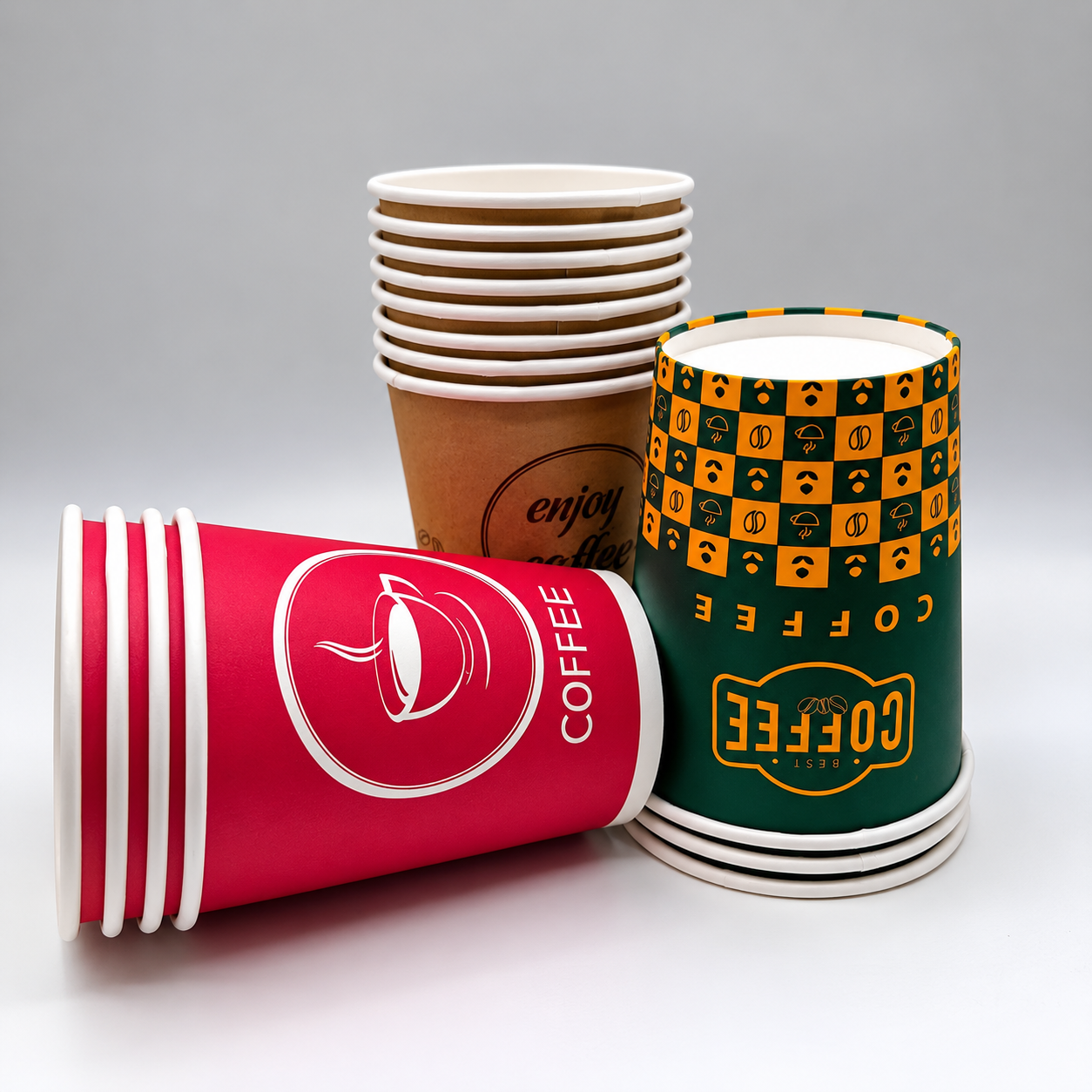
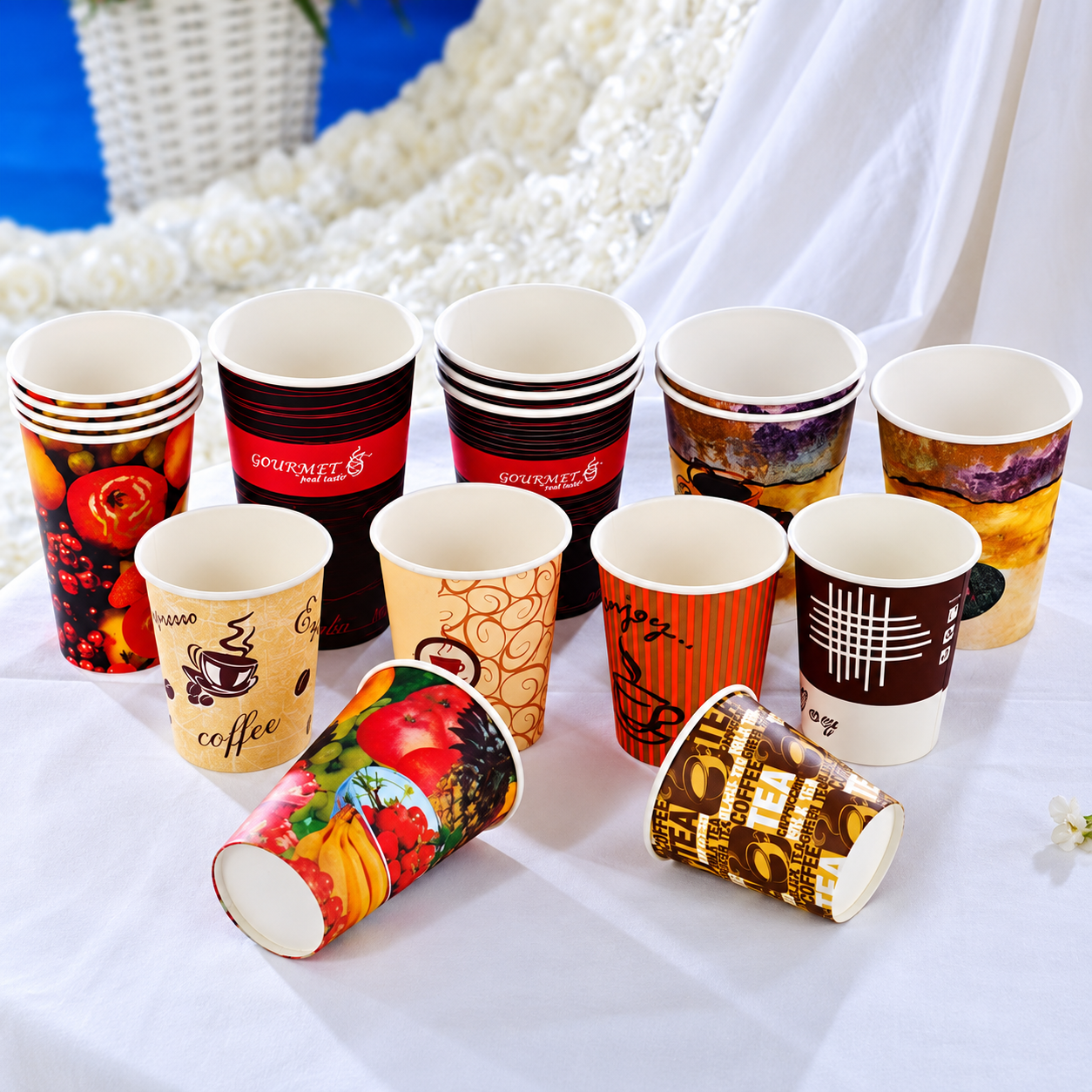

Ask for documentation at the component level, not a single blanket statement. A supplier who can only offer one generic “FDA approved” letter for the whole cup hasn’t done the component-level work this requires.
Request a letter of guaranty or declaration of compliance that names the specific 21 CFR sections, FCN number, or GRAS basis for each component. Ask whether that compliance basis matches your actual use case: your beverage type, fill temperature, and expected shelf and hold time. A coating compliant for cold beverages isn’t automatically compliant for hot ones.
Ask for supplier traceability records tying your specific cup construction to the documentation you’re given. A compliance letter for a different coating formulation or a different supplier’s paperboard doesn’t cover your order.
You can review how Xinnengpack documents production controls, including food-contact testing practices, on the Quality Control page.
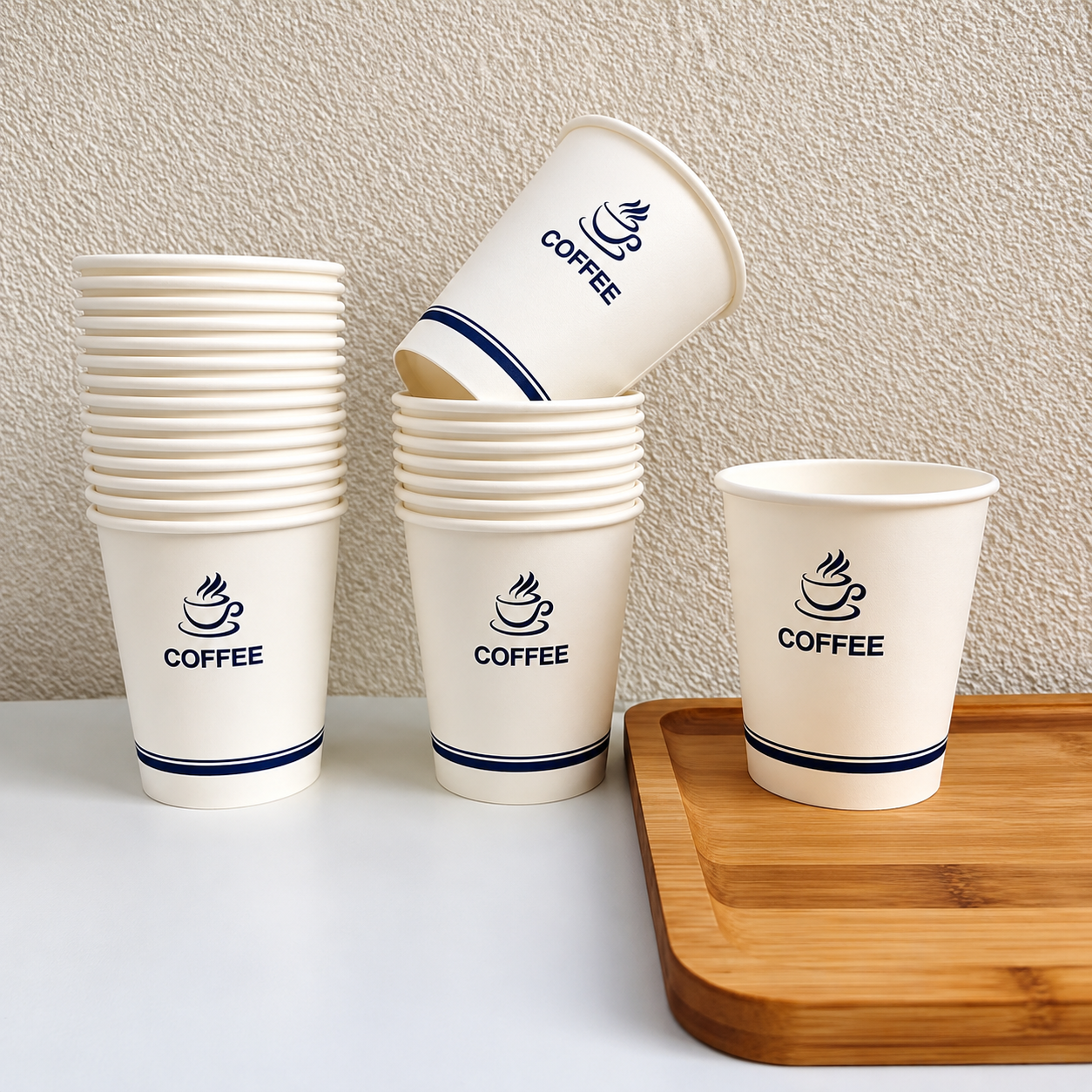
For buyers comparing cup construction and documentation, see Xinnengpack’s Custom 8 oz Single Wall Paper Cups. Use this as a product reference while keeping compliance claims tied to the actual construction and documentation for the order.
Where this guidance doesn’t generalize
This article explains the general US regulatory framework and the questions a buyer should ask. It isn’t legal advice, and it doesn’t replace a review by qualified regulatory counsel for your specific product, supplier, and use case.
FCNs are often proprietary to the company that filed them. Your supplier may not be able to share the full notification, even when their formulation is genuinely covered by one. In that case, ask for a summary letter of guarantee referencing the FCN number instead of the full filing.
State-level requirements can add obligations beyond federal FDA rules, including chemical disclosure rules in some states. This article covers the federal framework only; confirm state-specific requirements separately if you’re distributing into a state with its own packaging chemical rules.
FAQ
Does “FDA approved” mean anything for a paper cup?
Not on its own. The FDA doesn’t operate a certification program for finished packaging products. The accurate claim names a specific regulation, FCN, or GRAS basis for each material component, not the product as a whole.
Do all four components — substrate, coating, ink, adhesive — need separate documentation?
Yes, if you want to verify compliance completely. Each one has its own regulatory pathway. Documentation for the paperboard doesn’t tell you anything about the coating’s compliance status.
Is an FCN always something a supplier can share directly?
No. FCNs are often proprietary to the company that filed them, so your supplier may only be able to provide a letter of guaranty referencing the notification number rather than the full document.
Does printing ink need the same food-contact compliance as the coating?
Usually not, if the ink sits on the exterior surface only, since it isn’t a food-contact substance in that case. Confirm with your supplier where the ink is applied and whether any migration testing has been done, rather than assuming.
Does compliance for cold beverages carry over to hot beverages automatically?
No. A substance’s approved status is tied to the conditions it was reviewed under, including temperature and contact duration. Confirm your actual use case matches the conditions your supplier’s documentation covers.
Who is responsible if a supplier’s compliance claim turns out to be wrong?
As the importer, you carry real exposure if you can’t produce documentation behind a supplier’s claim. That’s why component-level verification protects you, not just your supplier.
Get a compliance pack for your exact cup construction
Tell us your exact cup construction, beverage type, and fill temperature. We’ll put together the compliance documentation for your specific substrate, coating, ink, and adhesive, matched to your actual use case rather than a generic statement.